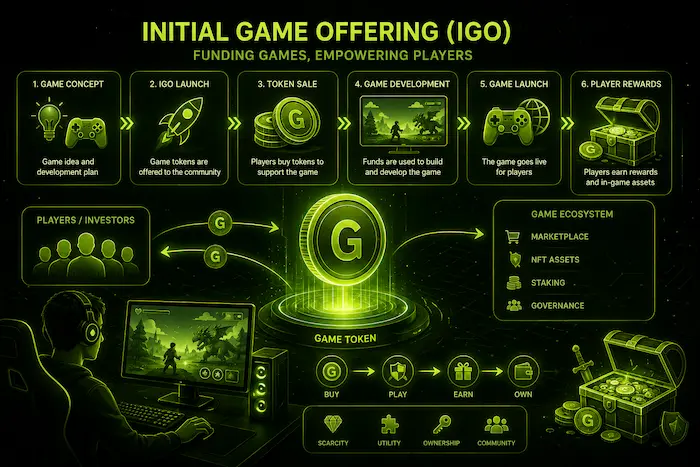
GameFi’s emergence has introduced new fundraising strategies for blockchain games, linking developers and their early enthusiasts prior to the release. The fundraising strategy gives the possibility for projects to share digital assets at the time when their game is not yet released.
Initial Game Offerings (IGOs) is one of such strategies that provide blockchain gaming projects with an opportunity to raise funds by offering early supporters the game-related digital assets before the release.
In contrast to traditional fundraising strategies that concentrate only on cryptocurrency tokens, IGOs include both fungible tokens and NFTs.
With the development of blockchain games via the expansion of GameFi in 2021 and 2022 and then entering the more selective market, the form of IGOs has also evolved. The investors start judging the development, token distribution, and reputation of the launchpad before investing.
What Is an Initial Game Offering?
The initial game offering is a form of raising funds for blockchain games that will be officially launched soon. It is a way of financing the project by giving gaming tokens, NFTs, or both via a particular launchpad.
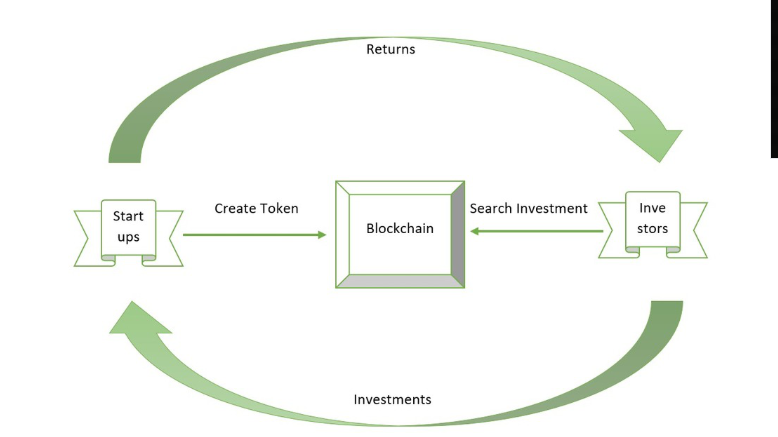
Source: Geeks
The structure is similar to the ICO structure, although the assets being provided go beyond cryptocurrencies. The participants may be provided with NFTs of characters, mystery boxes, accessories, weapons, skins, virtual lands, and other types of digital assets needed for participation in the game.
In some cases, those assets may be able to be traded on the cryptocurrency exchange or NFT marketplace once the vesting period ends.
How an Initial Game Offering Works
While the procedures in most cases are different depending on the platform used, the general process of how an IGO works is similar for all projects.
The investor first purchases or holds the native token of the launchpad before he becomes eligible for participation. Once an eligible user, the token is locked or staked for a certain period of time.
When the period of participation ends, the allocation is done either based on the stake that has been made or via a lottery system defined by the platform itself.
Typical IGO Process
- Hold or purchase the launchpad’s native token.
- Lock or stake tokens during the allocation period.
- Gaming tokens or NFTs according to allocation criteria set by the platform.
IGOs vs. Other Crypto Fundraising Strategies
There are various fundraising strategies applied within the cryptocurrency industry. Despite their common goal to secure funds, different approaches are used for asset distribution and fundraising platforms.
| Fundraising Strategy | Purpose of Funding Asset Distribution | Fundraising Platform | Assets Distributed |
| Initial Coin Offering (ICO) | General fundraising on blockchain | Project development team | Cryptocurrency tokens |
| Initial Exchange Offering (IEO) | Fundraising organized by an exchange | Centralized exchange | Cryptocurrency tokens |
| Initial DEX Offering (IDO) | Decentralized fundraising | Decentralized exchange | Cryptocurrency tokens |
| Initial Game Offering (IGO) | Fundraising for blockchain games | Gaming launchpad | Non-fungible tokens & tokens |
ICO’s popularity grew when cryptocurrency was emerging but declined once regulatory oversight became stringent.
IEO’s were characterized by managed fundraising and review of projects by exchanges, IDO allowed for fundraising on decentralized exchanges with liquidity available from the get-go although project reviews were not always done.
IGO integrates various aspects of all of the mentioned fundraising types but only applies to blockchain gaming projects.
Assets that can be acquired in the Initial Game Offering
Unlike normal token offering, an Initial Game Offering gives investors access to many different asset classes before game launches.
Common types include local gaming tokens, governance tokens, NFT characters, virtual land, rare weapons, collectibles, and access to an alpha. Depending on the project structure, these assets can later gain in-game functionality, governance rights, staking capabilities, or serve for second-market trading.
Benefits of the Initial Game Offering Fundraising Model
This type of fundraising benefits developers and early contributors in providing the financing of the project before the launch.
The fundraising model is beneficial for the developers because it raises capital which can be used for the development process, audits, marketing activities, and ecosystem building.
IGO provides participants with an opportunity to gain access to digital assets before public exchanges listing. In case of further project development and attraction of the user base after its launch, then early participants will have those assets which will become actively used in the economy of the game.
Main Advantages
- Funding for the development of blockchain games at an early stage.
- Access to gaming tokens and NFTs at an early stage.
- Building a community prior to launching the game.
The Risks of Initial Game Offering
There are a number of risks that investors need to consider.
The development of such games can be postponed or not be successful. Tokens used for gaming might have very volatile prices after their release, while the value of NFTs depends on the continued usage of the game by players.
The document additionally mentions that there is still the risk of encountering fraudulent projects and fraudulent launchpads, thus making the independent research crucial in evaluating fundraising campaigns.
How to Evaluate an Initial Game Offering
There are a number of factors that can be checked in advance based on publicly available data about the project before participating in the IGO.
Experience of the development team, previously completed projects, demos of gameplay, roadmap, token distribution, partnerships, reputation of the launchpad, and security audits are all sources of information that can help evaluate the project structure.
Continued Development of the IGO Market
The report states that IGOs increased drastically during the GameFi boom in 2021–2022, when there was a lot of interest from investors in blockchain-based games.
With the decline in the cryptocurrency market and the failure of play-to-earn token economics, many launchpads experienced less activity.
The market became much more selective with an emphasis on products, sustainability of tokenomics, and progress in development.
In addition, the report states that newer blockchain games have moved from the model of play-to-earn to the play-and-earn concept, where large-scale NFT presales are not used.
Conclusion
Initial Game Offering is among the ways of financing of blockchain gaming projects before they get launched. In this case, via special launchpads, developers offer gaming tokens and NFTs to the market and earn money needed for further development. The process is different from the ICO, IEO, and IDO in that it involves only gaming tokens and NFTs.
FAQs
What is an Initial Game Offering?
Initial Game Offering is a way of financing blockchain gaming projects through selling tokens and NFTs before the launch of the game.
How is an IGO different from an ICO?
An IGO deals with blockchain gaming projects offering both gaming tokens and NFTs to the public, while an ICO offers only cryptocurrency tokens.
What do participants get in an IGO?
Game tokens, NFT characters, virtual land, collectibles, weapons, governance tokens, or early-access passes are possible options for what participants can get.