

The consensus algorithms of blockchain technology make the existence of such technologies viable. These algorithms enable all participants of a blockchain network to come to an agreement about the transaction and any alterations made to the database of the blockchain.
With the growth in the use of blockchain technologies in cryptocurrencies and distributed ledger technologies, consensus mechanisms continue to be an essential aspect of blockchain technologies.
Why Blockchain Consensus Algorithms Are Important
The blockchain network is made up of various computers known as nodes. Since the blockchain network does not have any centralized authority, there should be a way to ensure data verification.
This problem can be solved through blockchain consensus protocols, which provide a basis for users to reach agreement before permanently recording transactions on the blockchain.
Some important features of the blockchain consensus algorithms are:
- Prevent double-spending of digital currencies
- Ensure consistent data across the network
- Ensure protection against malicious behavior
- Enable decentralized systems
- Network security and reliability
By executing these roles, the consensus protocol facilitates synchronization among all parties who have copies of the distributed ledger.
Consensus Mechanism Verification Process for Transactions
The majority of consensus protocols on blockchains share almost identical processes in verifying transactions.
A user initiates a transaction request. This will be verified by other nodes in the network. Once the transaction is deemed to be valid, it is then accepted in line with the network protocol.
Upon reaching a consensus, the transaction is placed within a block. Then, the new block will be added to the existing chain of blocks.
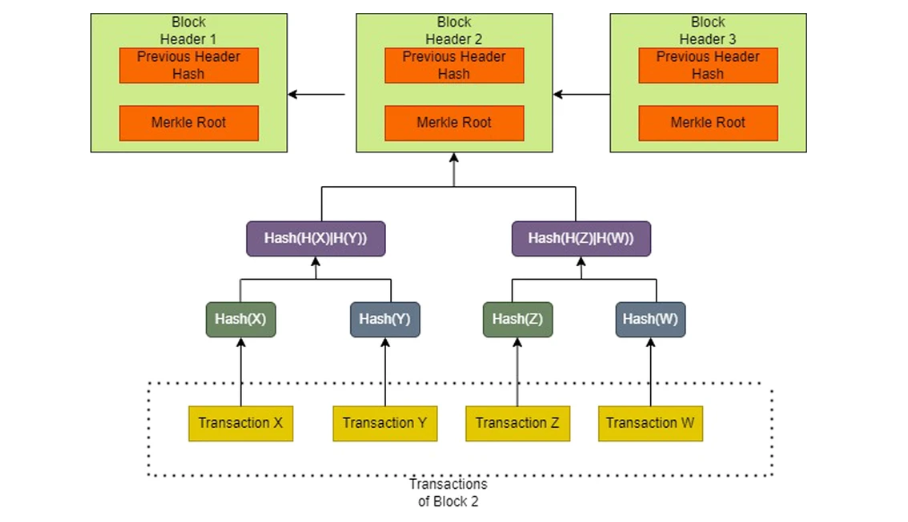
Source: Springer
The validation system has been built to ensure that transactions can be approved only when they meet certain criteria.
Blockchain Consensus Algorithms and Validation Rewards
The consensus algorithm relies on both rewards and punishments to encourage integrity. The validators will need to allocate resources before they can validate the transaction. These include:
- Computing power
- Cryptocurrency balances
- Reputational criteria
Validators, whose transactions have been validated successfully, can get some rewards that include transaction fees, newly generated crypto, or both.
However, blockchain networks are built to detect any kind of dishonesty. If validators fail to observe the rules of the network and try to cheat, their invested resources will be wasted.
Different Common Blockchain Consensus Algorithms
Various consensus algorithms have been developed and used in the blockchain sector to reach network consensus in unique ways.
| Consensus Mechanism | Process Utilized | Resource Used | Distinguishing Feature |
| Proof of Work (PoW) | Mining and puzzle solving | Computational power | Security from complex computation |
| Proof of Stake (PoS) | Voter selection by staking | Electronic coins | Low energy consumption |
| Delegated Proof of Stake (DPoS) | Delegate election via voting | Token-holder participation | Token ownership Quick transactions |
Blockchain Consensus Algorithms via Proof of Work
Proof of Work was invented for Bitcoin and is still considered one of the best-known consensus algorithms.
Under the model, participants engage in solving complex mathematical equations. The individual who solves an equation is rewarded by adding a new block to the blockchain.
In addition, mining requires significant electricity and computational power. On the other hand, the algorithm prevents malicious attacks, since it takes a long time to change anything on the blockchain. Bitcoin uses the Proof of Work algorithm to achieve consensus.
Validation via Proof of Stake
Proof of stake was created to offer a solution that could be used instead of traditional transaction validation.
Here, validation is performed using cryptocurrency, and it involves locking coins in a process called staking. Then, validators are picked by the network rules, and they verify transactions according to those rules.
However, there is no use of mining for energy savings through this process. There could be some penalties to the validators if they breach the set network protocols.
In 2022, Ethereum switched from Proof of Work to Proof of Stake, becoming one of the largest blockchain networks to adopt this model.
Delegated Proof of Stake
The Delegated Proof of Stake method uses an election system.
The tokens’ owners select a small number of delegates who will validate all transactions in the network. This approach may boost the number of transactions that the system handles.
But in this case, validation tasks are done by fewer members than in some other types of consensus. EOS is one blockchain network that uses the Delegated Proof of Stake protocol.
Pros and Cons of Blockchain Consensus Protocols
Several strengths can be highlighted in relation to blockchain consensus protocols. They include fostering trust within decentralized platforms, precise record keeping, and safeguarding from any unauthorized alterations.
Nonetheless, some other consensus algorithms pose challenges of their own. With proof of work consensus algorithms, high energy consumption is needed, whereas proof of stake consensus algorithm raises the risk of having stakeholders be powerful people or firms. Certain consensus algorithms struggle with scalability as transactions increase.
Conclusion
Consensus algorithms are crucial in blockchain operations. It plays a key role in validating transactions in a decentralized blockchain network. Blockchain technology employs proof of work, proof of stake, and delegated proof of stake to develop a consensus on a blockchain network and guarantee that data is accurate and reliable on the network.
FAQs
What is the purpose of consensus algorithms in Blockchain?
The rules that network members follow to reach agreement on transactions and ledger entries are called blockchain consensus algorithms.
Why is it necessary for a blockchain to have a consensus protocol?
The consensus algorithm guarantees all parties keep the correct record-keeping and do not have duplicate records.
What is the name of the Blockchain that uses PoW?
Bitcoin is the most widely used blockchain system, which is based on Proof of Work consensus.