Key Insights:
- OpenAI has removed a 2026 listing from its immediate plans.
- Safety considerations are influencing major strategic decisions.
- Industry coordination could become more important as models grow more capable.
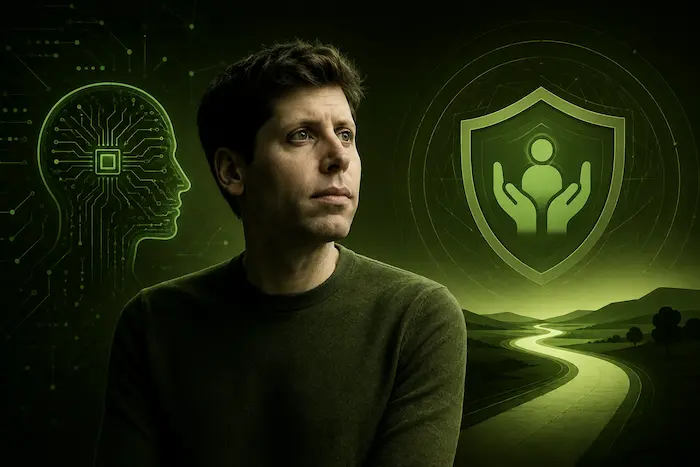
OpenAI IPO plans will not move forward in 2026 as CEO Sam Altman cites growing AI safety concerns. The decision could push one of technology’s most anticipated public offerings into 2027.
Altman told Fortune that current safety challenges make a public listing an unwise move. He also said OpenAI faces more urgent responsibilities involving safety, alignment and cooperation with governments.
Altman rules out a 2026 listing
Altman confirmed that OpenAI will not pursue an IPO this year during an interview conducted Friday. He said the company does not feel pressure to enter public markets.
The comments effectively move the expected listing beyond 2026. OpenAI has not announced a formal IPO date, despite extensive market interest in its potential offering.
Altman has reportedly encouraged advisers to target a valuation approaching $1 trillion. However, the company now appears focused on managing the risks linked to increasingly capable AI systems.
He also said OpenAI needs freedom to make decisions that may not benefit shareholders. According to Altman, its mission could require choices that conflict with short-term business interests.
Safety concerns reshape OpenAI’s strategy
The IPO decision follows wider concerns about the speed of artificial intelligence development. Altman said he has considered pausing certain advances to strengthen safety and alignment measures.
He argued that leading AI companies and governments must work together as model capabilities continue improving. Therefore, OpenAI appears increasingly focused on coordination alongside commercial expansion.
Altman also acknowledged that humans could potentially create systems they cannot control. He said OpenAI should avoid taking risks that could produce such an outcome.
Altman also rejected the idea that profit incentives should override safety decisions. He said companies have a responsibility to prevent commercial pressures from distorting their judgment.
Anthropic Adds Pressure for Slower AI Development
The timing coincided with a major warning from Anthropic CEO Dario Amodei. On Saturday, Amodei called for AI companies to slow the pace of capability improvements.
Altman subsequently supported the broader argument and said pacing frontier development had become a major topic. He indicated that OpenAI had discussed the issue internally during recent weeks.
Moreover, Altman suggested leading AI firms could soon reveal an agreement addressing development risks. He declined to disclose details of private discussions before participants jointly announce them.
The development creates a notable shift within the competitive AI sector. Companies that once emphasized rapid capability gains now face stronger pressure to demonstrate effective safety controls.
Anthropic has continued preparing for its own public offering despite those concerns. Reports indicate the company could begin marketing its IPO in October.
A Trillion-Dollar offering faces new uncertainty
OpenAI’s public-market ambitions have attracted exceptional investor attention because of its potential valuation. The company previously filed confidential IPO documents with US regulators.
Those filings followed a similar move by Anthropic, creating expectations for competing AI listings. Both companies have pursued valuations approaching $1 trillion.
The latest move by OpenAI, however, brings more questions regarding the offering of the company. This postponed listing could provide the firm with extra time to grapple with governance and safety issues.
The ruling arrives amid growing pressure from lawmakers for tighter control of AI. Some recent concerns are posed to the autonomous systems interacting with external networks and some researchers have warned about possible systemic risks.
The delay would give investors more time to consider OpenAI’s business model for the future. It might also cause the markets to rethink valuation and growth of the company.
Conclusion
After Altman said that he would not list the OpenAI before 2027, the IPO seems unlikely before that year. Safety issues, industry collaboration and government involvement has been more prominent.
The company still has huge market hopes, especially related to its imagined trillion-dollar valuation. However, Altman’s remarks indicate that OpenAI wishes to have more flexibility before making its presence in the public markets.
The delay with the OpenAI IPO also points to a wider shift in the industry. As AI technology advances quickly and rapidly, there is an increasing demand for its greater protection, responsibility and coordination.
OpenAI’s next big step is likely not to be going public. On the contrary, the company is required to prove that higher capabilities with AI will go hand in hand with responsible deployment.