
P2P trading safety continues to be one of the key concerns since decentralized P2P cryptocurrency exchanges provide more freedom of choice regarding prices, payments, and counterparties for both buyers and sellers. Unlike exchanges, where every single transaction is completed automatically by the system, P2P transactions allow people to trade assets on the marketplace directly.
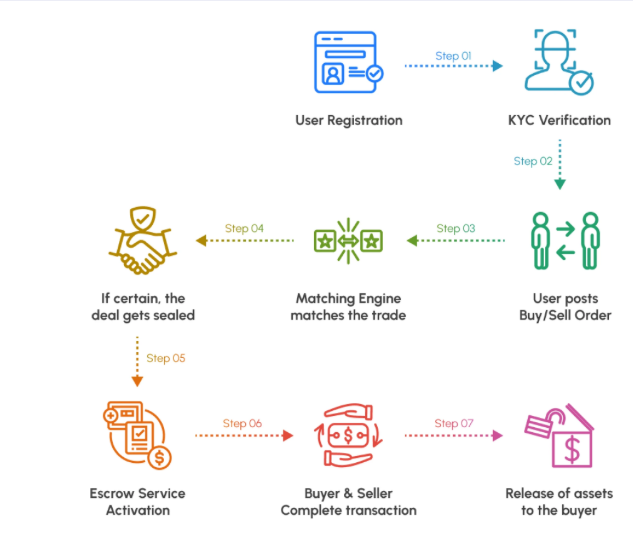
Today, modern platforms use security tools such as escrow, KYC verification, risk management systems, and dispute resolution mechanisms in order to reduce potential fraud cases.
Source: B2Broker
Nevertheless, some kinds of fraud affect P2P traders, which is why transaction confirmation and anti-fraud procedures are necessary for every transaction. Knowledge about these schemes and safety measures will help avoid unnecessary risks during transactions.
Popular Crypto Frauds on P2P Platforms for Traders
The majority of the fraud committed on P2P trading platforms usually involves persuading the victims to give out their cryptocurrency without confirming the payment or skipping the platform protocols altogether.
One of the most common forms of such fraud is fake proof of payment. Here, scammers send fake bank statements, fake images, or payment notifications to trick the victim into thinking that they have already been paid.
The third widely used technique is the chargeback fraud. Some payment processors have the option of reversing payments made after a successful transaction has been completed. The buyer completes the payment process, receives the cryptocurrency, and then contacts the payment processor to reverse the transaction on some grounds.
Moreover, another problem facing trading platforms is the social engineering scam. Scammers start their operations by contacting their targets via messaging apps, dating sites, or social media. They build a certain level of trust and then ask for cryptocurrency transfers.
Triangulation fraud consists of collaborative activities carried out by a number of buyers aimed at misleading sellers through combining payments on different orders. Such actions aim at making a seller believe that a bigger amount of money has been paid than the actual one.
Phishing activities are still common among crypto traders through the use of scamming customer support messages, fake emails, and security alerts.
List of Popular P2P Scam Variants
| Scam Name | Method | Protection from This Scam |
| Fake payment confirmation | Spoofed payments proof | Confirm funds in your account before sending crypto |
| Chargeback fraud | Money back for the user after crypto release | Don’t use third parties and save transaction details |
| Social engineering | Communication through external programs | Conduct communication through the official platform |
| Triangulation scam | Several buyers confuse you about payments | Pair each payment with order separately |
| Phishing | Bogus notifications and messages with malicious links | Use support service through official channels of the platform only |
Security in P2P Trade Starts Prior to Conducting Trade
Pre-check of counterparts prior to starting the trade is one of the first security steps users can take.
All P2P websites present traders’ statistics, which include their completion rate, completed transactions, account verification, and customer reviews. These metrics help identify a history of transactions that the user can check prior to making any offers.
Advertisements that come with prices that are way too high or low than the current market price need to be verified further. While making transactions, there are several warning signs that could point towards high-risk situations.
Warning signs for buyers include:
- Requesting to send cryptocurrency before payment confirmation.
- Payment coming through a third-party account.
- Efforts by the seller to take the conversation outside of the P2P website.
- Payment amounts that don’t correspond to the total amount of the transaction.
Signs of scams on the part of the seller are as follows:
- Cancellation of the order by the seller after payment.
- Demanding extra charges that were not specified in the listing.
- Trying to carry out the deal without using the platform.
- Requesting to continue communicating using other apps.
Security Features Supporting Safety of P2P Deals
There are several features of the platform that help prevent fraud in the process of trade. The escrow service locks the cryptocurrency during the transaction and releases it once the payment is confirmed.
The KYC process helps to build another level of accountability as it requires users to go through the identity verification process prior to being able to participate in any marketplace transaction.
Risk management systems help track down any unusual behaviors on behalf of the trader and even block the account for suspicious behavior. In addition, there are marketplace programs for verified merchants that require higher security levels for the traders.
Disputes can be escalated through customer support or dispute management systems and include screenshots and other transaction details.
Safer Peer-to-Peer Transactions Best Practices
Securing transactions in P2P deals involves adherence to the standard processes of verification in each deal.
The suggested best practices are:
- Enabling two-factor authentication (2FA) for your account.
- Ensuring that all messages related to your trades remain within the platform.
- Verifying payment via your banking account before you release cryptocurrency.
- Cross-checking the information of the sender with the amount of the payment.
- Saving screenshots of all successful transactions.
- Flagging suspicious accounts using the right channels.
- Appealing to the authority immediately in case there is a problem with the payment.
- Knowledge of the laws governing peer-to-peer transactions in that locality.
The above practices supplement the existing security options on the platform.
Why Payment Verification Remains Essential
The most consistent protection against P2P fraud remains independent payment verification. Receipts, screenshots, SMS notifications, and payment confirmations supplied by counterparties should not replace direct confirmation through a bank account, payment provider, or digital wallet.
Verifying the arrival of funds before releasing cryptocurrency helps reduce exposure to several of the most common fraud schemes documented across P2P marketplaces.
Additionally, keeping communication inside the official trading platform also creates a record that can support dispute investigations if an appeal becomes necessary.
Conclusion
P2P Trading Safety requires both the use of platform security measures and transaction verification. Escrow, KYC verification, merchant verification, and dispute resolution will be useful in this respect, but you still need to verify transactions on your own, check your counterpart, register everything that happens, and know about possible fraud schemes.
FAQs
What is peer-to-peer crypto trading?
Peer-to-peer crypto trading is a process of cryptocurrency exchange by buyers and sellers on an online platform that usually offers escrow and dispute resolution services.
What is the most widespread P2P crypto fraud?
Typical fraud schemes include forged payment confirmation when fraudsters use modified files or notifications to make the seller release their cryptocurrencies even before they receive money.
How can traders minimize P2P fraud risks?
The risk of fraud can be reduced via payment verification, the use of two-factor authentication, employing an escrow-enabled platform, reviewing a trader’s history, and keeping all communications through the official platform.
Why must communication take place through the platform?
Since platform communication leaves an official trail of a transaction that can be checked in case of disputes, it can reduce fraud involving external messaging apps.