Etherscan is still one of the most popular tools to review the public data available on the Ethereum blockchain. It allows the user to view transaction history, wallet balance, details of smart contracts, token data, and general network statistics via its search engine.
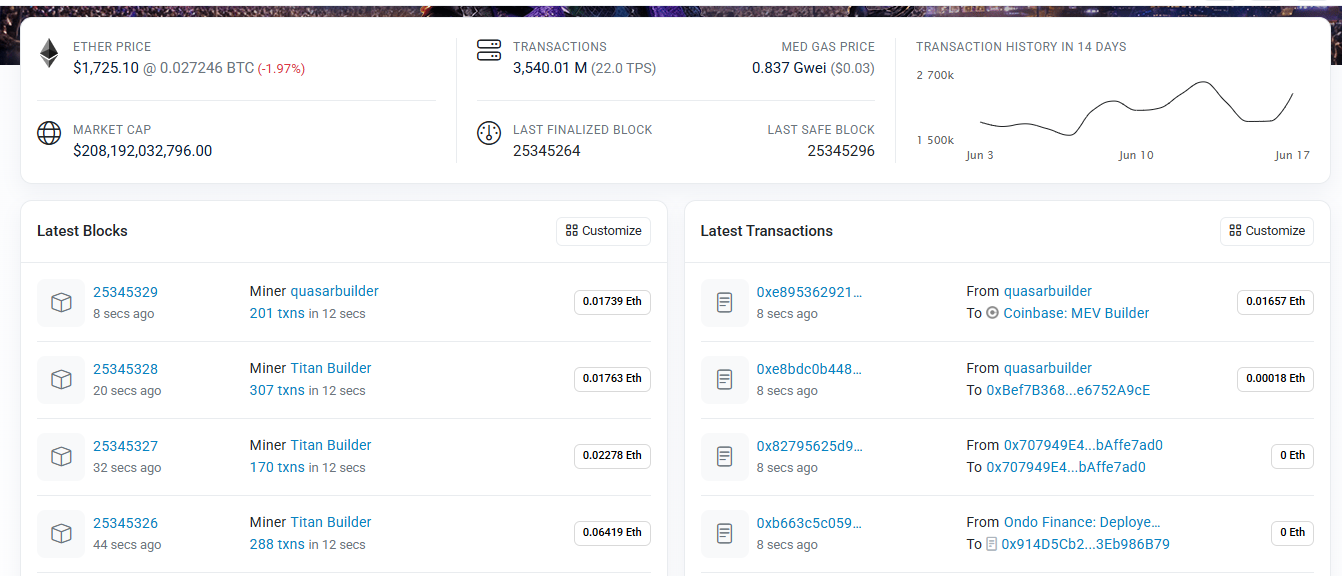
Source: Etherscan
As all transactions in Ethereum are made public in the blockchain, the data can be organized by Etherscan in such a way that it becomes possible to check the data without using any special tools. It is worth noting that Etherscan is not a wallet service, and therefore, it is unable to hold cryptocurrencies. Rather, it is an Ethereum explorer that allows viewing the data on the Ethereum blockchain in real-time mode.
What Is Etherscan?
Etherscan is an independent blockchain explorer created for the Ethereum network in 2015. Etherscan allows its users to look for details by entering addresses of the wallet, transaction hash, contract address, name of the token, or block number.
The explorer provides different types of blockchain details, such as:
- Ethereum transactions
- Balance of the wallet
- Smart contracts
- Transactions with ERC-20 tokens
- Transfers of NFTs
- Block details
- Details about gas fees
Etherscan is not like cryptocurrency wallets because it does not offer custodial services or transactions. Instead, it only shows the details stored on the Ethereum blockchain.
Core Features of Etherscan
Information about Ethereum is stored forever in the blockchain. This information is indexed and presented in a convenient form by Etherscan and is accessible via a web browser.
The table below gives information on several popular Etherscan features.
| Feature | Description |
| Transaction Tracker | Transaction information tracker |
| Wallet Explorer | Shows wallet balance and transaction information |
| Gas Tracker | Provides current gas price and congestion information |
| Token Tracker | Displays Token supply and holders information |
| Contract Viewer | Inspecting smart contract information |
| Token Approval Checker | Token spending permissions approval and rejection
tools. |
These resources give direct access to information about the Ethereum network without needing an account to be registered for general queries.
How to Track Transactions on Etherscan
The most often used feature in an Etherscan is transaction confirmation. The user just needs to enter the transaction hash into the search engine and will receive the following information on the resulting page:
- Transaction status
- Transaction hash
- Address of the sender
- Address of the recipient
- Amount
- Block number
- Number of confirmations
- Date & time
- Gas Price
- Transaction Fee
The transaction status denotes whether the transaction has been successful, unsuccessful, or is still in progress.
Since Ethereum’s Dencun update in March 2024, users may also see transactions that carry blobs. The transactions refer to data being shared via Ethereum from Layer 2 networks as opposed to regular ETH transfers.
Wallet Activity Check
Etherscan also lets you check any Ethereum address. A search using a wallet address will take you to a wallet overview page showing:
- ETH Balance
- Tokens
- NFTs
- Transaction history
- Internal transactions
This function allows the user to view wallet transactions and check if the transaction has arrived at the particular address or not. Since blockchain data is open-source, wallet information can be seen without actually accessing the wallet.
Etherscan Guide to Token Verification
Another common application of Etherscan is token verification. One can go to the Token Tracker section and look up a particular token. Information on token pages includes:
- Contract Address
- Total Supply
- Holders Count
- Transfers
- Contract Details.
Source: Etherscan
Moreover, contract addresses become especially important since many tokens can share the same names. Checking contract addresses against official project resources will help identify the correct contracts rather than any irrelevant duplicates.
Smart Contracts Review
Smart contracts are the basis of most Ethereum-based applications.
Etherscan enables users to check information about the contracts right on the special contract pages. These pages have tabs where one can read about and interact with the contract functions.
The main features of the contracts are:
Read Contract
Here you will find publicly available information stored in the contract.
Users can do the following:
- See token balance
- See permission levels
- See contract variables
- See configuration parameters
- Write Contract
The Write Contract option enables user interaction with smart contracts once connected to a suitable wallet. It is possible to utilize this option to run contract functions when such a function is provided by the smart contract.
Etherscan also offers an AI-driven Code Reader to help explain the smart contract code to users.
Monitoring Gas Fees
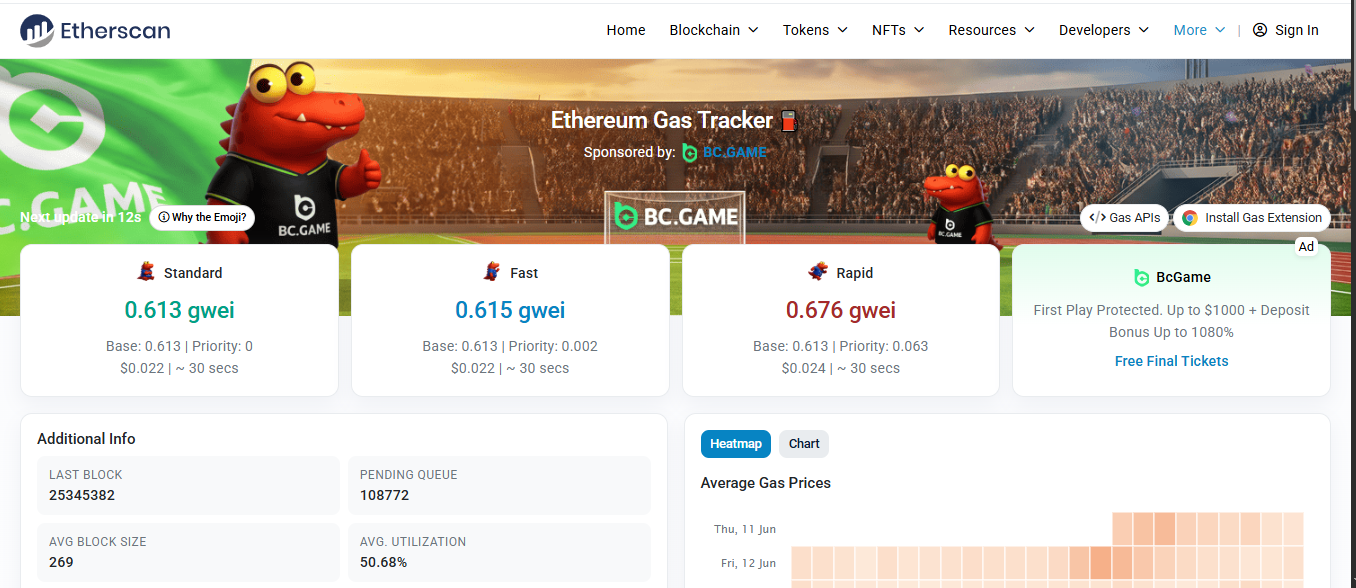
Gas fees are the charges for any activity conducted on the Ethereum network. Etherscan provides information related to the Gas Tracker. The following information is provided via the tool:
- Current gas rates
- Estimate for the time of confirmation
- Current network congestion
- Historic gas rates
Users have the ability to compare various speeds before sending a transaction. Charts from historic data also show the times when there was high or low network activity.
Management of Token Approvals
Token approvals are the process of providing smart contracts access to spend tokens on behalf of the token holder.
Such permissions tend to stay active even after interactions with the decentralized application. Etherscan has a Token Approval Checker feature for users to check the same.
The procedure involves:
- Linking the wallet
- Checking the list of token approvals
- Viewing the approved amounts
- Removing permissions when not required
Removing an approval involves executing an Ethereum transaction, and thus, a gas fee is levied. This enables one to see spending permissions that stay active even after using decentralized finance apps.
Conclusion
The Etherscan Guide highlights how the blockchain explorers are capable of offering transparency into Ethereum network operations. By utilizing services like transaction monitoring, wallet observation, token authentication, contract auditing, gas tracking, and approval monitoring, Etherscan compiles blockchain data available in the public domain in a searchable form.
The launch of Etherscan V2 further widened its capabilities for Ethereum, along with Layer 2 networks, enabling the user to track activities from different environments using one platform while still having access to the blockchain data in real time.
FAQs
What is Etherscan used for?
Etherscan is used to see Ethereum transactions, wallets, smart contracts, tokens, and blockchain statistics.
Does Etherscan hold cryptocurrency?
No. Etherscan is a blockchain explorer that doesn’t work as a wallet.
Is it possible to check the transaction status at Etherscan?
Yes. Inserting the transaction hash shows all details about it.