
The United States Treasury’s decision to at least double purchases of longer-dated bonds became a key macro development for crypto markets on Aug. 19, 2026.
Treasury announced that liquidity-support operations in selected longer-maturity Treasury sectors would increase from $2 billion to at least $4 billion per operation beginning Sept. 9.
Bitcoin rose from about $64,686 on Aug. 18 to $69,291 on Aug. 19 before moving above $80,000 later in August. Nevertheless, Treasury buybacks were not the only reason for the rally.
The impact of Treasury buybacks on Bitcoin is an indirect one since it does not involve putting money into crypto markets or expanding the money supply.
How Treasury Buybacks Work
The modern Treasury buyback program began in May 2024 and was designed primarily to improve liquidity in older and less frequently traded Treasury securities. It gives investors a predictable opportunity to sell eligible off-the-run securities back to the government.
On Aug. 19, Treasury said the maximum size of liquidity-support operations in the 10-year-to-20-year and 20-year-to-30-year nominal coupon sectors would increase. from $2 billion to at least $4 billion per operation. The adjustment takes effect Sept. 9 and remains in place through Nov. 4, when the current refunding quarter ends.
Treasury attributed the increase to strong demand from market participants seeking to sell eligible securities in the longer-dated sectors. The department also said an updated tentative buyback schedule would be released later.
| Metric | Reported figure |
| Previous operation size | $2 billion |
| New minimum operation size | $4 billion |
| Change begins. | Sept. 9, 2026 |
| Program quarter ends | Nov. 4, 2026 |
| Off-the-run purchases | Up to $38 billion |
| Shorter-maturity purchases | Up to $25 billion |
Treasury purchases existing government debt for liquidity-support purposes, while the Federal Reserve conducts monetary policy independently through its own securities transactions.
Treasury Buybacks and Bond Yields
Treasury buybacks can influence crypto markets through bond yields. When demand for existing longer-dated bonds increases, their prices can rise and yields can decline, all else equal. Lower long-term yields can reduce the relative return offered by government bonds and potentially make risk assets more attractive.
Treasury data showed the 30-year constant-maturity rate falling from 5.24% on Aug. 18 to 5.14% on Aug. 19. It then rose to 5.18% on Aug. 20 and 5.22% on Aug. 21, indicating that the initial decline was not sustained.
Glassnode’s Aug. 19 market analysis had identified elevated U.S. yields as a constraint on Bitcoin. The firm said BTC was trading below key cost-basis measures while the 10-year Treasury yield was approaching 4.7%, keeping financial conditions restrictive.
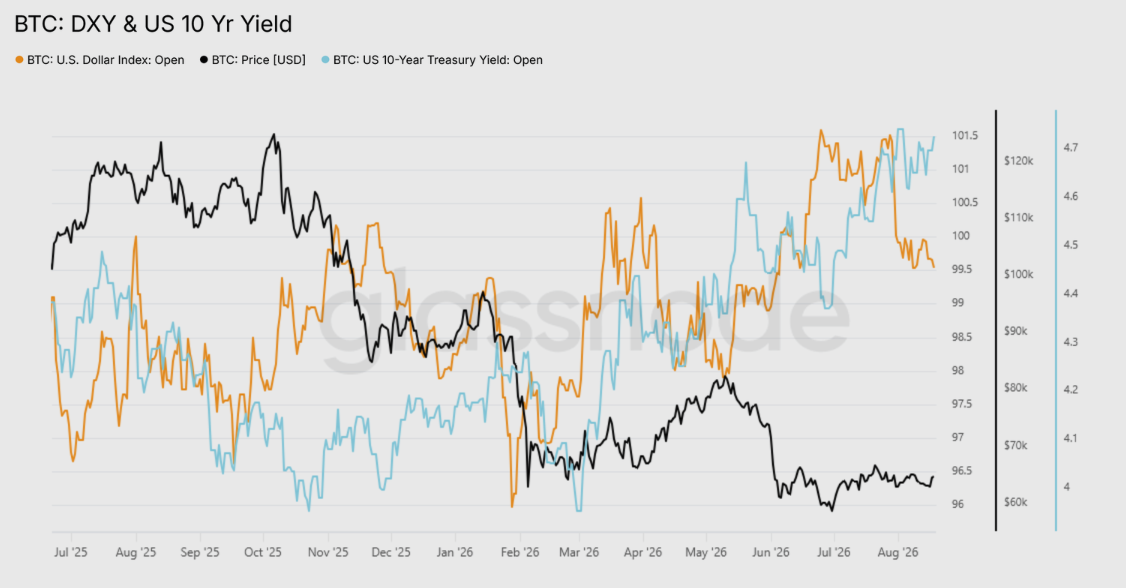
U.S. yields constraint on Bitcoin, Source: Glassnode
That backdrop helps explain why Treasury buybacks attracted attention. A decline in long-term yields can reduce the relative opportunity cost of holding Bitcoin, which does not generate conventional yield.
Bitcoin’s August Rally Had Multiple Drivers
Bitcoin’s move accelerated following the Aug. 19 announcement. CoinGecko data showed BTC closing at $64,686 on Aug. 18 and $69,291 on Aug. 19, an increase of about 7.1% in one day. Ether also climbed, closing at $2,251 on Aug. 19 compared with $1,884 on Aug. 18.
CoinDesk reported that Bitcoin gained about 6% during the Aug. 19 session while roughly $1.4 billion in short positions were liquidated. The Block later reported total crypto liquidations of about $1.92 billion over 24 hours surrounding the broader rally.
Short liquidations can amplify price movements because traders forced to close bearish positions may need to buy the underlying asset or related derivatives. This creates additional buying pressure after an initial price increase.
Glassnode’s Aug. 31 analysis showed the recovery extending from the $64,000 area toward $78,300, while institutional inflows remained strong. The firm also highlighted rising leverage and softer retail activity as factors supporting a more cautious market structure.
Dollar Weakness Added to the Macro Effect
Dollar weakness provided another potential transmission channel. Changes in long-term yields can affect the attractiveness of dollar-denominated fixed-income assets, while expectations surrounding government debt management can influence perceptions of future currency purchasing power.
Reuters reported on Aug. 25 that Bitcoin had moved above $80,000 as a softer dollar and concerns about currency debasement supported demand for Bitcoin and gold. The report also linked the move to Treasury’s plan to repurchase longer-dated bonds.
CoinGecko historical data showed Bitcoin closing at $78,511 on Aug. 25 compared with $64,686 on Aug. 18. This represented a rise of roughly 21% over the period surrounding the Treasury announcement. However, the available evidence does not support attributing the entire increase to Treasury policy.
Treasury Buybacks Are Not Quantitative Easing
Treasury buybacks should not be classified as a new form of quantitative easing. The Treasury’s stated purpose is to improve liquidity in selected off-the-run securities, while Federal Reserve asset purchases are monetary-policy operations conducted independently.
Historical precedent also does not establish a direct connection between buybacks and crypto gains. Between March 2000 and April 2002, the United States conducted a larger buyback program in which about $68 billion of securities were redeemed through 45 operations.
Treasury said that program operated under a different fiscal and market backdrop and primarily supported Treasury-market liquidity.
The current program is comparatively small against the broader Treasury market. The Treasury’s August 2026 refunding statement projected up to $38 billion in off-the-run purchases for liquidity support during the upcoming quarter, alongside as much as $25 billion in shorter-maturity cash-management purchases.
Conclusion
Treasury buybacks became an important part of Bitcoin’s August macro backdrop as longer-dated bond purchases increased from $2 billion to at least $4 billion per operation.
The move coincided with changes in Treasury yields, dollar weakness, and stronger crypto demand. However, Bitcoin’s rally also reflected institutional inflows and substantial short liquidations. The evidence therefore points to Treasury buybacks as one contributing factor rather than the sole cause of Bitcoin’s August gains.
FAQs
What are Treasury buybacks?
Treasury buybacks allow the U.S. government to repurchase eligible Treasury securities from investors to support liquidity in less frequently traded bonds.
How can Treasury buybacks affect Bitcoin?
Buybacks can influence bond prices and yields, which may affect financial conditions and the relative attractiveness of risk assets such as Bitcoin.
Did Treasury buybacks cause Bitcoin’s August rally?
No direct causal link has been established. Bitcoin’s rally also coincided with dollar weakness, institutional inflows, and large short liquidations.