

With the growth of decentralized finance after several high-profile scandals involving central cryptocurrency companies, there have been some emerging trading platforms that cater to demands for transparency and self-custodied platforms. One of these is Hyperliquid, which has become one of the leading decentralized exchanges in the world of cryptocurrencies.
Originally starting as a market-maker, the company has developed itself as a blockchain platform dedicated to perpetual futures and financial trading. The platform, which uses its Layer 1 blockchain, has seen trillions of dollars in trade volumes since its inception, with more than 1.2 million users using it.
Its emergence comes at a time when people have started showing an interest in decentralized trading infrastructures in light of scandals like that of FTX, with the company extending its product range outside of cryptocurrencies as well.
In the last three years, Hyperliquid has not only grown its products but has even launched a token and a stablecoin project.
Hyperliquid Built On Its Own Dedicated Blockchain
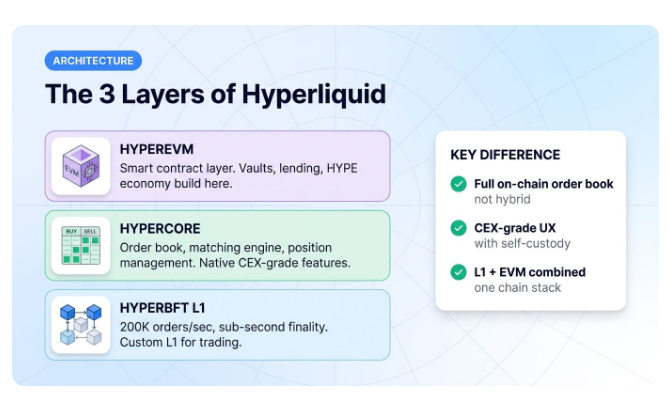
Whereas some other decentralized exchanges are built on already existing blockchains, Hyperliquid was created based on its own dedicated blockchain architecture.
The system includes a proprietary Layer 1 blockchain together with a full on-chain order book that allows traders to perform transactions without losing control over their funds.
Source: Altrady
This platform specializes in providing perpetual future contracts for cryptocurrencies, where traders can bet on price changes without holding any cryptocurrencies themselves.
Users may use leverage, but the higher the size of the positions gets, the less leverage is available.
The Hyperliquid blockchain was created to provide:
- Faster transaction processing
- Reduced transaction fees
- Order matching and transparency in the blockchain
The architecture of the network provides for recording every transaction and order on the blockchain in an openly verifiable trading platform.
Important Events in Hyperliquid Development
| Year | Development |
| 2020 | Launched a crypto market-making service, which subsequently developed into Hyperliquid |
| 2023 | Hyperliquid mainnet was launched following its closed alpha |
| 2024 | Platform held an airdrop of $1.6 billion of HYPE tokens |
| 2025 | HIP-3 launched permissionless perpetual futures markets |
| 2025 | The USDH stablecoin project chose Native Markets as its development partner |
| 2026 | HIP-4 rolled out outcome and prediction markets |
The platform’s development has been expedited by the collapse of FTX. In the view of its founder, Jeff Yan, the failure of the centralized exchange made people aware of custodial issues and transparency problems; therefore, the decision to concentrate on decentralized trading infrastructure was made.
Hyperliquid Expands Beyond Perpetual Futures
Although perpetual futures continue to be its main offering, Hyperliquid has expanded its markets with the help of major protocol changes.
HIP-3 Introduced Market Creation by Third-Party Builders
Launched in October 2025, HIP-3 enabled third-party builders to create their perpetual futures markets through Hyperliquid’s trading platform. The system gave builders access to the platform’s order books, margin engine, and trading framework.
The platform later reported that HIP-3 markets generated more than $120 billion in volume tied to pre-IPO assets, including contracts linked to companies such as OpenAI, Anthropic, and SpaceX.
HIP-4 Introduction of Prediction Markets
In February 2026, Hyperliquid rolled out HIP-4, a framework for outcome-based markets. The update facilitated trading on contracts that were attached to certain events and not leveraged perpetual positions.
With the upgrade, the users could trade prediction markets and other event-related instruments through the platform.
Trading Grew Beyond Micro Markets
Hyperliquid has been widely used by traders in 2026 for getting exposure to non-cryptocurrency assets. More trades were conducted through perpetual futures based on oil in the context of the geopolitical rivalry between the US and Iran.
HYPE Token and USDH Became Core Components
HYPE token is the native token of Hyperliquid. The token has various applications, such as governance participation and incentive distribution.
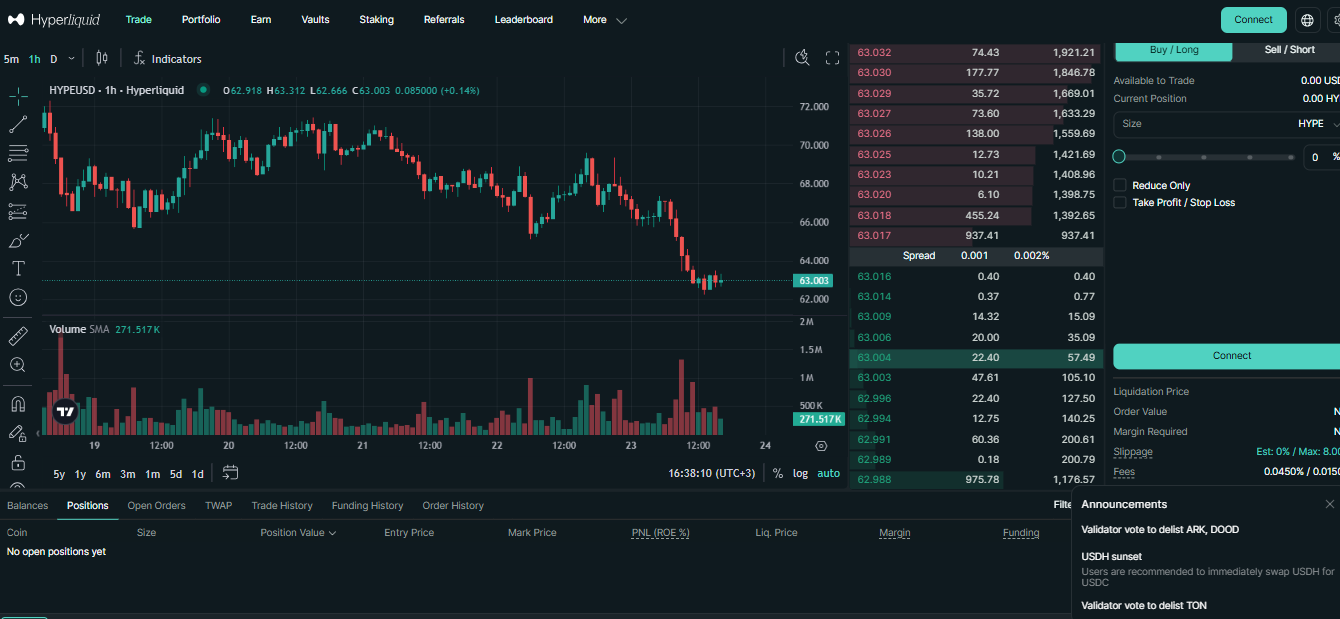
Hyperliquid also diversified into stablecoins by introducing the stablecoin USDH, which was introduced in September 2025 following the selection of Native Markets for the creation of an offering compatible with Hyperliquid.
Source: Hyperliquid
Based on the information obtained, the stablecoin attained a market capitalization of about $21.4 million with a supply of around 21.4 million tokens. It employs a revenue-sharing model whereby the reserve yields are directed toward ecosystem development and the HYPE Assistance Fund.
Operational and Regulatory Obstacles
Even as the platform has grown, it has been exposed to various regulatory and operational obstacles.
As reported by the media in December 2024, North Korean hackers have been studying the platform in order to look for any weaknesses it may have. Not long after that, Hyperliquid encountered a situation related to the liquidation of a meme coin on Solana.
The platform also received regulatory attention in May 2026 when the United Kingdom’s Financial Conduct Authority stated that Hyperliquid and the Hyper Foundation were not authorized to offer or promote financial services within the country.
Separately, the Hyperliquid Policy Center joined industry participants in challenging proposed U.S. anti-money laundering requirements related to stablecoin issuers under the GENIUS Act.
They maintained that regulatory bodies must make the distinction between the activities of primary issuances and secondary market transactions carried out through decentralized networks.
Interest from Institutions Remains
The interest shown by institutions towards Hyperliquid intensified in 2026. Asset management firms applied for the listing of ETFs tied to HYPE, as executives of conventional financial organizations talked about the trading system of the platform.
At the same time, Hyperliquid kept growing into other markets, which include equities, commodities, real-world assets, and pre-IPO trading.
According to the latest data, the platform was one of the biggest decentralized finance chains in terms of value locked and the leading decentralized exchanges in terms of trading volume.
The evolution of Hyperliquid can be considered on the basis of how it has progressed from being a market maker company created in 2020 to becoming a blockchain that serves many decentralized finance applications.
With the emergence of new market structures, stablecoin infrastructure, and institutions’ interest in 2026, Hyperliquid remains one of the most interesting projects for decentralized trading.
Conclusion
Hyperliquid has evolved from being a cryptocurrency market maker to becoming one of the prominent decentralized trading platforms using its very own Layer 1 blockchain network.
Since the launch of the mainnet in 2023, Hyperliquid has not only become a platform for perpetual futures but has also ventured into prediction markets, stablecoin protocols, commodities, and even pre-IPO trading. The emergence of HIP-3, HIP-4, HYPE token, and USDH has expanded the features of the network and, at the same time, brought more users into the system.
FAQs
What is Hyperliquid?
Hyperliquid is an exchange platform that utilizes its own Layer 1 blockchain network. This exchange network deals with trading activities using the perpetual futures model and makes use of the on-chain order book.
What is the use of the HYPE token?
The HYPE token is the native token of the Hyperliquid system. It has many purposes, ranging from governance to ecosystem incentives and other network-related and protocol development activities.
What is USDH?
USDH is the Hyperliquid-aligned stable coin which was introduced in September 2025. It is a result of the collaboration with Native markets and comes with a revenue-sharing model based on reserves.