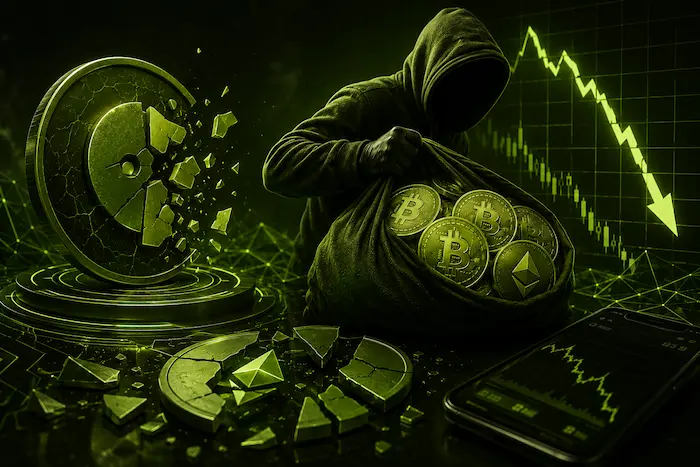
The rug pull scam has always been among the worst and most destructive ways of defrauding people in the world of cryptocurrencies. They typically occur when project developers withdraw liquidity from projects, exploit loopholes in smart contracts, or abandon the project after it has attracted investors.
Although rug pull scams gained popularity during the DeFi boom of 2020, they have continued appearing even in other areas of the crypto sphere. Examples include meme coin scams, initial coin offerings, and even NFT-related projects.
Usually, in these scams, developers present professional websites and social media presence, and even build a community, only for the project to eventually collapse.
Moreover, one of the most well-known is the RKC memecoin, where, in 2025, the developers were accused of stealing money worth more than $600,000, resulting in a decline of over 90% in the price of the coin.
What is a Rug Pull?
A rug pull is a crypto scam where the developer pulls out liquidity in a project, cheats investors by using the contract in the process, and leaves after obtaining their money. The result of this scam is a significant fall in the price of tokens since it becomes hard for people to sell them.
Differing from traditional scams in investment, rug pulls are conducted in decentralized networks where anyone can issue their coin without regulations. Therefore, the project may attract some investors and disappear with their investments.
Key Features of Rug Pull Scams
- Fast liquidity extraction from trading pools
- Hidden operations inside smart contracts
- Anonymous creators who have never been seen before
- No third-party security audits performed
- High reliance on social media promotional strategies
- Total radio silence on every aspect of the venture
Main Rug Pull Scams
There are three types of rug pulls, but some might practice several methods.
- Liquidity Pool Rug Pulls
Liquidity pools are designed to enable trading of tokens on decentralized platforms through direct interaction between parties. In this case, developers retain ownership of LP tokens and subsequently withdraw liquidity from the pool.
This includes among other things, the following steps:
- Launching the new token along with a famous cryptocurrency like ETH or USDT.
- Buyers invest in the new token to create liquidity.
- Extracting the created liquidity by the developers.
- An unfavorable market situation causes a huge drop in token prices.
Rug pull scams occur in a short while after the token launch, especially when there is no liquidity lock-up.
Source: UEEx
- Manipulating Smart Contracts
The rug pulls may be integrated within the code of the particular project. Having certain concealed functions, developers would be able to engage in manipulative operations that cannot be spotted by investors.
Some examples are:
- Creating an endless supply of tokens
- Preventing token holders from selling their tokens
- Honeypot functionality, which would enable buying but prevent selling tokens
- Malicious approval functions
Without conducting any analysis of smart contracts and getting an audit, it is difficult to spot such practices.
- Social Rug Pulls
However, not all rug pulls exploit technical vulnerabilities. Instead, social rug pulls exploit human weaknesses within a particular community and market engagement.
The projects may attract large online audiences, spread information about the upcoming release, and encourage people to invest in the projects via social media platforms. After raising enough funds, developers may leave the project, destroy all communication channels, and halt all activities.
Comparison of Key Types of Rug Pulls
| Rug Pull Type | Approach Used | Consequence |
| Liquidity Withdrawal | Liquidation from trading pools | Prompt fall in value |
| Smart Contract Manipulation | Manipulated code | Impossibility for investors to access their funds or the devaluation |
| Social Rug Pull | Fraudulent activity | Abandonment of the project by developers |
Warning Signs Related to Rug Pull Schemes
A number of signs could help an investor recognize higher levels of risk before investing.
Anonymous Development Teams
Although anonymity is prevalent in the cryptosphere, anonymity about the people behind a project could pose accountability issues if concerns arise.
No Smart Contract Audit
Security audits play a key role in determining vulnerabilities, bugs in the code, and malicious functions.
Unlockable Liquidity
The liquidity, which is controlled by the developers, can always be unlocked. Many successful projects use liquidity-locking schemes or vesting schedules to gain greater visibility.
Fanciful Claims
Any projects claiming guarantees, huge profits, or any partnership that cannot be confirmed need to be further investigated. Any claims related to insurance or partnerships need to be independently confirmed whenever possible.
Risk Mitigation Measures for Investors
While there is no way to mitigate risks entirely, there are certain actions that investors can undertake while assessing crypto projects.
Independent research
Going through project documents, token distribution, transactions, and development details may prove helpful prior to making investments.
Some of the sources which investors may consider using include:
- Whitepapers
- Blockchain explorers
- Token distribution
- Transaction history
Projects that freeze funds through third-party systems ensure increased transparency on accessibility and withdrawal limits.
Audit Reports Review
One can check audit reports to find any vulnerabilities or unusual conditions in a contract. Additionally, one can confirm the validity and relevance of the audit for the most recent contract version.
Utilize Reputable Launch Platforms
Some launch platforms have a screening process and review projects before they go public. This is not an absolute way of eliminating risks but may offer some extra analysis of a project than an entirely free token launch.
Conclusion
The threat posed by rug pulls continues to remain relevant in the world of cryptocurrencies. Rug pulls can happen due to liquidity drain, hidden features of smart contracts, or the creators abandoning the project after raising capital. For example, the failure of the RKC memecoin in 2025 revealed just how fast losses could be incurred in the presence of developer control over important project elements.
FAQs
What is a rug pull in crypto?
A rug pull is a scam technique where either the developers take all the liquidity, misuse the smart contract features, or just leave the project and make people lose their funds.
What is a honeypot token?
Honeypot tokens are used to allow users to purchase tokens but hinder their ability to sell them.
Are all anonymous cryptocurrency projects fraudulent?
No, but it becomes hard to be accountable if there are any issues because of the nature of the team.