
Phishing attacks are among the leading forms of cyber threats targeting internet users worldwide. These attacks enable criminals to obtain personal information such as passwords, bank account details, cryptocurrency wallet credentials, and other sensitive data.
According to the Federal Bureau of Investigation (FBI), phishing scams involve emails, text messages, or websites that impersonate legitimate entities and attempt to obtain victims’ sensitive information.
How Phishing Works
In general, phishing attacks are carried out through several common stages. Attackers create emails that appear to come from a trusted institution, organization, government agency, payment provider, or even someone the recipient knows. These emails typically use language designed to create a sense of urgency.
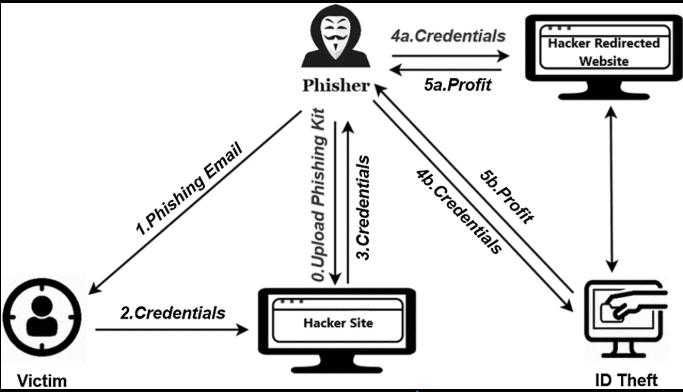
How Phishing Happens | Source: Bing X
The recipient might be informed that:
- Their account has been suspended
- There is an issue with a payment
- Credentials need to be verified
- Suspicious activity has been detected on their account
- Immediate action is required
The email usually contains a link or an attachment. Clicking the link may redirect the victim to a fraudulent website designed to mimic a legitimate one.
In other cases, malware may be installed on the victim’s device. Any information entered on these fake websites can then be collected and misused by cybercriminals.
Types of Phishing Techniques
Cybercriminals use several phishing techniques.
| Phishing Type | Type |
| Email Phishing | Fraudulent emails that trick victims into revealing personal information by clicking malicious links or downloading harmful attachments. |
| Spear | Phishing attacks that target specific individuals or organizations. |
| Smishing | Phishing conducted through text messages. |
| Vishing | This refers to phishing attacks carried out through phone calls. |
| Clone Phishing | A phishing method in which legitimate emails are copied and modified to include malicious links or attachments. |
| Whaling | A specialized form of spear phishing that targets executives and senior decision-makers. |
| Pharming | Redirects users to fraudulent websites through DNS manipulation. |
| Email Spoofing | This is a phishing attack that involves emails disguised to appear as if they come from a trusted source. |
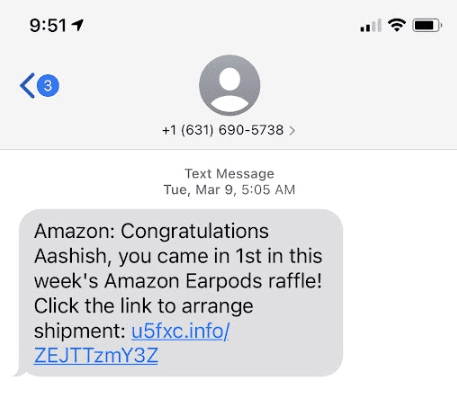
SMS Phishing | Source: Bing X
Other phishing methods include redirects to malicious websites, typo squatting, online advertising scams, watering hole attacks, malware-based phishing attacks, and social media impersonation scams.
Signs of Possible Phishing Scam
Detecting phishing messages is an important part of preventing cybercrime. Several warning signs may indicate a phishing attempt
These signs include:
- Requests for passwords or personal information
- Unexpected messages regarding transactions
- Suspicious website links
- Generic or public email addresses claiming to represent organizations
- Spelling and grammatical errors
- Messages that create urgency and demand immediate action
- Unfamiliar or suspicious sender addresses
Users should also verify website addresses before entering any credentials. Phishing websites often use domain names that closely resemble legitimate ones to deceive users.
Phishing Attacks and Digital Payment Services
According to a report from the Anti-Phishing Working Group (APWG), digital payment services remain among the industries most frequently targeted by phishing scams, with attackers attempting to steal account credentials through impersonation.
These scams often redirect victims to fake login pages where sensitive information can be collected.
Similarly, customers of banks and other financial institutions are frequently targeted. Fraudulent messages may claim that there is a security issue, suspicious transaction, or restriction on an account that requires immediate attention.
Corporate-focused phishing attacks have also become increasingly sophisticated. Some cybercriminals impersonate executives or company representatives and attempt to convince employees to transfer funds or approve fraudulent vendor payments
Phishing Dangers in the Cryptocurrency Market
The cryptocurrency industry has become a major target for phishing attacks because of the high value of digital assets.
Common forms of cryptocurrency-related phishing attacks include:
- Fake cryptocurrency exchange websites
- Fraudulent cryptocurrency wallet services
- Impersonation of blockchain projects
- Token giveaway scams
- Fake customer support representatives
- Requests for wallet seed phrases
In some cases, cybercriminals create applications that appear to be related to cryptocurrency but are actually designed to monitor user activity or collect personal information.
Phishing attacks in the cryptocurrency sector are often carried out through social media platforms and messaging applications. Scammers frequently impersonate project founders, influencers, or well-known industry figures to deceive victims, hack networks, and steal digital assets.
Methods for Minimizing the Threat of Phishing Attacks
Both individuals and organizations can take steps to reduce their exposure to phishing attacks.
These measures include:
- Visiting websites directly instead of clicking links in unsolicited messages
- Verifying communications through official channels
- Using antivirus and anti-spam software
- Enabling two-factor authentication (2FA)
- Keeping software and security programs up to date
- Educating family members and employees about phishing risks
Organizations can also implement email authentication protocols such as DKIM and DMARC to help verify legitimate emails and reduce malicious email activity.
Conclusion
Phishing remains a major cybersecurity threat across both traditional financial services and the cryptocurrency industry. Cybercriminals continue to use emails, text messages, phone calls, fraudulent websites, and impersonation tactics to obtain sensitive information from victims.
Remaining vigilant, verifying communications, and following cybersecurity best practices can significantly reduce the risk of becoming a phishing victim.
FAQs
How does a phishing attack work?
A phishing attack is a form of fraud in which scammers impersonate trusted individuals or organizations to trick victims into revealing sensitive information.
What is the most common phishing technique?
Email phishing remains the most common form of phishing and typically involves malicious links, fraudulent login pages, or harmful attachments.
How does phishing affect the crypto industry?
Cybercriminals target the cryptocurrency industry through phishing attacks involving fake exchanges, fraudulent wallets, giveaway scams, impersonation schemes, and requests for wallet seed phrases.