

Staking platforms in 2026 are increasingly divided between consumer services and institutional infrastructure. Ethereum staking reached 40.2 million ETH, or 33% of supply, by July 23, according to Bitwise, while Solana’s staking ratio reached 68%. Staking Rewards tracks more than 120 assets and 90 verified providers.
The market now includes centralized exchanges, liquid-staking protocols and infrastructure providers, with differences in supported assets, custody, liquidity, fees, validator operations and reward structures.
Staking platforms cover distinct market segments
The ranking uses supplied data on assets, liquidity, custody, infrastructure and staking functionality.
| Platform | Focus | Supplied data |
| Lido | Ethereum liquid staking | ~$18B TVL; 9.36M ETH; ~62.5% share; ~2.2% APY |
| Coinbase | Centralized staking | Six assets; ETH ~1.73% APY |
| Kraken | Flexible and bonded staking | Up to 21% for certain assets |
| Binance | Staking and liquid staking | WBETH and BNSOL |
| Rocket Pool | Ethereum liquid staking | ~$1B TVL; 528,000+ ETH |
| StakeWise | Ethereum staking | ~$710M TVL; 377,000+ ETH |
| Figment | Institutional staking | $15B+ staked; 99.8% ETH participation |
| Anchorage Digital | Institutional custody | ETH, SOL, APT, SUI and others |
| Kiln | Institutional infrastructure | $18B+ assets staked |
| Gemini | Retail staking | Up to 7% APR |
Lido holds the largest position among the listed Ethereum liquid-staking services. DefiLlama records about $18 billion in TVL and 9.36 million ETH, representing roughly 62.5% of Ethereum’s liquid-staking market. Its displayed supply APY is around 2.2%. Users receive stETH, which can be traded or used in supported DeFi applications.
However, DeFiLlama records about $1 billion in TVL and more than 528,000 ETH, with displayed supply APY around 2.2%. StakeWise has about $710 million in TVL and more than 377,000 ETH associated with its V2 system.
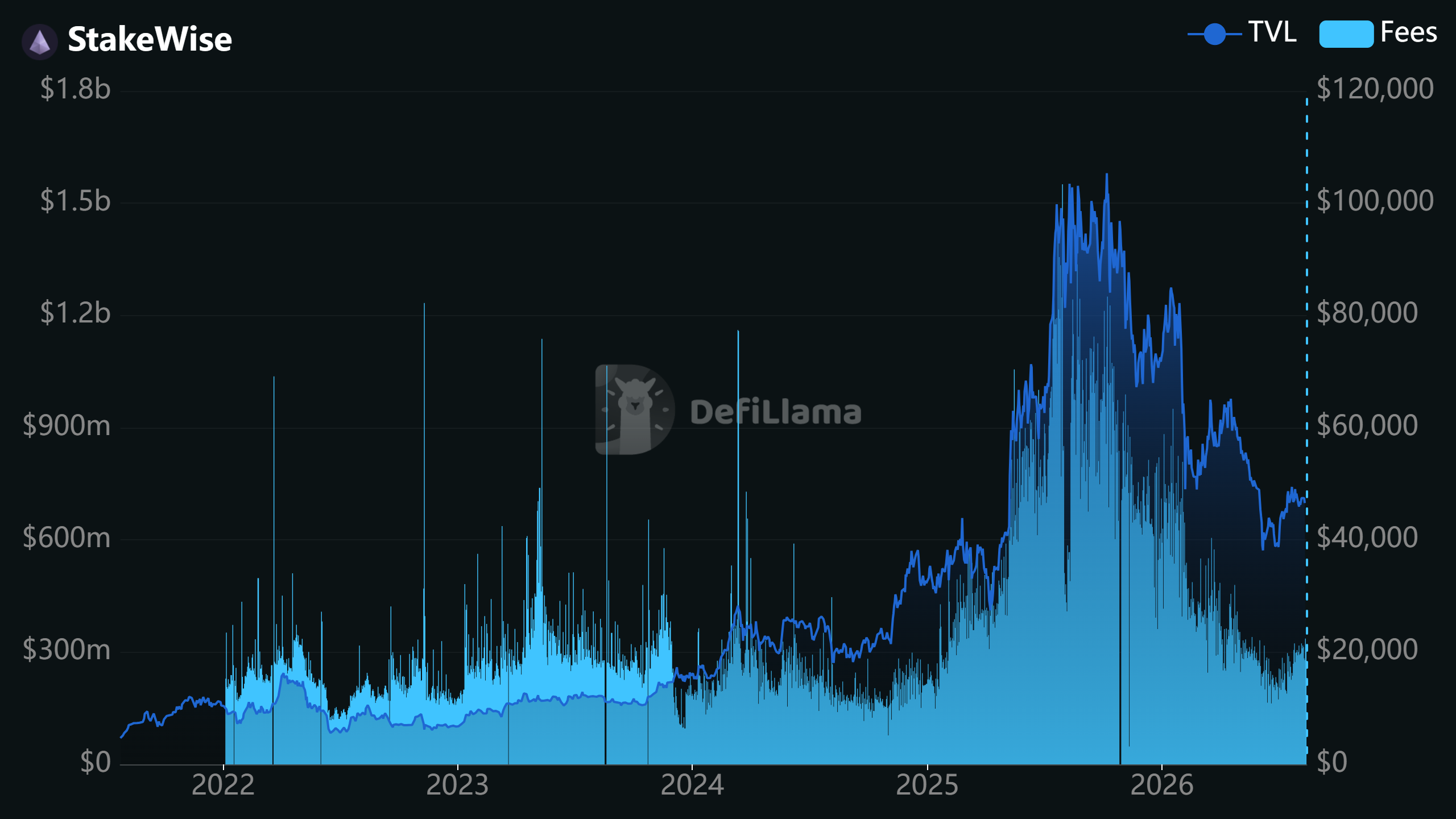
Source: DefiLIama
Centralized staking services emphasize accessibility
Coinbase lists ETH, SOL, ADA, AVAX, ATOM and XTZ. Displayed rates range from about 1.40% for ADA to 13.28% for ATOM, with ETH at approximately 1.73%.
Kraken provides flexible and bonded staking; the rewards are mostly paid out on a weekly basis. Rates reach 21% for certain assets, while flexible staking and Auto Earn carry a 30% commission.
Binance offers ETH and SOL liquid staking through WBETH and BNSOL. Binance.US separately lists staking for ETH, SOL, BNB, ADA, HBAR, TRX, HYPE, INJ and ATOM. Gemini advertises rewards of up to 7% APR and monthly distributions.
Institutional providers expand the staking market
Figment reports more than $15 billion in staked value and a 99.8% Ethereum validator participation rate.
Morgan Stanley Investment Management selected Figment for Ether and Solana exchange-traded products that began trading July 28 and were designed to pass an anticipated 95% of rewards to shareholders.
Anchorage Digital offers staking within its institutional custody environment and supports Ethereum, Solana, Aptos and Sui.
Kiln reported more than $18 billion in assets staked through its infrastructure in its January 7, 2026 review of 2025. It reported no Ethereum validator slashing during 2025.
Staking yields depend on more than advertised rates
Staking platforms display different returns because rewards depend on network conditions, validator performance, commissions, operating fees, and other factors.
Kraken’s May 19, 2026 research estimated major proof-of-stake networks generally produced about 3% to 15% APR during 2026.
Coinbase bases its APYs on recent staking rewards after its commission, while Lido describes its rate as an estimate. DefiLlama data places major Ethereum liquid-staking yields around 2% to 3%. Token price movements also affect the value of staking rewards.
Regulation and taxes remain part of the framework
The SEC’s Division of Corporation Finance said on May 29, 2025, that certain protocol-staking activities involving covered crypto assets did not constitute securities offers or sales under federal securities laws.
The SEC addressed certain liquid-staking activities on Aug. 5, 2025. On March 17, 2026, it issued a broader interpretation covering protocol staking, effective March 23.
According to the Internal Revenue Service Revenue Ruling 2023-14, staking rewards are included in gross income when the taxpayer has dominion and control over it.
Important factors
- There is a variation in custody and validator risks across the above-mentioned platforms.
- Fees and unbonding periods can affect realized rewards.
- Liquid-staking tokens introduce smart-contract and liquidity considerations.
Conclusion
The 2026 staking market spans centralized exchanges, Ethereum liquid staking, and institutional infrastructure. The supplied data shows different custody, liquidity, and operational models as Ethereum staking reaches 33% of supply.
FAQs
What are staking platforms?
They are services or protocols that provide access to proof-of-stake rewards through delegation, liquid staking or validator infrastructure.
Which listed platform has the largest Ethereum liquid-staking position?
Lido, with about 9.36 million ETH and roughly 62.5% of Ethereum’s liquid-staking market in the supplied DefiLlama data.
Are staking rewards fixed?
No. Staking rewards vary depending on the conditions and fees.