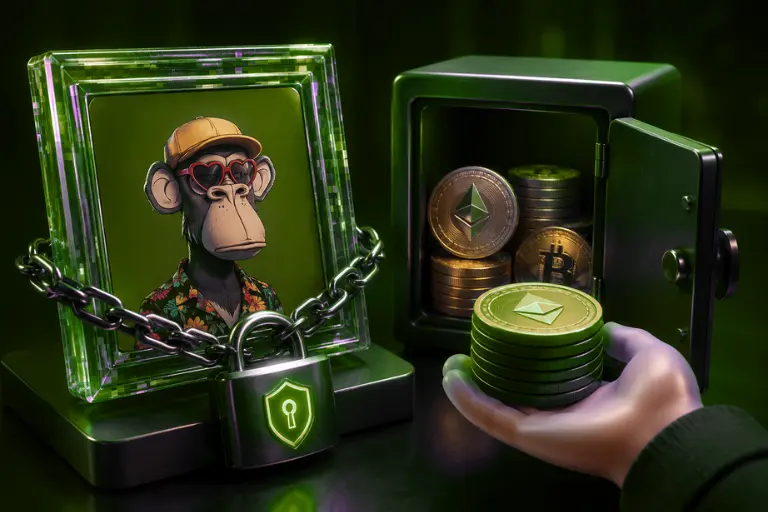
Blockchain networks were created as standalone systems, each system keeping its own ledger, assets, and transaction rules. Consequently, Bitcoin, Ethereum, and other blockchain networks cannot trade in their native cryptocurrencies among each other without any additional technology.
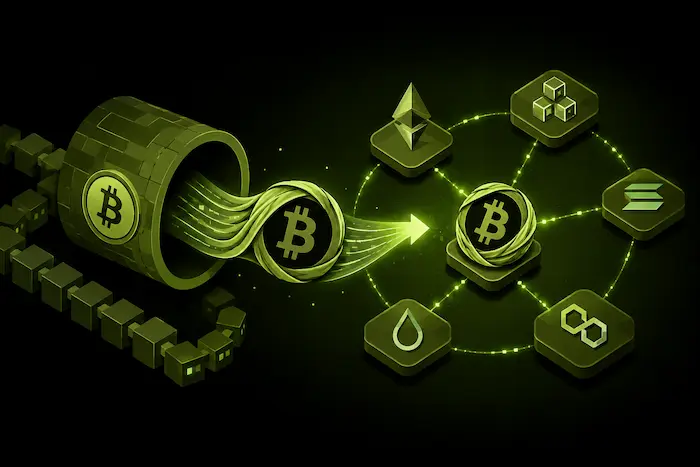
To facilitate such transactions, wrapped tokens have emerged. They serve as blockchain tokenized versions of cryptocurrencies that keep the same value as the underlying assets but exist on another blockchain.
By implementing minting and burning algorithms based on locked reserves, these tokens enable assets to take part in decentralized finance (DeFi), decentralized exchanges, and cross-chain solutions without transferring the ownership of the underlying asset.
Despite the ongoing progress in developing technologies of blockchain interoperability, wrapped tokens continue to be one of the most popular ways of connecting blockchain ecosystems with a one-to-one ratio with the underlying asset.
Wrapped Tokens Enable Blockchain Interoperability
Wrapped tokens are cryptocurrency-based digital assets represented on blockchains other than the blockchain on which the original cryptocurrency is native. In other words, each wrapped token is guaranteed by the equal amount of the original cryptocurrency and thus represents a 1:1 ratio between the two assets.
One good example of such a wrapped token is Wrapped Bitcoin (WBTC). Bitcoin is a cryptocurrency running on its own blockchain, while WBTC is an ERC-20 token that runs on Ethereum and also on Tron blockchains. In other words, one WBTC is guaranteed by one Bitcoin kept as reserves for it. Thus, holders of Bitcoin can use Ethereum applications without selling their BTC.
Another widely spread token is Wrapped Ether (WETH). Ether is the native asset of the Ethereum blockchain; however, it does not comply with the ERC-20 token standard, unlike many decentralized apps. Therefore, WETH is required to turn Ether into an ERC-20 token.
How the Minting and Burning Process Works
Wrapped tokens are issued in a systematic manner via the combination of the initial cryptocurrency and the wrapped version of it.
The initial cryptocurrency is deposited using a custodian or decentralized protocol, and it is kept reserved there. After successful verification, the exact same number of wrapped tokens is created on another blockchain network.
When a user wishes to obtain the initial cryptocurrency back, the wrapped tokens get burnt and are taken out of circulation. Once the burn gets validated, the reserved initial cryptocurrency is released to the user.
Such a process of creating and destroying wrapped tokens provides a guarantee that all the wrapped tokens available at any time are backed by the same number of initial cryptocurrencies. The term can also be defined as the wrapping and unwrapping of the initial cryptocurrency.
Main Functions of Wrapped Tokens
Wrapped tokens enable the use cases of cryptocurrencies in many other blockchain environments.
Main functions include:
- Using decentralized finance applications through tokens that originate from a different blockchain environment.
- Liquidity increase through availability of cryptocurrencies on other blockchains besides their own.
- Enabling cross-chain transfers without the need to exchange the initial tokens.
This makes it possible for these assets to take part in lending platforms, decentralized exchanges, staking services, and liquidity pools on other blockchains where initially they could not be used.
Wrapped Asset Examples
Many wrapped assets have been established in the cryptocurrency ecosystem.
They include:
- Wrapped Bitcoin (WBTC): A representation of Bitcoin on Ethereum and any other compatible blockchains where its backing is pegged with BTC at par.
- Wrapped Ether (WETH): An Ethereum asset that transforms Ether into an ERC-20-compliant asset for deployment in Ethereum-based decentralized applications.
DOGE, BNB, and SOL wrapped tokens: Allow the cryptocurrencies to work within compatible blockchain ecosystems via wrapped tokens equivalent to these cryptos.
Security Concerns for Wrapped Tokens
Whereas wrapped tokens offer better interoperability, the system that supports them brings about further security concerns.
Some wrapped tokens are based on the idea of a custodian holding the real cryptocurrency as reserves behind the wrapped token. In order for the value of the wrapped token to be preserved, these reserves need to be maintained consistently.
Others are based on the process involving smart contracts and blockchain bridges that lock, mint, burn, and distribute tokens. In the recent past, cross-chain bridges have been associated with a number of security issues.
These advancements have led to the increased need to enhance bridge security and lessen dependency on intermediary organizations.
Interoperability Remains an Area for Improvement
The blockchain technology community continues to develop interoperability solutions aimed at making it easier to move assets between different blockchains.
The recent developments include work on decentralized bridge infrastructure and cross-chain communication protocols that do not require centralized custodians and that increase transaction speed. Bridge hubs have also become one way to minimize the increasing number of connections between blockchains created as new blockchains emerge.
With the development of real-world asset tokens, the significance of interoperability technologies, which would allow transferring value between various blockchain ecosystems, has become even more critical.
Key Takeaways
- Wrapped tokens have a 1-to-1 ratio regarding the value of the cryptocurrency held in the locked reserve fund.
- Wrapped tokens remain backed by the cryptocurrency backing them through the process of minting and burning.
- Cross-chain transactions and interoperability are often made possible through the development of interoperability technologies.
FAQs
What are wrapped tokens?
Wrapped tokens represent cryptocurrencies that are issued on one blockchain but are made to work on another blockchain and maintain the value of the underlying asset at the same time.
How is the value of wrapped tokens ensured?
Wrapped tokens are minted first, as the original cryptocurrency serves as collateral. The original cryptocurrency becomes available after the wrapped tokens are burnt.
Why wrap tokens?
Wrapped tokens are necessary when there is a possibility for cryptocurrencies to be used on a blockchain where they cannot work normally.