
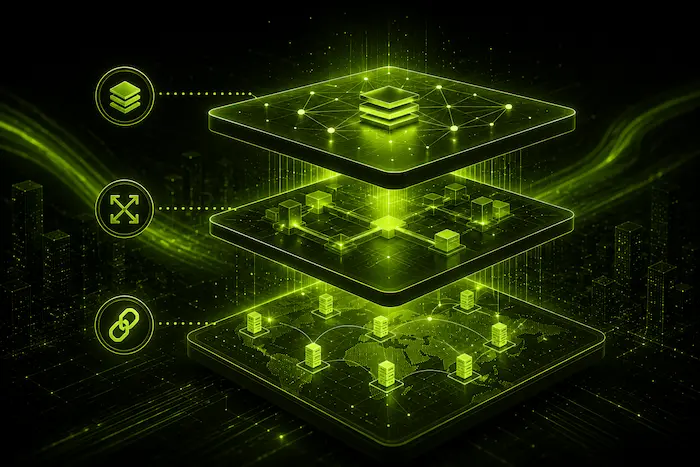
Blockchain Infrastructure is evolving quickly because blockchain programmers are now searching for ways to increase the performance of blockchain in terms of the existing network.
Earlier developments had been centered on security and faster transactions, but currently, all developments are about the construction of infrastructure for certain applications. This way, every layer of development meets the requirements of some specific technology, while the rest of the blockchain remains unchanged.
Layer 3 Networks are considered to be the latest level in this layered concept. They use the scalable solutions provided by the second layer and build a separate infrastructure for DApps by taking help from Layer 1 blockchains for security purposes and Layer 2 networks for efficient transactions. Layer 3 networks do not try to replace the layers below them and focus only on application-specific solutions and environment building.
Layer 3 Networks on Top of Other Layers
Blockchain infrastructure is based on several layers, each of which has its own specific role. Layer 1 blockchains like Ethereum and Bitcoin form the base layer that has transaction validation, consensus, and security features.
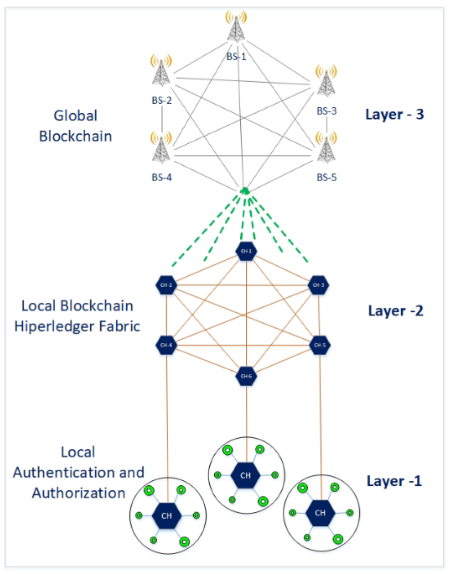
Source: mdpi
The Layer 2 technologies like Arbitrum, Optimism, and Blast were suggested to help with scalability. These transactions would be batched or performed off-chain and recorded on Layer 1 as final transactions. In contrast, Layer 3 networks have better infrastructure than Layer 2 as far as application-based services are concerned.
Layer 3 networks offer infrastructure for decentralized apps, interoperability, privacy features, identity management, gaming infrastructure, among others.
Functions of Layer 3 Networks
- Enable Decentralized Apps by providing specific application environments.
- Increase the interoperability of blockchain systems.
- Ease interaction of users via application-based architecture.
How Transactions Move Across the Blockchain Stack
The transactions are processed by layer 3 apps, after which they pass on the transactions to Layer 2 in a bundle form. From there, Layer 2 transfers final transaction data to Layer 1 for settlement and security.
The benefit of such architecture is that developers do not need to deal with security issues because there are security protocols implemented within lower layers of blockchains. In other words, since Layer 3 does not provide security for the whole blockchain network, applications can be built without repeating the infrastructure.
Application-Specific Architecture
As opposed to Layer 2, which is dedicated to blockchain scalability, Layer 3 Networks have application-specific architecture.
Developers have the opportunity to build their own customized decentralized applications via smart contracts and to do that on a higher level while avoiding the scalability and cost issues related to the lower levels of blockchains. The fact that Layer 3 is usually dedicated to certain applications allows for optimization without affecting the entire blockchain.
Furthermore, the architecture enables account abstraction, making the interaction with the blockchain easier due to reduced numbers of steps in performing actions with decentralized applications.
Layer Comparison
| Blockchain Layer | Primary Role | Examples |
| Layer 1 | Security, consensus, transaction | BTC, Ethereum |
| Layer 2 | Scalability and efficiency | Arbitrum, Optimism, Blast |
| Layer 3 | Application infrastructure, interoperability, specialized services | Degen Chain, Xai, Orbs |
Layer 3 Networks Enhance Cross-Chain Operations
One of the major goals of Layer 3 Networks is interoperability. Blockchain networks usually work independently from each other, thus leading to difficulties when it comes to the transfer of assets and interaction with applications on various networks.
These networks are created to simplify this process by allowing interactions between different blockchain networks while still using Layer 2 solutions. The added layer also serves as an abstraction over the blockchain operations and allows applications to have a more seamless user experience while preserving Layer 1 security.
Application Areas
- Platforms used for gaming applications that require high transactional speeds and low latency.
- Applications of decentralized finance that include lending, trading, and derivatives.
- Applications of enterprise, identities, and metaverses that require tailored blockchain ecosystems.
Layer 3 Implementations
There are many blockchain projects which currently utilize Layer 3 architecture.
For instance, Degen Chain can be considered a Layer 3 platform that targets application-specific tasks by using Arbitrum Orbit and running on Base, which is Ethereum’s Layer 2 platform. Xai is another example of a Layer 3 platform used for gaming applications.
Other examples would be the Orbs layer that adds functionality to the smart contract via a decentralized backend system, as well as Starknet appchains and Orbit chains that offer developers customized blockchain platforms for their application.
Layer 3 Network Challenges
Layer 3 Networks still have some technical issues that need to be overcome. Standards for interoperability still need to be established in order to ensure communication between all blockchain systems.
Moreover, the inclusion of an additional blockchain layer means increased complexity in terms of security, as all infrastructure components have to be secured from possible risks. Another problem is related to the adoption by developers since the creation of Layer 3 applications requires understanding of modular blockchain structure, scaling solutions, and inter-blockchain interaction.
Conclusion
Layer 3 Networks are the new infrastructure layers based on Layer 2 blockchain solutions. As opposed to the existing blockchain structure, they expand the architecture with support for decentralized applications, interoperability, and application-specific services.
The architecture designates the security layer as Layer 1, the scalability as Layer 2, and the advanced application functionality as Layer 3. Among other examples of existing projects based on the Layer 3 Network structure are Degen Chain, Xai, Orbs, Starknet appchains, and Orbit chains.
Frequently Asked Questions
What are Layer 3 Networks?
Layer 3 Networks are blockchains which have been created over Layer 2 networks to deliver application-based services.
How does Layer 3 Networks differ from Layer 2?
Layer 2 networks mostly concentrate on improving transaction efficiency, whereas Layer 3 networks are more concerned about application-specific functionalities.
Which Blockchain Projects implement the Layer 3 technology?
Degen Chain, Xai, Orbs, Starknet appchains and Orbit Chains are some of the examples of blockchain projects that implement the Layer 3 network technology as per the source.