
US inflation figures released recently have brought the money supply back to the forefront of crypto market considerations ahead of the Fed meeting from September 15-16.
The CPI figure for August indicated that the annual rate of inflation was 3.4%, while the PPI rose to 5.4% year-over-year. These factors will affect perceptions of interest rates, Treasuries, and liquidity, which may in turn affect Bitcoin and cryptocurrencies in general.
August CPI Keeps Inflation Above the Fed’s Target
The statistics published by the Bureau of Labor Statistics in the United States stated that the headline CPI grew by 0.4% in August compared to the previous month. The core CPI, which excludes energy and food components, has risen by 0.3% in August and by 2.4% on an annual basis.
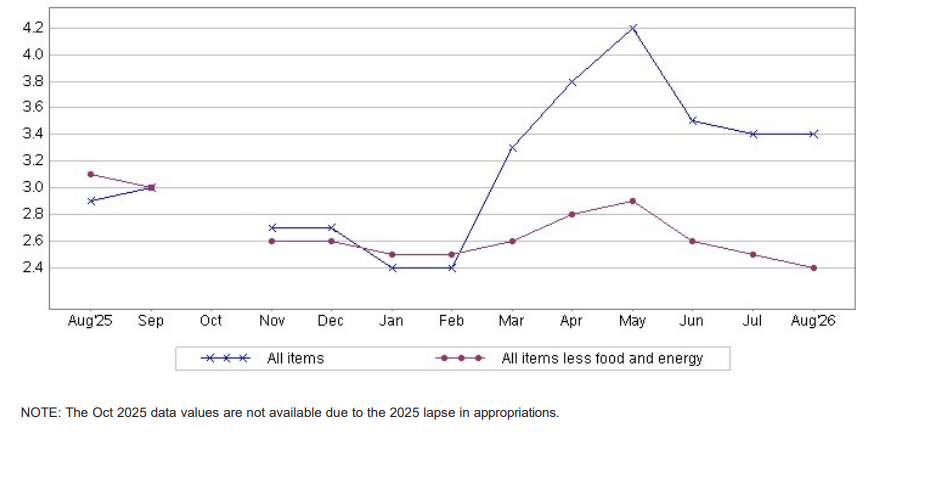
Source: U.S. Bureau of Labor Statistics
The energy component of the CPI has contributed significantly to the rise in the CPI in August. The prices of gasoline have grown by 3.9% in August and contributed more than a third of the total increase in CPI in that month, according to BLS stats.
The distinction between core and headline inflation becomes significant when assessing the sustainability of inflationary pressures. Growth in CPI, partially driven by higher energy prices, does not necessarily mean an acceleration in consumer price growth.
In regard to the crypto market, both measures can influence investors’ expectations because the Fed considers different measures of the economy while setting monetary policy. Changes in those expectations can influence the market sentiment before the FOMC decision.
Why Inflation Data Moves Crypto Markets Through Rates
The movement of crypto markets due to inflation data is directly related to interest-rate projections. Traders who foresee that higher interest rates will persist for a while might see borrowing costs rise and asset opportunity costs increase as well.
Moreover, the market tends to act before the Federal Reserve’s rate announcement. This is because the economic data informs investors of what interest rates are likely to be in the future.
The FedWatch Tool from CME Group provides a clear example of how this happens, as probabilities of future FOMC decisions are derived from federal funds futures prices. Thus, an inflation report can affect the market before policymakers announce a new policy.
The market’s reaction also depends on what investors expected from the report prior to its release. A higher-than-expected inflation reading will cause a reaction different from that to an identical reading if investors had already accounted for it in interest rate pricing.
PPI Adds Another Inflation Signal
Another indicator for market consideration ahead of the CPI numbers is the PPI report released on September 10. The Bureau of Labor Statistics reported that final-demand PPI rose 0.4 percent in August, with the index up 5.4 percent from the previous year.
The Producer Price Index tracks price changes for domestic producers and provides information on price pressures across the supply chain. This index does not affect future CPI or Fed policy readings, but investors can evaluate it alongside consumer inflation and other economic indicators.
According to Reuters, on September 10, expectations of a Fed interest rate hike have grown since the release of the PPI.
August Inflation Data at a Glance
| Measure | August Monthly Change | Annual Change |
| Headline CPI | 0.4% | 3.4% |
| Core CPI | 0.3% | 2.4% |
| Final-demand PPI | 0.4% | 5.4% |
| Gasoline CPI | 3.9% | — |
Liquidity Links Inflation and Crypto
Expectations about interest rates might affect cryptocurrency prices due to the overall financial situation. Interest rates can raise yields on cash and bonds, whereas interest-rate expectations can affect the attractiveness of risk assets.
According to Coinbase Institutional’s analysis published on May 15, higher CPI and PPI figures reduced expectations of an easier liquidity-driven move in crypto. Furthermore, it was mentioned that Bitcoin has proven its resilience, which is related to some structural demands of ETFs and treasuries.
This example shows that macroeconomic indicators do not operate independently of other factors affecting cryptocurrencies. There can be other influencing factors, such as ETF flows, leverage, regulation, network activity, and institutional participation.
Thus, there are multiple steps in the connection between inflation and cryptocurrencies. CPI and PPI can affect expectations; expectations can affect interest rates; interest rate expectations can affect yields, liquidity, and risks.
What the September Fed Meeting Means for Markets
Inflation numbers for September came out right ahead of the Fed’s September 15-16 meeting. On September 11, Reuters noted that the 0.3% increase in the core CPI reading and the 3.4% rise in headline inflation had increased the likelihood of tighter monetary policy.
According to CME Group, as reported on September 15, FedWatch indicated a 92% chance of a rate increase, while Bitcoin was hovering around $75,000, as shown in the market snapshot.
However, the policy action itself would not be the only factor driving the market. With the outcome already priced in, further actions will rely on the Federal Reserve’s guidance and projections.
The upcoming meeting is scheduled to conclude on September 16, with the policy statement and economic projections to be released at 2 p.m. Eastern Time.
FAQs
What did August CPI show?
The August headline CPI showed that it increased by 0.4% month-to-month and 3.4% year-over-year. The core CPI rose by 0.3% month-to-month and 2.4% year-over-year.
What was revealed in the August PPI?
The final demand PPI increased by 0.4% in August and rose 5.4% from a year ago.
When was the September Federal Reserve meeting?
The Federal Reserve’s September 15–16 meeting was scheduled to conclude on September 16, with the policy statement and economic projections due at 2 p.m. Eastern Time.