
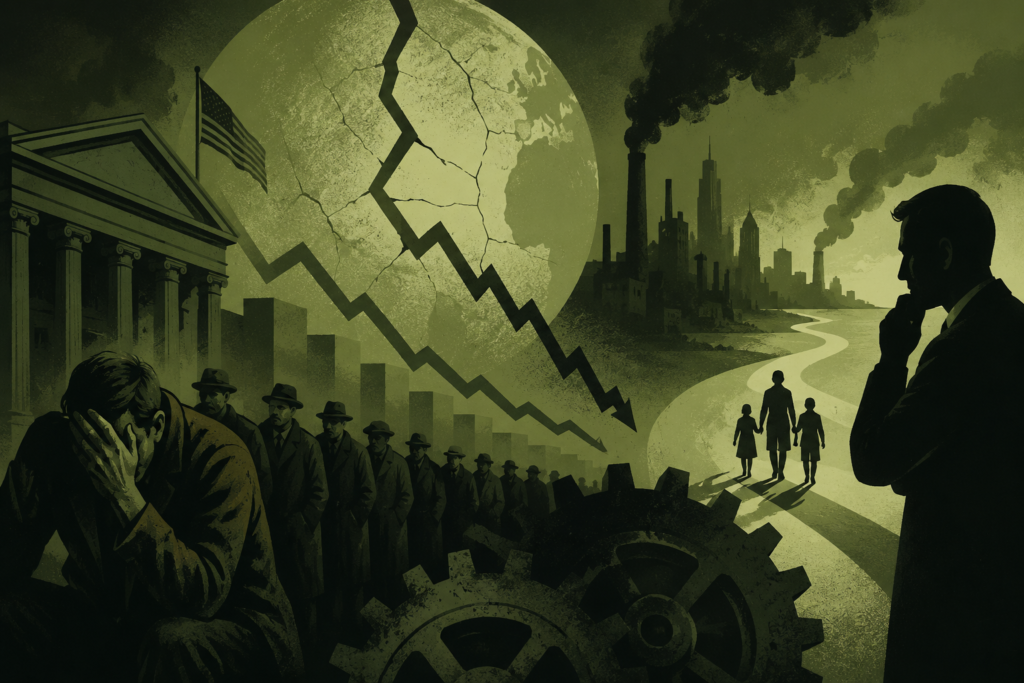
The Great Depression was the most severe economic depression in history. It started from the US stock market crash in 1929 and continued until the late 1930s. Some of the consequences of the depression included unemployment, bankruptcy, reduction in incomes, and others.
In spite of the fact that the economic collapse originated in the US, its effects started being felt in Europe, Latin America, and other parts of the world as well. Moreover, it affected all sectors, including governments, businesses, and households.
The Great Depression is one of the most examined economic events due to its great importance for economics and finance.
What Caused the Great Depression?
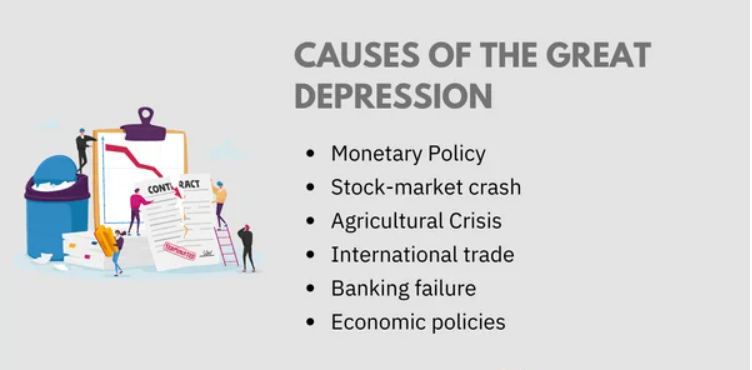
Most economic historians agree that there were many reasons for the economic crisis rather than only one.
Crash of the Stock Market in 1929
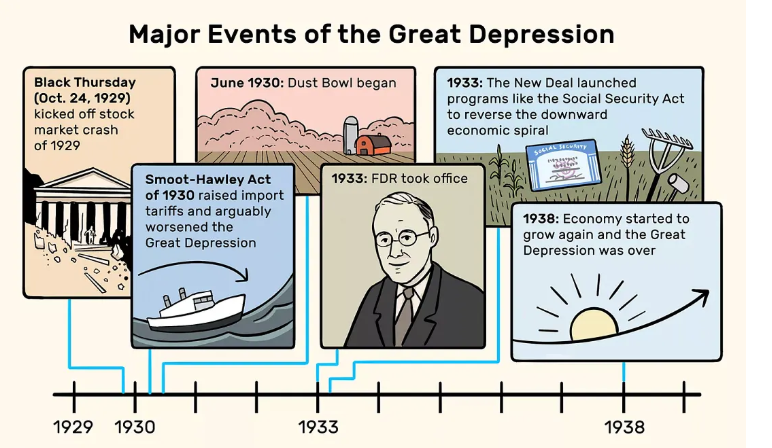
The Great Depression came after the crash of the U.S. stock market in October 1929. The prices for stocks increased significantly in the 1920s, and everyone wanted to buy them since they thought that their price would continue to grow.
However, when investor confidence began to falter, stock prices suddenly fell, and they continued to decline, especially on Black Thursday and Black Tuesday.
Failures of the Banking System
The economic problems grew worse as banks faced greater difficulties. Banks had made high-risk investments and granted risky loans. The panic surrounding banks’ failures caused people to withdraw money from their accounts.
Thousands of banks failed due to these issues. Since deposit insurance was not available for all deposits, many people lost money that they had been saving for years. Lending was reduced because of this problem.
Decrease in Consumer Spending and Investments
The rise in unemployment led consumers to spend less. The decline in consumer demand forced firms to lay off workers, further worsening joblessness. Such actions prolonged the period of economic depression.
Source: Meduim
Decrease in International Business
This economic problem became a global issue due to a decline in international trade. Various tariffs and restrictions were imposed on trade to protect domestic businesses from foreign competition.
For example, the Smoot-Hawley Tariff Act that came into effect in 1930 in the United States is one of the best examples of government intervention.
Key Components Leading to Economic Collapse
| Components | Economic Effect |
| Crash of Stock Markets | Losses due to a decrease in wealth and investments |
| Bank Crashes | Small deposits and low loans |
| Less Consumer Spending | Lesser consumer goods spending |
| Fewer Investments | Difficulties in businesses growth |
| Trade Restrictions | Decline in international business |
Impact of Great Depression and Its Effect on Society
The Great Depression affected virtually everything around us. Economic depression resulted in major difficulties for various social groups.
Unemployment Increased
The unemployment rate reached record highs in several nations. The unemployment rate in America was estimated at 25% of the workforce when the Depression was at its peak.
Effects of unemployment include the following:
- Decrease in family earnings
- Increasing need for assistance from government aid programs
- Trouble finding jobs
- Financial insecurity among families
- Poverty and Housing Issues
Housing issues became a problem due to income losses among families.
Narratives at this time include:
- Homelessness was rising
- Greater demand for help
- Long queues for food
- Difficulties in getting the basics
- Impact on agriculture
Additionally, farmers were also experiencing financial hardship due to low prices in the agriculture sector and environmental challenges.
Source: Boycewire
Dust Bowl, a term used to describe times of drought and dust storms across the United States, was a period that made life tougher for farmers since they needed to migrate from their farms in search of work.
Business Closure
Businesses belonging to several sectors witnessed decreased sales. Whether it was a small business or a large corporation, all faced financial difficulties owing to reduced demand for their products or services.
Production cuts affected several other aspects such as logistics, economy, and employment within many sectors.
Government Reaction to the Crisis
Governments responded to the crisis with several policies geared towards restoring stability and boosting recovery.
In America, for instance, President Franklin D. Roosevelt launched the New Deal program that was made up of a series of programs designed to help people financially and provide employment.
Some of them included:
- Public works intended to create job opportunities
- Reforms in banks to build confidence in the banking system
- Financial regulation
- Social service expansion
Other nations also took steps to curb the financial crisis and revive their economies.
Recovery and Economic Changes
Economic recovery from the Great Depression was gradual and came about through several means. Economic improvement was driven by interventions, reforms, and industries.
Higher production and employment figures resulted from the outbreak of the Second World War as well. There were several aspects through which the causes and effects of the Great
Depression affected future economic policy-making:
- Deposit insurance systems have been established.
- There was more control over banks.
- Securities were regulated.
- Social safety nets have been developed.
- More government intervention during depressions.
The study of economists and policymakers has never stopped in an effort to learn how to protect financial systems against such shocks.
Conclusion
The Great Depression was the worst economic recession of the modern era, impacting millions of people worldwide. Lack of money in the stock market, failure of banks, reduced spending by consumers, and reduced economic activities around the globe were some of the factors that resulted in the Great Depression. The challenges experienced during and after the Great Depression resulted in unemployment and poverty, among other issues.
FAQ
What caused the Great Depression?
It was caused by many different reasons like the stock market crash in 1929, bank failure, reduction in consumer demand, and international trade volume.
What was the effect of the Great Depression on unemployment?
It was very high because about one-fourth of the labour force in the United States was unemployed during that period.
What is meant by the New Deal?
The New Deal means various programs launched by President Franklin D. Roosevelt aimed at fostering economic development.
Why do we study the Great Depression?
This happened as a result of which many things like financial policies, banking regulations, and governmental policies changed, continuing to affect us up to today.