
Many stock market crashes have occurred in history that have had a big impact on the markets and even resulted in changes to be made in regulatory measures. One of such stock market crashes was known as Black Monday.
Black Monday occurred on October 19, 1987, when the Dow Jones Industrial Average (DJIA) fell by roughly 22% in one trading day. The crash of the stock market led to huge losses in the stock markets all around the world and made evident the issues with the existing trading techniques.
Until now, the effects of Black Monday have shaped today’s financial markets and their approach to dealing with market volatility and risks. This incident pointed out the flaws in the market system infrastructure, pointed out the importance of electronic trading, and eventually brought about new measures that aimed at curbing any kind of panic selling.
What Is Black Monday?
Black Monday is the name given to the day, October 19, 1987, on which the DJIA dropped by more than 22% on a single day. This was a period marked by losses incurred before this date, indicating a decline in investor confidence.
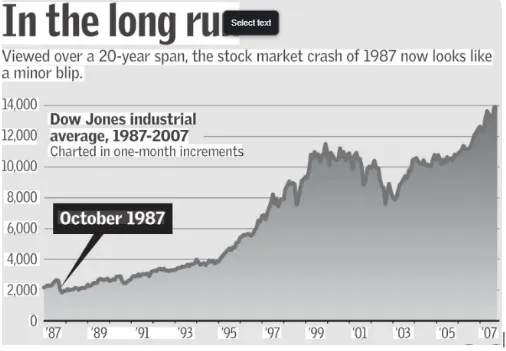
Source: The Mercury News
Trading became hectic, and even the computers in use could not keep up. According to historical accounts, several unfilled trades were open for hours while the transfer of large funds was delayed.
By October 31st, 1987, most major stock indexes had experienced significant declines. Among them, Hong Kong registered one of the biggest, recording a loss of about 45.5%. Despite the popular notion that Black Monday is synonymous with 1987, the term has been used several times to refer to other market downturns that occurred in a single trading day.
What Caused Black Monday?
No single event triggered the Black Monday crash. Instead, several factors created uncertainty, thereby increasing selling pressure.
One important reason was that computerized trading systems were being used more widely. The stock markets were shifting towards computerization rather than the traditional form of trading during the 1980s. Through these computerized systems, huge amounts of shares could be traded very quickly.
As prices fell, additional sell orders emerged, accelerating the decline. Another contributing factor was the market sentiment, as people were quick to sell their shares as prices were falling. Other contributing factors during that time included problems with the U.S. trade deficit, international relations, and excessive media attention on weak markets.
Timeline of Major Crashes on Stock Markets
Many crashes have occurred within the stock markets over time.
| Occurrence | Year | Main Factor |
| Wall Street Crash | 1929 | Paved the way for the Great Depression |
| Black Monday | 1987 | DJIA tumbled over 22% on a single day |
| Global Financial Crisis | 2008 | Came after the US housing market crash |
| COVID-19 Market Crash | 2020 | Panicked by pandemic uncertainties |
| Market Crash Due to Tariffs | 2025 | S&P 500 fell nearly 6% on April 4th |
The crash of 1929 is one of the most economically significant crashes due to its association with the Great Depression.
In the year 2008, stock markets saw a sharp fall amid the bursting of the housing bubble in the United States, along with other disruptions in the financial markets.
The cryptocurrency Markets have seen substantial drops during the month of March 2020 due to the effects of COVID-19 on the economy. During the month of April 2025, stock markets have experienced volatility due to the imposition of new tariffs.
On April 4, the S&P 500 has fallen by about 6%, but it did not qualify as a Level 1 circuit breaker.
What Is the Process Involved in Stock Market Circuit Breakers?
As one of the major outcomes of the Black Monday market crash, stock circuit breakers were introduced. They were instituted by the exchanges after the crash with permission from the SEC to mitigate the consequences of wild market fluctuations.
Circuit breakers stop trading if certain losses are incurred in a single trading session.
Thresholds for today’s S&P 500 circuit breakers are as follows:
- Level 1: Trading is halted for 15 minutes once losses exceed 7%
- Level 2: Another 15-minute halt occurs after losses exceed 13%
- Level 3: Trading ends for the rest of the day if losses exceed 20%
The role of such mechanisms is to give investors some extra time to make a proper evaluation of the situation when there are too many sellers in the market.
Some market analysts and academic researchers claim that knowledge about certain market thresholds may affect traders’ actions at such levels. Despite such critiques, circuit breakers still play a very important role in modern market regulations.
What Investors Can Learn From Stock Market Crashes
Black Monday shows traders how fast things happen in the market when there is uncertainty. Past events have shown that panic selling can lead to sharp drops in the prices of securities once the price starts falling. In light of this fact, risk management is a critical factor for all market participants.
Most financial consultants suggest portfolio diversification, risk-based sizing of positions, and well-established plans on entry and exit from the market.
Performance statistics for the S&P 500 Index and U.S market indexes suggest that stock markets have managed to bounce back from earlier crashes experienced in 1987, 2008, and 2020. Nonetheless, the period required for such recoveries varied based on the conditions prevailing at that time.
Significance of Black Monday
Black Monday has been considered one of the most crucial days in the history of finance because it altered the way in which regulatory measures, market practices, and investments were managed by all the concerned parties.
The event highlighted the speed and severity with which market crashes could spread throughout the world and revealed any weaknesses in the trading mechanisms in place back then.
The implementation of circuit breakers after the crash is still having an impact on the market today. Thus, Black Monday has continued to be an important topic for studying market crashes and investor behavior.
Conclusion
The Crash of Black Monday still stands out as one of the most defining events within the realm of modern finance. The crash that occurred in October of 1987 showed just how fast the selling pressure could spread between the interconnected markets as well as the shortcomings in the trading system that was employed at the time.
FAQs
Was Black Monday worse than the 1929 crash?
Black Monday produced a larger single-day percentage decline in the DJIA, while the 1929 crash was followed by the Great Depression.
What caused the occurrence of Black Monday?
The market crash was due to several factors, including computer trading, the pressure exerted on investors to sell out, and the state of the economy.
Was there any circuit breaker during Black Monday?
No. The circuit breaker system did not exist before 1987.