Key Insights:
- The two leading players in the trend are Hyperliquid and Pump.fun, accounting for almost 90% of the tracked 2026 repurchases.
- While it’s possible to buyback gains, Jupiter, Chainlink and Helium are giving mixed results.
- As investors seek more economic value, crypto projects are increasingly associating tokens with revenue.
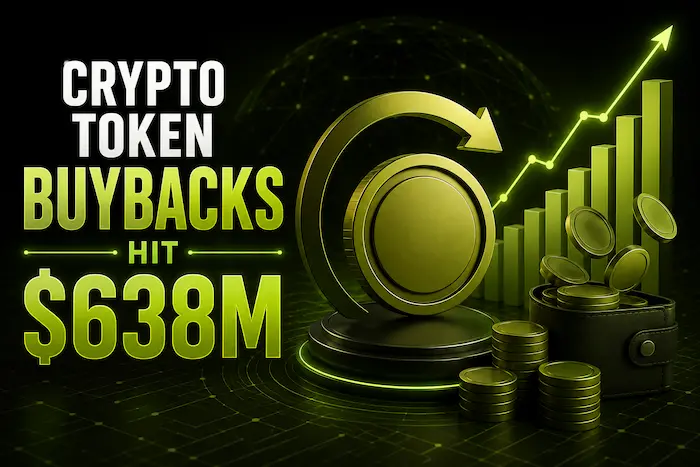
As of August 31, crypto token buybacks have picked up to approximately $638 million, which is a significant increase from the previous years.The surge shows more digital asset projects using revenue to support native tokens during a difficult market.
Allium Labs data cited by the Financial Times shows a 17% increase from $545 million during 2025. The figure also dwarfs the $366,000 recorded across the whole of 2024. However, the growth remains highly concentrated. Hyperliquid and Pump.fun account for almost 90% of tracked repurchases this year.
Hyperliquid Sets the Pace
Hyperliquid has emerged as the strongest force behind the buyback trend. The derivatives platform directs 99% of eligible trading fees toward purchases of HYPE.
The protocol routes those fees through its Assistance Fund. It then uses the funds to buy HYPE automatically. Hyperliquid permanently burns the purchased tokens. That process further decreases the supply of tokens, and establishes a clear link between platform activity and token scarcity.
Since launching in December 2024, the protocol has acquired and destroyed approximately $1.3 billion worth of HYPE tokens. The overall number includes a longer time period than the industry number for 2026.
HYPE traded near $63.35 on August 31. According to Financial Times the token increased by approximately 70% over the year. That’s reinforced the case for revenue-based repurchases. However, HYPE’s performance can also be influenced by the market demand and the increased activity in the platforms.
Pump.fun Expands the Buyback Race
Pump.fun has become another major participant through its PUMP token programme. The platform generates revenue through its launchpad, PumpSwap exchange and trading services. Its current mechanism directs 50% of designated revenue toward PUMP purchases. The project then burns the acquired tokens through a locked smart contract.
During the week ending August 9, Pump.fun spent about $5.02 million buying and burning 2.15 billion PUMP. Then, the program had offset roughly 15.7% of the token’s first supply. Yet buybacks face a counterforce from token unlocks. Pump.fun distributed about $86.49 million in vested PUMP to team and investor wallets in July.
Those distributions increase the amount of transferable supply. Therefore, repurchases and unlocks can push token economics in opposite directions. The broader market also remains weak. Bitcoin has been trading below its all-time highs while a few big altcoins have seen bigger drops.
Sky and Lido Take Different Paths
Sky Protocol has also applied some excess revenue to developing their native token, Sky’s. According to Allium data, Sky invested approximately $26 million in 2026 in the repurchasing of SKY.
The protocol’s Smart Burn Engine is designed to buy SKY on the market with the surplus funds. The governance has altered the mechanism by adjusting the size of purchases and interval of transactions.
Buybacks, according to Sky co-founder Rune Christensen, can help get the participants of the governance aligned with the long-term performance of the protocol. SKY holders are involved in the decisions affecting the network.
Lido has taken a more cautious stance. Its proposed NEST framework would activate buybacks after annualized revenue exceeds $40 million. The framework would direct half of revenue above that threshold toward LDO purchases. It would also impose a $50,000 daily limit and a $10 million annual cap.
Those parameters remain governance proposals rather than guaranteed spending commitments. LDO has fallen sharply over the past year despite expectations surrounding the programme.
The buybacks take on a fundamental test
As the use of crypto token buybacks increases, the trend has become more of an adoption of revenue-based token economics. Investors are now expected to make sure there is a direct correlation between network activity and token value.
Still, repurchases alone cannot guarantee stronger prices. Jupiter provides a clear example after spending nearly $14 million on JUP buybacks this year. Despite those purchases, JUP has fallen about 55% over the past year. Chainlink has faced a similar disconnect, with LINK losing roughly half its value despite buyback activity.
Helium offers an even stronger warning. The project stopped its buyback programme in February after concluding that the market showed little response. Industry researchers therefore remain cautious about the strategy. Allium research head Elton Shehdula has argued that buybacks can signal confidence and reduce supply.
However, he has also questioned whether repurchases alone can produce meaningful long-term price gains. Investors increasingly examine revenue, token emissions, unlock schedules and actual network demand.
Conclusion
Crypto token buybacks have moved from a niche strategy toward a growing part of digital asset economics. The sharp increase in spending shows that protocols increasingly want to return revenue through their native assets.
Hyperliquid’s results provide the strongest case for the model, while Jupiter, Chainlink and Helium highlight its limitations. In the end, it is sustainable demand that will make or break buybacks as a source of value creation.
The next step is to see if the projects can sustain repurchases in times of reduced revenues. The result may help shape the future of token buybacks in decentralized finance, making them a permanent or temporary play to appease the markets.