key Insights
- Users automatically make cash back into investment assets after purchases.
- The program is based on dollar-cost averaging by spending regularly on cards.
- Tokenized equities open up U.S. market access without the need for a brokerage account.
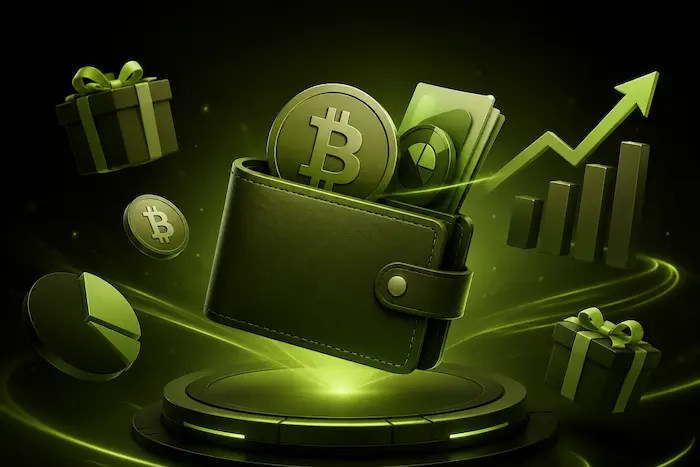
Bitget Wallet has introduced Assetback, a new rewards program that converts eligible card cashback into Bitcoin, tokenized gold, tokenized U.S. stocks, exchange-traded funds, or stablecoins instead of cash. The feature will launch globally on Aug. 1, allowing eligible Bitget Wallet Card users in more than 50 markets to automatically build investment positions through everyday spending.
The rollout reflects growing competition among crypto payment providers seeking to replace traditional cashback programs with digital assets. Instead of redeeming points or fiat rewards, users can pre-select an investment asset before making purchases, while qualifying cashback converts automatically after each eligible transaction.
Everyday payments become recurring investments
The Bitget Wallet Card operates across Visa and Mastercard networks and supports spending in Europe, Asia, Latin America, and expanding African markets. The company said users can select one of seven reward assets before making purchases.
Assetback is the new cashback.
Refract your daily spend into bitcoin, gold, tokenized stocks & more.
Choose your Assetback on 1 Aug. pic.twitter.com/biQE63BNui
— Bitget Wallet 🩵 (@BitgetWallet) July 30, 2026
Available options include Bitcoin, Tether Gold, tokenized Nvidia, Tesla, and Alphabet shares, an S&P 500-linked investment product, and USDC. Stock and ETF rewards use xStocks, whose blockchain-based tokens represent securities held in custody.
Eligible cardholders receive a 2% base cashback rate. New users and customers meeting monthly spending requirements can unlock a temporary 3% reward tier that remains active during the qualifying month and the following month.
Users may change their preferred reward asset once each month. Rewards become redeemable seven days after the underlying purchase, while non-USDC rewards require accumulated rewards worth at least one USDC before transfer.
However, the advertised cashback does not apply to every transaction. Merchant-category exclusions, monthly reward caps, risk reviews, and reversed or refunded payments remain ineligible under the program. The company also replaced its previous zero-fee rewards model, meaning regional fees and conversion charges may still apply.
Key launch metrics
Category Details
Launch date Aug. 1, 2026
Base cashback 2%
Maximum cashback Up to 3% for eligible users
Reward assets BTC, XAUT, Nvidia, Tesla, Alphabet, S&P 500 product, USDC
Availability More than 50 markets
Payment networks Visa and Mastercard
Digital assets move deeper into consumer finance
The company said Assetback applies dollar-cost averaging to routine purchases by converting cashback into recurring investments instead of cash rebates.
Chief Operating Officer Alvin Kan said reward programs have distributed cash or points for decades because alternatives lacked supporting infrastructure. He argued that tokenization now allows users to accumulate fractional ownership of Bitcoin, commodities, and equities through normal spending habits.
Kan also said tokenized real-world assets are expanding beyond institutional trading into consumer finance. According to the company, automated investing through payment rewards could lower barriers for users who face limited or expensive access to global investment markets.
Tokenized stocks, however, are not quite the same as owning regular shares. The rights, redemption procedures, investor protections and trading access all depend on the issuing platform, custody arrangements and local rules. Requirements differ by jurisdiction.
The company previously integrated more than 130 xStocks products into its self-custodial wallet, extending access to tokenized equities alongside cryptocurrencies and stablecoins.
Industry momentum continues building
The Bitget Wallet announcement arrives as crypto payment cards continue recording stronger transaction volumes across the sector.
According to company figures, monthly crypto card payment volume reached $656 million in May 2026, compared with $271 million one year earlier. Total cumulative payment volume has also exceeded $7.8 billion.
The company added that spending through its payment card nearly tripled during the first half of 2026. It also said its wallet now serves more than 100 million users worldwide.
Although Assetback introduces automated investment rewards, returns remain tied to market performance rather than guaranteed income. Rewards may be credited to Bitcoin, tokenized gold and equity-linked products that can climb or fall after the receipt of the rewards.
The overall competitive situation
The Bitget Wallet launch echoes the ongoing evolution in the digital finance space, where payment providers are increasingly tying everyday transactions to investment products, instead of traditional cashback.
Furthermore, the launch could potentially raise the awareness of tokenized real-world assets among the existing retail rewards users. It will be more clear from the Aug. 1 launch when the cashback will be redeemed and the users participate in the program whether consumers will prefer the asset-based program or the cashback.