Imagine you are sending cryptocurrencies to your friend without copying the randomly generated blockchain wallet address composed of random characters.
All you have to do is enter a shortened domain name that makes things easier for you, just like emails or visiting any website.
All these have now been made possible thanks to Ethereum Name Service, a decentralized domain system.
The network utilizes the Ethereum blockchain technology and links up decentralized apps, NFT marketplaces, blockchain sites, and identities through a blockchain name system. Each domain name takes the form of a non-fungible token (NFT), and this allows owners full control over their blockchain identities without the help of any central registry.
What Is Ethereum Name Service?
Ethereum Name Service is a decentralized system of domain name resolution in which domains get mapped to blockchain addresses and different kinds of information.
ENS acts as the same sort of tool as DNS, the conventional Domain Name System that translates website names into internet protocol addresses, except for the fact that ENS links up .eth names to Ethereum wallets and other blockchain data.
Every ENS domain is stored as an NFT on the Ethereum network, which means that whoever owns it has full ownership over it.
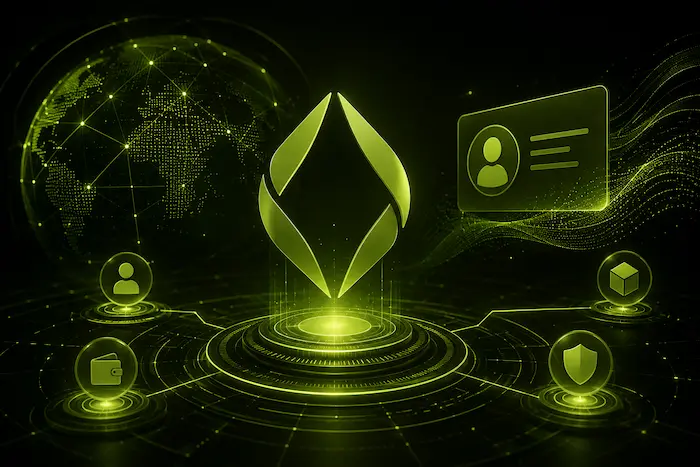
Owners of domain names are able to link one ENS name to different resources such as Ethereum wallets, wallets on other blockchain networks, decentralized web pages, email addresses, social media profiles, avatar pictures, and any other identity-related data. In this way, one domain can be used as an identity for several Web3 services.
Key Features of ENS
- Uses short .eth domains instead of long wallet addresses.
- One domain can be connected to several blockchain wallets and online identities.
- Full owner control over domains with NFT ownership.
Ethereum Name Service Runs via Ethereum Smart Contracts
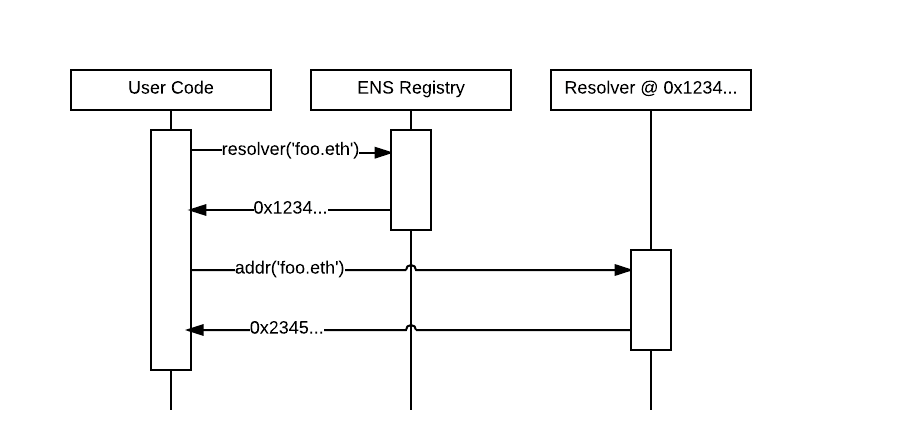
ENS works on Ethereum smart contracts, not central servers. As can be seen from the given information, the system mainly consists of two smart contracts, namely, the ENS Registry and the Resolver.
The ENS Registry holds domain and subdomain records along with the information regarding ownership and links to the Resolver smart contract. While the Resolver does the job of translating the readable names into blockchain addresses or linked resources.
Source: CoinGecko
This service also uses the same hierarchical system as DNS, wherein owners of the domains have the ability to form subdomains within a single domain name, enabling such combinations as wallet. company.eth, support.company.eth, and payments.company.eth to function under the same domain name.
Features of Ethereum Name Service
| Feature | Description |
| Blockchain | Ethereum blockchain |
| Domain Extension | Names with .eth |
| Domain Ownership | Non-fungible tokens-based ownership |
| Main Purpose | Simplification of wallet addresses |
| Management | ENS token and DAO |
| Functionality | Wallets, websites, social media profiles, emails, avatars |
| Extra Feature | Customized subdomains creation |
Introduction of Ethereum Name Service
According to ENS, the cryptocurrency wallet addresses consist of very long strings of numbers and letters that are difficult to memorize and prone to errors during manual data entry.
As a rule, transactions on the blockchain are irreversible once they are completed, which means that if someone mistakenly sends funds to the wrong address, they can be irretrievably lost.
The solution to this problem is provided by Ethereum Name Service, which enables users to work with blockchain through the use of convenient names rather than copying long strings of characters.
Advantages
- Decreases chances for errors during transactions due to wrong wallet addresses.
- Ensures the same Web3 identity within different decentralized platforms.
- Facilitates the creation of structured subdomains for various companies and organizations.
Governance, Registrations, and Limitations
One of the main components of the ENS system is the governance token – ENS. It gives users the opportunity to participate in upgrading the protocol, managing the treasury, deciding on the prices, and future developments.
As the ENS domain states, the token was introduced in 2021 when creating a decentralized autonomous organization (DAO).
Domain registration occurs via the ENS Manager platform by means of an Ethereum wallet, including MetaMask. Domain registration involves payment in ETH, while users themselves set the duration of the registration and arrange wallet addresses, subdomains, and other connected resources. According to the ENS Domain, domain registration starts at around $5 a year and is paid in ETH.
Moreover, several limitations are mentioned in the data presented. Due to the fact that ENS works on the Ethereum blockchain, higher fees can be expected in cases of network congestion, which results in increased gas fees. Numerous premium domains have already been reserved. Some blockchain platforms also continue using alternative naming systems instead of ENS.
Additionally, ENS integrates with decentralized websites through IPFS and supports linking more than 1,300 traditional domain extensions, including .com, .org, and .edu, to blockchain identities.
Conclusion
Ethereum Name Service provides a decentralized naming framework that replaces complex blockchain wallet addresses with readable .eth names while extending those names into broader Web3 identities.
According to ENS Domain, the system combines NFT-based ownership, Ethereum smart contracts, governance through the ENS token, multi-currency support, decentralized website integration, and hierarchical subdomains within one naming infrastructure.
Frequently Asked Questions
What is Ethereum Name Service?
The Ethereum Name Service is a decentralized name service which enables converting long wallet addresses on the blockchain into a simple and easy-to-understand .eth address.
How can ENS make cryptocurrency transactions easier?
ENS minimizes the chance of users copying complex wallet addresses, which in turn can minimize mistakes while sending cryptocurrencies to other users.
Who owns an ENS domain?
An ENS domain works like an NFT stored on Ethereum, where the owner is responsible for managing, transferring, and selling the domain.