

With the advent of blockchain, a new form of value exchange and information sharing has come about, which doesn’t require any intermediary system. In contrast to traditional finance, blockchain systems should be able to work safely, although users in the network might be strangers to each other and do not necessarily trust each other.
This has been made possible since the protocols of blockchain networks depend upon both mathematical security and financial incentives. Cryptoeconomics is the name given to the field that enables blockchain systems to run in a decentralized fashion without requiring any sort of central authority.
What Is Cryptoeconomics?
Cryptoeconomics can be said to be a field within the realm of computer science in which cryptography and economic motivators are used to develop decentralized networks that are able to run efficiently.
Cryptography ensures that information is secured and also that transactions are verified, while monetary rewards ensure compliance with the protocol for economic reasons.
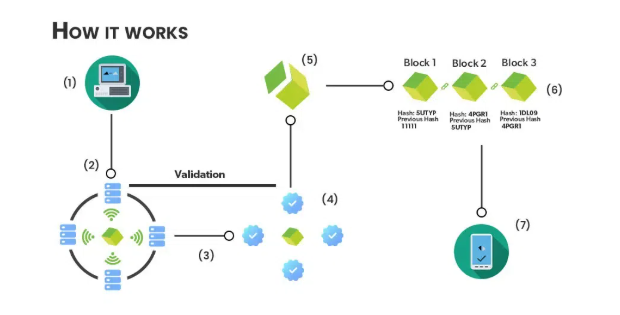
Source: Geeks
Moreover, the major purpose is to address the issue of coordination in decentralized systems. When there is no trusted third party, the parties involved might try to tamper with the information or spend the money multiple times. The role of cryptoeconomic systems in this case is to make sure that the financial cost of attacking the system is higher than its benefits.
Cryptoeconomics and Blockchain Coordination
Financial systems use central organizations for verification and record-keeping. Blockchain networks use cryptographic proofs and incentives for honest transaction verification.
These principles have been designed using the following fundamental ideas:
- Honest behavior earns money.
- Bad behavior incurs financial loss.
- Financial incentives ensure the decentralized system’s security.
Bitcoin Proves the Concept of Cryptoeconomics
Bitcoin was among the first applications that provided one of the most concrete realizations of cryptoeconomics via its proof-of-work consensus algorithm.
Competing miners work on solving complicated mathematical equations to gain the right to confirm a certain block of transactions. The miners that win the competition get new units of bitcoin as well as fees for the transactions contained in the block.
The incentive scheme is designed in such a way that a block will be paid for only if it is recognized by the rest of the network. In case a miner tries to include fraudulent transactions in his block, he does not get any reward but bears all expenses related to hardware and electricity.
The safety of Bitcoin is also ensured by making attacks financially unprofitable. For a member who wishes to rewrite the history of transactions, it will be necessary to have more than half of the computing power in the network, which means that a significant amount of money is needed for such an attack, while the success of this attack will lead to the devaluation of the Bitcoin currency.
How Proof of Stake Works With Another Motivation
Proof-of-Stake networks work on another economic principle while reaching the same goal of security. Instead of acquiring mining hardware, validators stake their cryptocurrencies before performing transaction validation.
The main features of the model are:
- Validators get rewards if they follow the protocol.
- Misbehavior might lead to automatic slashing of their staked tokens.
- Inactivity of validators can lead to penalties as well.
Proof of Stake was implemented by Ethereum after the network transition to it in September 2022. Financial rewards and penalties play an important role in encouraging validators to sustain the integrity of the network without any special hardware.
Cryptoeconomics Outside Consensus Algorithms
The idea of cryptoeconomics transcends the concept of transaction validation. Decentralized finance projects leverage incentives to reward liquidity provision, provide governance rights, and conduct lending operations without a central authority.
The governance tokens give voting rights to token owners, thus the voting process becomes an integral part of the economic mechanism of each particular network.
Moreover, the concept of tokenomics is crucial as well. It deals with token creation, distribution, rewards, usage in a network, and, in certain cases, token burnings. Tokenomics influences participation and sustains the work of networks in the long run.
Another example of cryptoeconomic concepts is the idea of the cryptoeconomic circle described by Joel Monegro, which helps to understand how users, validators, or miners, and investors work in blockchain economies.
Cryptoeconomics In Brief
| Element | Reason | Examples |
| Cryptography | Guarantees secure transactions and validates activity in the network | Digital signatures, transactions confirmation |
| incentives | Incentivize players to adhere to protocol rules | Blockchain mining rewards and validators’ rewards on Ethereum |
| Penalties | Reduces malicious actions by inflicting financial damage | Validator slashing in Proof of Stake |
| Consensus mechanisms | Outlines token minting, circulation and incentivization | Proof of Work and Proof of Stake |
| Tokenomics | Defines token creation, distribution utility, and rewards | Block rewards, staking rewards, tokenomics |
Challenges in Creating Cryptoeconomic Systems
There are a number of challenges that must be solved in order to develop an efficient cryptoeconomy. These challenges are highlighted in the article.
They are as follows:
- Token inflation is causing token devaluation.
- Centralization of the validators group.
- Low level of governance and unsustainable rewards.
- Speculative behavior on the market instead of network functionality.
Networks might change their staking policies, governance structures, or reward schemes in accordance with those problems that arise during the development process.
Conclusion
The notion of cryptoeconomics implies the use of both cryptographic methods and economic incentives in order to build decentralized blockchain networks without the need for central authorities.
Bitcoin relies on such methods using the Proof of Work algorithm, whereas Ethereum uses the Proof of Stake system to incentivize compliance and punish malpractice.
FAQs
What is cryptoeconomics?
Cryptoeconomics combines both cryptography and economics and enables the creation of blockchain systems where honest behavior can be rewarded with money to the honest parties.
How does cryptoeconomics relate to Bitcoin?
With cryptoeconomics, blockchain systems can run efficiently without the intervention of an authority since it is economically beneficial to be honest rather than dishonest.
What is the relationship between cryptoeconomics and Bitcoin?
In Bitcoin, proof-of-work is utilized, and this results in the miners being rewarded for verification of transactions and punished whenever they fail.