Modern supply chain management entails various players ranging from manufacturers to suppliers, distributors, logistic companies, retailers, and customers. The effective coordination of these supply chains is only possible when there is an accurate information flow and communication channels between these parties.
Nevertheless, conventional supply chains are characterized by fragmented information flows, the use of paper documentation, and manual verifications, making it hard to trace products at any given point in time.
The developments, such as the use of blockchain technology, may facilitate this process since they allow for the creation of a digital common ledger through which information concerning transactions can be shared between participants.
Unlike the use of separate databases maintained by different organizations, blockchain technology provides a means of accessing common information among authorized participants.
What is a Blockchain Supply Chain?
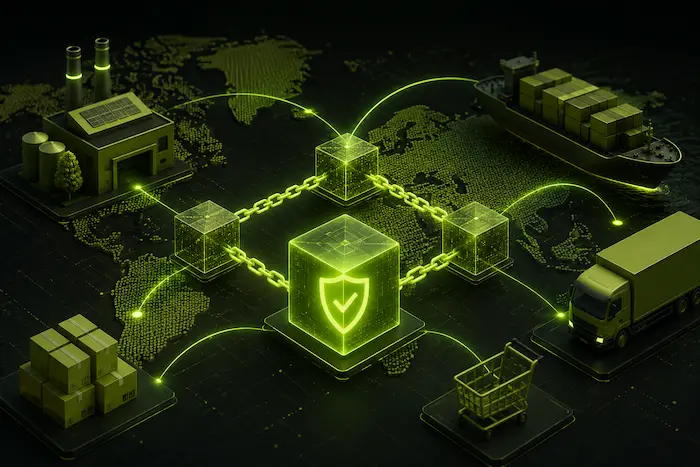
The blockchain supply chain is when blockchain technology is used in recording all the important transactions in the life cycle of the product, from the acquisition of raw materials, through manufacturing, transportation, storage, and even delivery of the product.
The transaction is recorded in a block, which is linked to other blocks. This makes the information stored immutable since it is not easy to alter once the information is stored. Everyone on the network sees the same version of the documentation.
Unlike normal databases operated by a single entity, blockchain stores information among several parties, thereby increasing the security and transparency of the system.
Issues with Normal Supply Chains
Several organizations experience problems during their operations due to the fact that normal supply chain processes occur in a siloed environment.
Some of the major problems include:
- Lack of visibility regarding the flow of goods from the suppliers and logistic companies.
- Manually recording information results in time wastage and costs incurred.
- Introduction of counterfeit goods through loopholes that cannot be identified easily.
- Time wastage in detecting the source of the defective or contaminated goods.
- Miscommunication due to the use of different software applications.
This inefficiency may cause increased costs of operation, late delivery of the products, and loss of customers’ trust.
How Blockchain Improves Transparency and Tracking
One of the best qualities of blockchain is transparency throughout the entire supply chain process.
All activities carried out on each product are recorded using timestamps, location details, transfers in ownership, certifications, and delivery details. All users have access to the same ledger system; thus, companies do not have to sync multiple systems.
Product Tracking in Real Time
With blockchain technology, companies can track products at each stage of transit and storage.
This includes the ability to:
- Track products from manufacturing to delivery.
- Trace the origin of the raw material used in making the products.
- Track the movements of products in the warehouses.
- Detect delays instantly.
- Forecast demand based on accurate data.
This gives companies an edge in making decisions fast and minimizing errors in inventory.
Improved Product Traceability
In case of any safety concern or defects in the products, the companies are able to trace these products to their sources instantly through blockchain technology.
Rather than recalling all products from their shelves, firms can recall only the affected batches to limit costs and safeguard consumers. The ability proves useful, especially for those industries that have safety and compliance standards.
Smart Contracts in Logistics
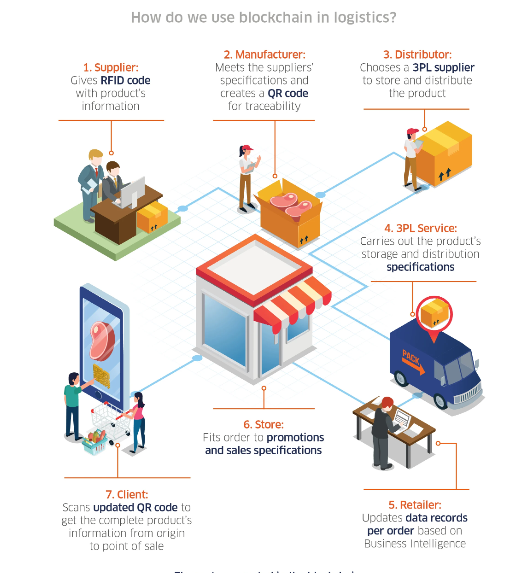
Smart contracts form another benefit introduced by blockchain technology. They are self-executing contracts existing digitally within the blockchain.
Source: Sites
Once certain predetermined conditions are met, smart contracts automatically execute a certain action.
A smart contract may do the following:
- Disburse payment upon delivery of goods.
- The registration of inventory should take place once the products arrive at the warehouse.
- Sending a message to the vendor in case the inventory becomes low.
- Initiate an insurance claim in case of damage while shipping the goods.
- Clear customs papers after submission of the necessary documents.
Since the process is automated, companies will cut down on paperwork, avoid errors, and accelerate supply chain processes.
Industries Adopting Blockchain
There are several industries that have already adopted blockchain for their supply chain processes.
Food industry
Companies in the food industry use blockchain technology to track their products from farm to retail stores.
This will enable them to:
- Check the source of the food.
- Monitor storage conditions.
- Act fast in case of any contamination.
Greater speed of traceability will assist the regulator in investigating food safety issues.
Pharmaceutical Industry
Blockchain is being used by the pharmaceutical industry to counter fake drugs and improve regulatory compliance.
Blockchain allows verification of the following aspects for drugs:
- Authenticity of the drug.
- History of manufacture.
- History of distribution.
- Storage history.
- Expiry history.
All of this assists in decreasing the prevalence of fake drugs.
Luxury Items
The luxury brands are using blockchain technology for authenticating their products.
Customers can verify the following about the products:
- Designer bags.
- Watches.
- Jewelry.
- Fashion.
- Collectibles.
Blockchain-based digital certificates provide protection for brands against counterfeiters and increase buyer trust.
Companies Applying Blockchain to Supply Chain Management
A number of international companies have started using blockchain technology to enhance their supply chain performance.
Walmart
Walmart uses blockchain technology to enhance the traceability of its food products along the supply chain. It allows the company to quickly track the source of its food products and thus speed up recall procedures.
IBM Food Trust
IBM Food Trust is a blockchain platform linking together food producers, processors, distributors, and retailers.
They can securely exchange information from the supply chain, which includes production data, shipping data, certifications, and inspections. The use of this platform increases transparency and reduces the time taken to investigate any food safety incidents.
VeChain
This company offers enterprise solutions to the supply chain that integrate blockchain with other forms of technology, including QR, RFID, NFC, and IoT.
Some of the areas where this platform has been used include the food, health, automobile, luxury and logistics sectors.
Benefits of Using Blockchain for Business Purposes
In case of businesses using blockchain technology in supply chain management, some of the benefits include:
- Improved transparency throughout the entire supply chain process.
- Increased trust between the suppliers and business partners.
- Efficient product recalls because of improved traceability.
- Prevention of frauds and counterfeit products.
- Decreased administrative costs through automation
- Better adherence to regulations within the industry.
- Increased consumer confidence due to better product history.
Such features gain even greater importance as supply chains become ever more global and interconnected.
Blockchain Implementation Challenges
Although blockchain technology has several strengths, there are difficulties in implementing it within supply chains.
The challenges could be:
- High cost associated with the process of implementation and integration.
- Systems that need to be upgraded.
- Absence of blockchain skills within an organization.
- Privacy problems related to data among members of a supply chain.
- Challenges to scale up to process large volumes of transactions.
- Industry-wide implementation to achieve the best results.
Solutions to this inefficiency would be found when working together with the suppliers, logistics firms, and tech firms.
Conclusion
The implementation of blockchain in supply chain management is changing the way in which the process was managed earlier. The use of blockchain allows companies to streamline the process of recordkeeping. This is done by enhancing product traceability, using smart contracts, limiting fraud, and ensuring better traceability.
Frequently Asked Questions
What is a blockchain supply chain?
A blockchain supply chain is a supply chain that applies blockchain technology in recording and sharing information regarding the products from their manufacture up to their distribution.
How does blockchain increase transparency in the supply chain?
The blockchain ensures that everyone participating in the process of the supply chain gets to see the verified records of the products.
What are the smart contracts in logistics?
Smart contracts are computerized contracts whose operation depends on meeting certain criteria.