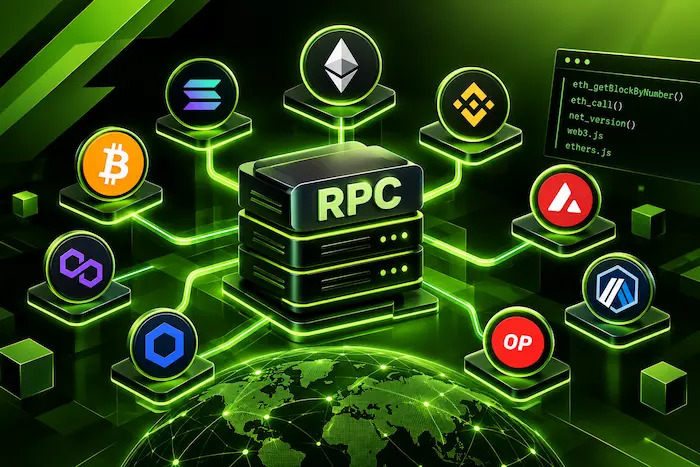
Applications based on blockchains are increasingly using managed RPC services for data retrieval, transaction submission, and connectivity among the chains. In 2026, QuickNode, Alchemy, Chainstack, Infura, and Ankr are adding more services to go beyond JSON-RPC. The ranking assesses 10 RPC providers by coverage, infrastructure, tooling, and architecture.
RPC providers support multichain applications.
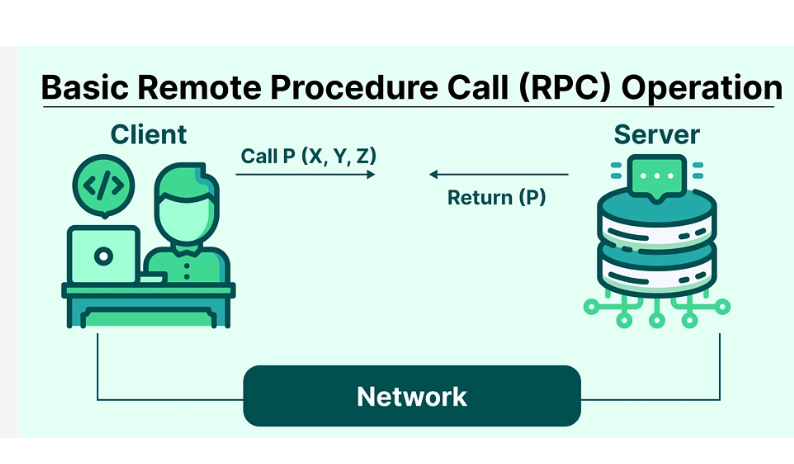
Remote Procedure Call (RPC) infrastructure connects applications with blockchain nodes. Managed endpoints let developers retrieve blocks, query balances, execute contract calls, and broadcast signed transactions without maintaining nodes.
Source: Pulse
DeFiLlama tracks hundreds of networks, including Ethereum, Solana, BNB Chain, and Base. Ethereum has nearly $50 billion in DeFi total value locked, while Solana and Base have billions in decentralized finance activity.
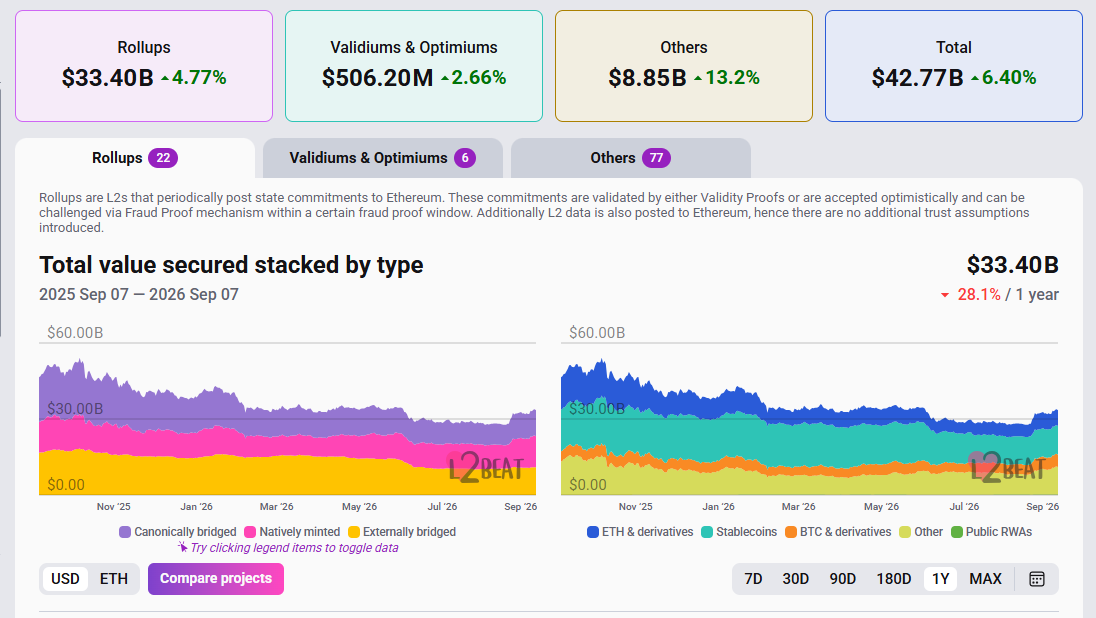
L2BEAT data shows more than $38 billion in value secured across tracked rollups, validiums, optimiums, and other scaling systems. The ranking considers multichain access and excludes market share.
Source: L2BEAT
How leading RPC providers compare
QuickNode ranks first, covering 79+ chains and 135 networks. It supports JSON-RPC, REST, WebSockets, gRPC, and dedicated clusters, with a stated 99.99% uptime guarantee.
Alchemy ranks second, combining RPC access with APIs for wallets, token data, NFTs, transfers, webhooks, gas sponsorship, and account abstraction. Supported networks include Ethereum, Polygon, Arbitrum, Base, Optimism, Solana, Starknet, Sui, and Bitcoin.
Chainstack ranks third with managed RPC infrastructure and dedicated nodes. Its documentation lists 70+ networks, including Ethereum, Solana, Bitcoin, Arbitrum, Base, Polygon, Avalanche, Sui, Starknet, TON, and TRON.
Ankr takes fourth place with 80+ networks. Ankr’s Chain RPC API gives raw access, while the Advanced API gives enhanced and indexed access. Infura ranks fifth, focusing on Ethereum and the Consensys ecosystem.
| Provider | Key differentiator |
| QuickNode | 79+ chains and 135 networks |
| Alchemy | RPC plus developer APIs |
| Chainstack | 70+ protocol networks |
| Ankr | 80+ networks and indexed APIs |
| Infura | Ethereum-focused infrastructure |
| Blockdaemon | Institutional infrastructure |
| GetBlock | 130+ blockchains |
| dRPC | Decentralized RPC routing |
| NOWNodes | Broad non-EVM coverage |
| Lava Network | Provider coordination |
Enterprise and decentralized RPC providers
Blockdaemon ranks sixth and targets institutional and enterprise use. Its infrastructure covers Ethereum, Bitcoin, Solana, Polygon, Avalanche, Arbitrum, Base, Optimism, Polkadot, NEAR, and XRP. It states that its infrastructure processes more than 100 billion on-chain requests across more than 80 protocols.
GetBlock ranks seventh and advertises access to more than 130 blockchains. It supports JSON-RPC and WebSockets, selected archive and full nodes, and reports a 99.9% uptime SLA. Its 2026 updates included Nervos CKB, Midnight, and the GIWA testnet.
dRPC ranks eighth and aggregates RPC providers through routing infrastructure. Its documentation covers Ethereum, EVM networks, Bitcoin, Solana, Starknet, NEAR, and Cosmos. Standard RPC methods are generally priced at 20 compute units.
NOWNodes ranks ninth with native gRPC access for Cosmos, Aptos, Hedera, Injective, IOTA, Kaspa, Sui, TRON, and XRP Ledger. Lava Network ranks tenth and coordinates independent RPC providers using availability, latency, data freshness, and geographic location.
RPC providers face infrastructure risks.
Managed services simplify development but create concentration risks. A severe RPC outage may result in an inability for any application to read the state of the blockchain and to send any transactions, despite the continuous operation of the blockchain itself.
An Infura outage in November 2020 was related to Ethereum API services and caused withdrawal interruptions at some exchanges. According to The Block, QuickNode and Alchemy were still up and running.
However, privacy considerations are also necessary since RPC providers have access to the metadata of the requests. The dispute between MetaMask and Infura in 2022 was an example of such a problem.
Critical applications can use multiple providers or dedicated nodes for stronger resilience.
Choosing RPC providers by workload
Chain count should not be the sole criterion. Developers should compare request limits, archive access, WebSocket reliability, propagation, routing, latency, pricing, and specialized RPC methods.
Analytics use cases may need archives, whereas high-frequency trading may focus on lower latencies and propagation. Wallets of consumers may consider availability, network reachability, and consistent pricing.
Enterprise customers should also consider security certifications, SLAs, data policy and assurances. Fewer chains may be a better choice for a regulated entity that has certain controls.
Conclusion
The ranking shows RPC providers expanding beyond basic node access. QuickNode, Alchemy, Chainstack, Ankr, and Infura lead the listed group, while Blockdaemon emphasizes enterprise infrastructure and dRPC, and Lava uses decentralized approaches. Reliability, privacy, workload, and redundancy remain important considerations.
FAQs
What is RPC infrastructure?
RPC stands for Remote Procedure Call. An RPC node refers to a particular type of node on a blockchain network, which allows interaction with the blockchain through remote procedure calls.
Which provider is first?
The first provider in the provided evaluation is QuickNode.
Why does multichain support matter?
Applications increasingly need multiple L1 and Layer 2 networks.