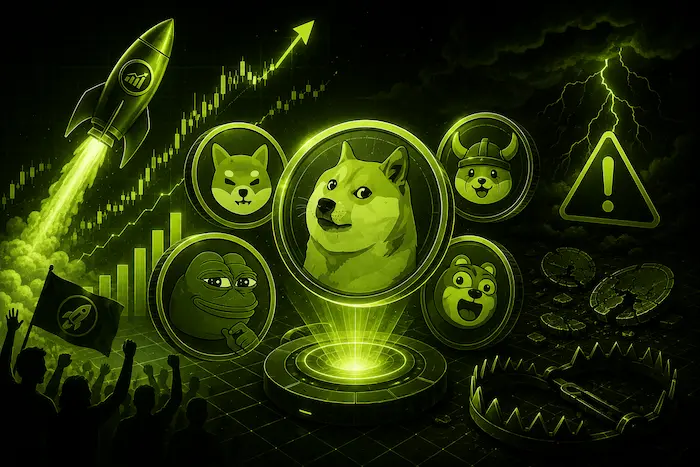
Meme Coins have become one of the most popular segments in the cryptocurrency space due to the ability to make use of the power of the Internet culture, Internet communities, and fast price movement.
Despite being initiated in 2013 as a small-scale experiment with Dogecoin, the segment grew to become a market worth $150 billion at its peak in December 2024.
Meanwhile, there have been numerous developments in the Meme Coins market, including celebrity-backed tokens, politically oriented tokens, institutional monitoring tools, coin launch platforms, and others.
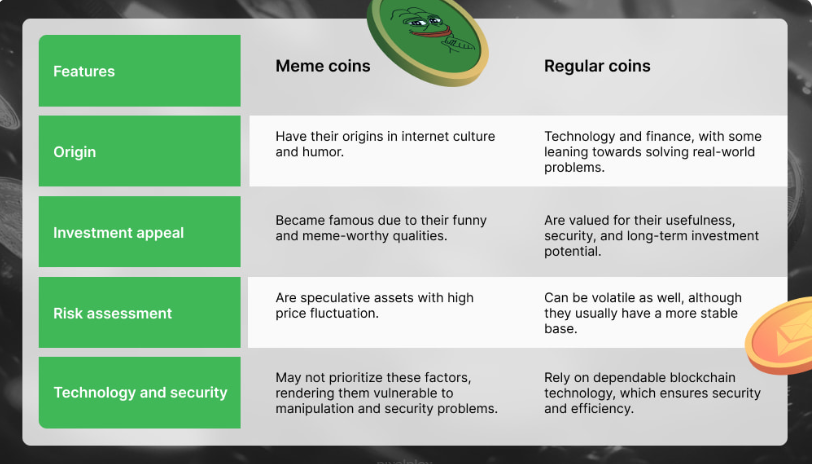
Source: pixelplex
In addition, the topics of volatility, token distribution, and investor protection have remained some of the key problems of the Meme Coins market.
The Beginning of the Meme Coins Industry
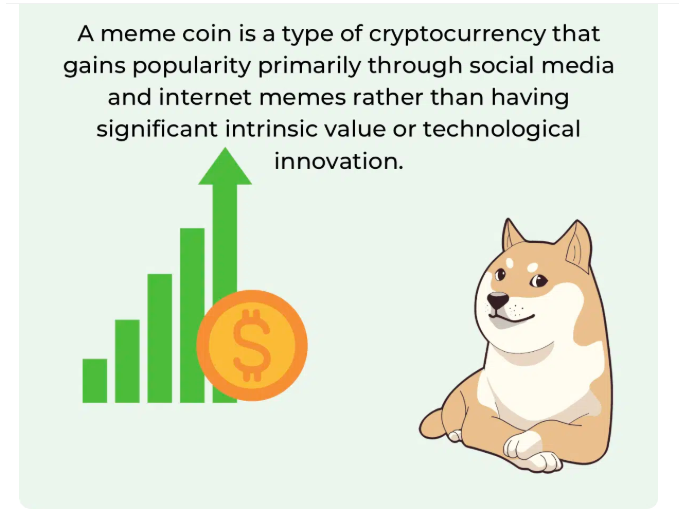
Meme Coins refer to cryptocurrencies that are created after online jokes, memes, or internet culture. The most recognizable one is Dogecoin (DOGE), which is a parody coin introduced in 2013 following the popular internet meme of an image of a Shiba Inu dog with the word “Doge”.
Source: Changelly
Contrary to those projects that were created due to new innovations and technological framework or utility functions, Meme Coins gained their popularity due to the active involvement of people through social media.
In connection with the spread of COVID-19, retail investing was on the rise in the global financial markets. Simultaneously, cryptocurrency investing was on the rise as well and, hence, contributed to the increase in the popularity of Meme Coins.
Momentum increased during the GameStop and AMC events, where online communities proved their ability to impact the price of assets through interest.
Various elements have helped in the development of meme coins:
- High social media engagement
- Community-based involvement
- Low cost of tokens
- Ease of access on cryptocurrency exchanges
- Retail investment activities
Meme Coins Have Evolved Further Than Dogecoin
After the emergence of Dogecoin, various other meme coins have come into existence. Some of the best-known meme coins include Shiba Inu (SHIB), Pepe (PEPE), Dogwifhat (WIF), FLOKI, BONK, and TRUMP.
Most of these tokens had huge numbers of tokens. One of these was SHIB, which started with an issuance of one quadrillion tokens, whereas there is no maximum number of tokens issued for DOGE.
Moreover, the industry witnessed the growth beyond the internet-based tokens. During the early part of 2025, political and celebrity-themed Meme Coins became more popular.
Tokens such as TRUMP and MELANIA brought in billions of dollars in trading volume just after several days of their release.
Major Meme Coins and Main Features
| Meme Coin | Launch Period | Main Feature |
| Dogecoin (DOGE) | 2013 | Unlimited token supply |
| Shiba Inu (SHIB) | 2020 | Quadrillion token supply |
| Pepe (PEPE) | 2023 | Based on Pepe the Frog meme |
| Dogwifhat (WIF) | 2023 | Meme-oriented coin |
| FLOKI | 2021 | NFT and staking included |
| BONK | 2022 | Built on Solana blockchain |
| TRUMP | 2025 | Meme Coin with political theme |
In 2024, an important development took place with the launch by the investment firm VanEck of an index of Meme Coins tracking the performance of some of the top coins in this segment, such as DOGE, SHIB, PEPE, WIF, FLOKI, and BONK.
However, increased visibility of Meme Coins was one of the results of this index, as well as a way to track their performance. The appearance of the Meme Coin market data on large financial websites also made their market players more aware of it.
In December 2024, the total market capitalization of all Meme Coins reached nearly $150 billion, but then started falling during 2025. The falling trend was driven by the cyclicality of trading activity in the industry.
Structure Problems of Meme Coins Persist
Despite the success of Meme Coins, there are some problems connected to them.
Tokenomics Issues
The majority of Meme Coins have the structure of an inflationary token supply or a very large token supply. In contrast to Bitcoin, which has a limited and fixed issuance schedule, Meme Coins do not have such restrictions.
Some issues raised include:
- Unlimited minting of tokens
- Heavy allocation of tokens to founders
- Token concentration
- Insufficient application aside from community involvement
- Volatile Characteristic Persisted
Price fluctuation still defines this industry. The value of meme tokens can rise rapidly after being talked about on social media or traded heavily.
However, prices can quickly fall due to a change in market interest. This trend has brought about many boom and bust cycles since the inception of Meme Coins.
Rug Pull Incidents Still Impact the Industry
Rug pull incidents continue to be one of the major dangers related to Meme Coins. Rug pulls happen when developers abandon their projects and take away the liquidity or the investors’ money.
Here are some examples of rug pulls that occurred:
SQUID (2021): The developers left the project after investors had put their money into it.
BALD (2023): Liquidity was removed from the project, and the project’s token became worthless.
URF (2024): Developers left the project after raising $450,000 through a presale.
LIBRA (2025): Its token became worth $4.5 billion before losing 97 percent of its value within hours, prompting a federal investigation in Argentina.
What Do Market Players Look for Before Buying Meme Coins
Risk management is still very popular in participant analyses of Meme Coins.
Among the things to consider are:
- Evaluation of project documentation
- Analysis of token distribution methods
- Supply chain evaluation
- Observation of project progress
- Community activities evaluation
- Not making decisions purely based on market buzz
Diversification is also a popular method to mitigate the risk from any specific asset.
Conclusion
Meme Coins have transformed from internet-driven joke currencies into a notable part of the cryptocurrency industry. These companies have succeeded due to the community’s active participation, social media engagements, and accessibility to markets. The crypto industry reached its highest value worth of about $150 billion at the end of 2024 and has declined due to the speculative nature of the market cycles. Even though Meme Coins remain popular, their volatility, tokenomics, and rug pulls remain crucial factors while considering the industry.
FAQs
What are Meme Coins?
Meme coins refer to cryptocurrencies that are created from internet memes, jokes, and culture. These currencies do not serve any specific purpose but exist due to the community’s active participation and social media engagements.
What is the first Meme Coin?
Dogecoin (DOGE), launched in 2013, is considered the first Meme coin. Dogecoin is a parody cryptocurrency that exists because of the internet meme of a Shiba Inu dog referred to as Doge.
Why are Meme Coins popular?
Meme Coins rose to fame through internet-based communities, social media interaction, retail investor engagement, and affordable tokens that could be purchased in high volume.