

Creation of wealth over the long term involves more than just selecting some investments that have good return prospects. Financial planning generally starts by setting objectives, assessing the level of acceptable market risk, and defining the investment period. This affects the selection, management, and adjustment of the investments to suit the changes in financial conditions.
The Investment Portfolio involves all these through the combination of financial assets, including stocks, bonds, cash, real estate, and cryptocurrency, in a strategic manner that takes care of the financial objectives and investment horizon of the investor.
Continuous evaluations, diversifications, and revaluations ensure that the portfolio stays in sync with the financial conditions and original financial objectives of the investor.
What Determines an Investment Portfolio?
An investment portfolio has three major things that influence the creation of a successful investment portfolio.
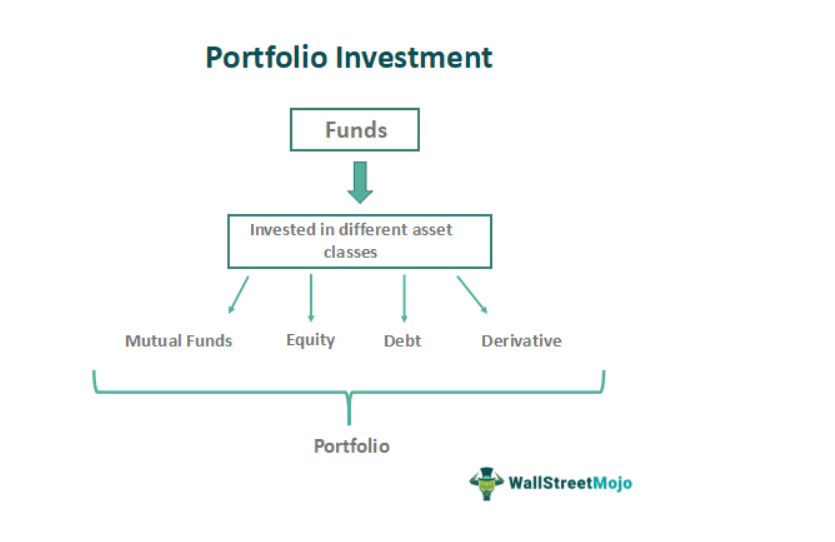
Source: Wall Street Mojo
These factors are:
- Financial goals define the aim of the portfolio.
- Risk management determines how exposed the portfolio is.
- Investment time frame determines asset selection and allocation.
Financial objectives could range from saving for retirement, buying a house, educating oneself, or accumulating wealth. As per the details obtained, those who have a short investment horizon will be more inclined to protect their money, whereas those with a longer investment period would have a greater preference for assets that have more chances of growth since they have enough time to recover from any downturns in the market.
Understanding Risk Tolerance Before Investing
Risk tolerance is the measure of an investor’s capability and willingness to bear losses and earn some gains.
A number of factors play into this, including income level, financial responsibilities, emergency funds, and knowledge of investment types.
Factors affecting risk tolerance include:
- Financial responsibilities and existing savings.
- Understanding of investment options.
- Ability to tolerate market changes.
Many financial advisors argue investors have enough money in an emergency fund for three to six months before starting any investment activity. Investors who do not have sufficient knowledge of cryptocurrencies and other special types of investments will invest small amounts while learning about them. The same applies to derivatives, options, and sector-specific investments.
Investment Portfolio Asset Allocation Defined
Asset allocation is the process of investing funds in various types of assets according to the goals of the investor, time frames, and risk tolerances.
It should not be done using a single formula but rather by taking into account individual characteristics of the investor. With larger investment time frames, higher allocations to stocks and growth-type assets are possible, whereas when approaching important goals, higher allocations to bonds and cash might be considered.
Examples of assets classes are:
- Equities
- Bonds and cash
- Alternative assets, like cryptocurrencies and real estate.
Diversification Helps Investors Avoid Over-Concentration
Diversification refers to investment diversification across different sectors, industries, regions, and asset types rather than concentrating one’s investments in few items.
According to the CFPB, investors can achieve diversification through ETFs, mutual funds, and/or selecting specific investments. Although diversification is not a guarantee against losing money during a market downturn, it helps to avoid risks linked with individual companies/industries/regions.
Cryptocurrencies could also be included in an investment portfolio due to their different nature when compared to other financial assets. Nevertheless, according to the information, greater price volatility should be considered in this regard.
Investment Portfolio Construction Quick Review
| Factor | Reason for Consideration |
| Financial goals | Investment goal and approach |
| Risk tolerance | Market volatility tolerance level |
| Time horizon | Balance of growth and conservative investments |
| Asset allocation | Splitting investments among asset types |
| Diversification | Concentration minimization |
| Portfolio analysis | Keeping the investments on target |
Why Portfolio Reviews and Rebalancing Matter ?
Portfolios are managed beyond the process of creating them. The advice is to keep reviewing them because of market moves, which could change the planned proportion of the portfolio. For instance, there might be very good performance in one investment category, and its proportion will rise.
Rebalancing brings back the desired portfolio through proper adjustment of asset classes. Other individuals also employ a dollar-cost averaging strategy, which means that equal sums of money are invested irrespective of the market situation at certain intervals.
According to the CFPB, the review periods differ among individual investors. While some individuals review their portfolios every quarter, others do it yearly. Those having cryptocurrencies in their portfolios might need to review them frequently due to greater price fluctuations. As individuals approach their financial goals, they can move towards conservative investments.
Other Influences on Long-Term Investment Success
Apart from the above information, other issues that affect long-term investment success include costs related to investing, tax policies, and sound decision-making skills.
Costs of investment will involve costs incurred for the purchase of mutual funds, ETFs, brokerage, and advice fees. Tax policies will differ depending on whether profits arise from capital gain, dividends, or interest income.
Conclusion
The Investment Portfolio is created on the basis of specific financial objectives, the right degree of risk, and the proper duration of investments. The above information illustrates that asset allocation, diversification, and portfolio management play their roles in ensuring that the portfolio stays consistent with the changing financial needs.
Monitoring and rebalancing of the portfolio allow for keeping the investment strategy relevant and adjusting to the market trends and financial needs.
FAQs
What is an investment portfolio?
An investment portfolio is a set of financial instruments, which could be stocks, bonds, cash, real estate, and cryptocurrency.
Why does one need diversification?
With diversification, we invest in various asset classes and sectors so that we do not put all our eggs in one basket.
How frequently should the portfolio of investments be reviewed?
According to CFPB, some individuals prefer quarterly reviews of their investment portfolio, while others do it annually.