
While bitcoin (BTC) is currently the largest cryptocurrency by market capitalization, it is not designed to interact with decentralized finance networks smoothly. DeFi developers needed to solve this issue and connect Bitcoin’s liquidity to the Ethereum network.
As DeFi grew on the Ethereum blockchain, developers needed to understand how to use the liquidity of Bitcoin on the chain. As a result of this challenge, Wrapped Bitcoin (WBTC) was born.
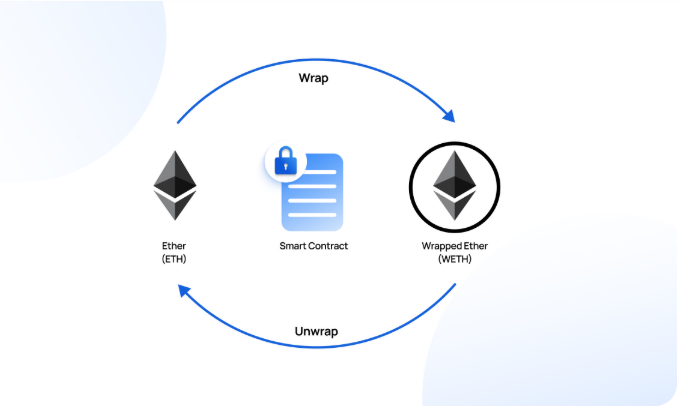
Source: Transak
Wrapped Bitcoin (WBTC) is a tokenized bitcoin that offers users access to decentralized applications, but keeps them exposed to the Bitcoin market. To enable a connection between Bitcoin liquidity and smart contract-based blockchain networks, one WBTC token is backed by one Bitcoin in reserve.
What is Wrapped Bitcoin (WBTC)?
Wrapped Bitcoins or WBTC are tokens that mirror the Bitcoin tokens but are wrapped on other blockchain platforms. WBTCs are also 100% collateralized, which means that each WBTC will be equal to oneBTC in terms of their custodians’ ledger entries.
The merchants serve the role of custodians, assisting to transform BTC to WBTC, and the specific custodians keep the Bitcoin reserves in WBTC. This allows Bitcoin users to interact with networks where they can utilize decentralized applications and smart contracts with their assets.
Such compatibility of the wallet, together with interoperability with decentralized exchanges, lending platforms, and other fintech services on the blockchain, provides WBTC with interoperability across different blockchain networks.
Further, the interoperability also allows for interaction between WBTC and wallets, decentralized exchanges, lending platforms, and other financial services on the blockchain.
Bitcoin vs WBTC
| Feature | Bitcoin (BTC) | Wrapped Bitcoin (WBTC) |
| Native Blockchain access | Bitcoin | Ethereum and other available chains. |
| Smart Contract Compatibility | No | Yes |
| DeFi Access | Limited | Available |
| Custodian Required | No | Yes |
| Backing Mechanism | Native asset | 1:1 BTC reserves |
| Use Case | Digital asset transfer and storage | DeFi participation and interoperability |
How Wrapped Bitcoin Works
The WBTC system is based on a user-merchant-custodian process.
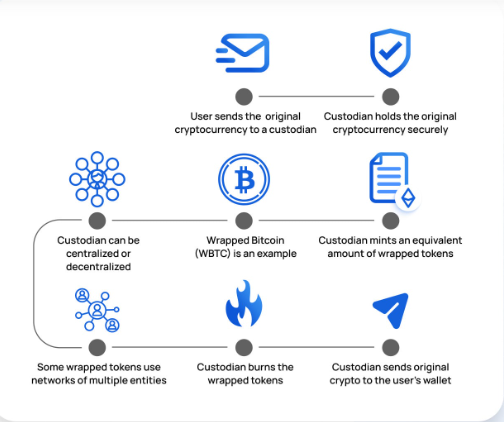
Source: Transak
To get WBTC:
- The customer makes a request via an authorized merchant.
- The merchant completes the necessary KYC and AML checks.
- Bitcoin is sent to the custodian.
- The custodian confirms the Bitcoin transaction.
- Minting of an equivalent amount of WBTC has been completed.
- The new WBTC is sent to the user.
The opposite phenomenon occurs when converting WBTC back to Bitcoin.
Unwrapping Process
- The user redeems WBTC.
- The merchant does a burn.
- The WBTC tokens are not returned to circulation.
- The custodian unlocks the appropriate reserve of BTC.
- A bitcoin is returned to the user.
This mint and burn mechanism is intended to safeguard the circulating supply of WBTC to be proportionate to the Bitcoin stored in the reserve.
What is the purpose of WBTC?
The purposes for which Bitcoin and Ethereum were created differ significantly.
The core purpose of Bitcoin is an asset network. The development of smart contracts, which could be programmable by developers, was done by Ethereum, giving rise to fintech services and applications.
But the problem is that the Bitcoin network was not compatible with Ethereum’s protocols. Therefore, owners of BTC had no chance of participating in deFi.
WBTC aims to bridge the gap between Bitcoin’s liquidity and smart contract ecosystems. Therefore, the holders can enjoy the financial services of the blockchain without losing the exposure of Bitcoin.
Wrapped Bitcoin (WBTC) Use Cases
With the addition of WBTC, there are more options for using Bitcoin on various blockchain networks.
Lending and Borrowing
Users can stake WBTC and borrow digital assets or stablecoins based on the assets that they have staked.
Liquidity Provision
WBTC tokens are able to be added to liquidity pools, which provide decentralized trading activity.
Yield generation
Participants can secure their WBTC holdings in yield-producing programs that distribute tokens according to the extent of participation.
Margin trading
Also, traders are allowed to trade WBTC on margin.
Governance participation
Other decentralized projects mint governance tokens for individuals holding liquidity or using their supported coins, including WBTC.
Various Security Precautions for WBTC
A number of security measures have been provided in the WBTC model with the objective of protecting the reserve assets and providing transparency.
Some Important Security Aspects
- Cold Storage: The Bitcoins are kept offline in order to avoid the risks involved in online storage.
- Multi-Signature: Multiple signatures are required before the movements of reserve assets can take place.
- Transparency: The transparency feature allows all the tokens and their balances to be trackable using the blockchain.
- Third Party Audit: Third-party audits help back the WBTC protocol with Bitcoin reserves.
Risks of wrapping bitcoins.
Wrapped Bitcoin Risks
Since WBTC expands the capabilities of Bitcoin, it brings about certain considerations for users.
Custodial Risk
The system relies on its custodians having Bitcoin reserves. These are expected to maintain the reserve backing for users.
Smart Contract Risk
WBTC runs on blockchain smart contracts. If any weaknesses are found in those contracts, then users will be affected.
Risk of Regulatory Change
Regulatory changes can influence the operations of WBTC in different jurisdictions since there are merchants and custodians involved in the whole process.
Fees and Duration
There can be transaction fees charged when creating and redeeming WBTC.
Transparency of WBTC
The WBTC system publishes data on token issuance and the backing of reserves.
Users can verify:
- Total circulating WBTC supply.
- Bitcoin reserves held by custodians.
- Minting transactions.
- Burn transactions.
- Reporting of confirmations of reserves.
The data can be disclosed through the use of blockchain technology and reserve reporting mechanisms.
Conclusion
WBTC is a process through which Bitcoin owners are able to take part in various DeFi operations on blockchains that utilize smart contract platforms. The custodians and merchants, the reserve backer, and a minting and burning process are employed to maintain parity between Bitcoin and WBTC.
FAQs
What is Wrapped Bitcoin?
WBTC is bitcoin on the blockchain, but backed by 1:1 ratio to BTC.
Is it possible to convert WBTC back into Bitcoin?
Yes. WBTC can be redeemed by a user via burn and they obtain an equivalent amount of Bitcoin.
What backs WBTC?
Every WBTC token is backed by 1 Bitcoin, which is held in reserve by the custodians.
Why have developers developed WBTC?
The use of WBTC allows Bitcoin owners to benefit from various applications on blockchains.
Does WBTC require custodians?
Yes. Custodians have to reserve Bitcoin in order to ensure circulation of WBTC.