The creation of Bitcoin saw the emergence of an alternative way of conducting digital transactions using the decentralized technology system without banks or any form of centralized intermediary in digital finance. Attention has not only been centered on the cryptocurrency but also on the identity of the person who created it since the network became active in 2009.
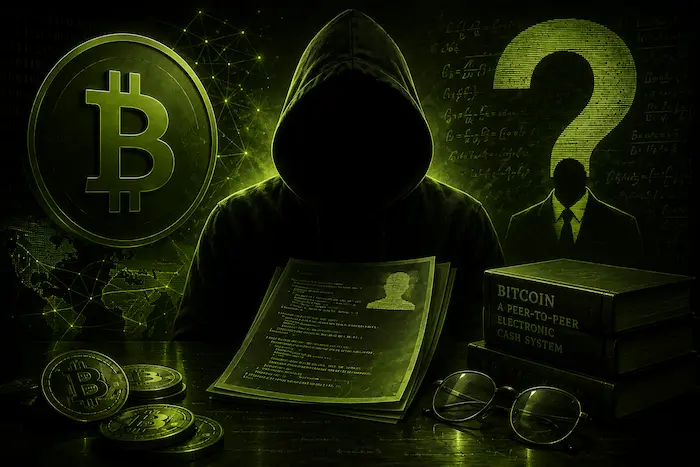
Satoshi Nakamoto, the pseudonym for Bitcoin’s founder, has not yet been identified despite the efforts put into investigation through court cases, documentaries, and even through blockchain technology after several years of probing.
The wallets involved in the initial mining of Bitcoin have not been touched either, and researchers believe that they may contain about 1.1 million Bitcoins.
Bitcoin Was Launched by Satoshi Nakamoto during the Financial Crisis Period
The first evidence of the existence of Bitcoin was made public in 2008 through the registration of the bitcoin.org domain name. Towards the end of that same year, an author going by the name Satoshi Nakamoto published the white paper entitled “Bitcoin: A Peer-to-Peer Electronic Cash System,” where he explained how electronic transactions could be made on a peer-to-peer basis without double-spending problems.
Bitcoin was launched in January 2009 through Nakamoto’s launch of the first Bitcoin software, where he mined the Genesis Block. Encrypted in the first block was the following message: “The Times 3 January 2009 Chancellor on brink of second bailout for banks.”
In the early days of Bitcoin, Satoshi was the main miner of the network, earning more than one million Bitcoins before other miners began joining the network.
Key events
- The white paper for Bitcoin was released on October 31, 2008.
- Genesis block was created on January 3, 2009.
- Bitcoin network went public after its first software release in January 2009.
Satoshi Nakamoto Collaboration with Initial Bitcoin Developers
After the launch of Bitcoin, Satoshi Nakamoto communicated with the developers through emails and forums to clarify any technical doubts about the functioning of the Bitcoin protocol. Early milestones included Hal Finney receiving his first Bitcoin transaction from Nakamoto in January 2009.
Nakamoto continued his work on Bitcoin until 2009 and 2010, after which he became less active in the community. Control of the project’s source code repository was later transferred to software developer Gavin Andresen. Nakamoto’s final known email, sent in April 2011, stated that the project had been left in capable hands before public communication ceased.
Previously unseen emails released through legal proceedings later showed Satoshi discussing Bitcoin’s technical development, its energy consumption, and the importance of avoiding an emphasis on anonymity or portraying Bitcoin primarily as an investment.
Unsolved Case Even After Many Years of Searching
The identity of Satoshi Nakamoto has not been known even after many years of searching. Individuals frequently identified as possible candidates include Hal Finney, Nick Szabo, Adam Back, Gavin Andresen, Len Sassaman, Dorian Nakamoto, Craig Steven Wright, Elon Musk, and Peter Todd. Some researchers have also suggested that the name may represent a group rather than a single individual.
None of these claims has been conclusively verified. A UK court in 2024 found that Craig Wright is not the author of the Bitcoin white paper and not the person behind the Satoshi Nakamoto pseudonym.
Other pieces of news have contributed to more discussion. Previous letters from Satoshi to Adam Back, as well as emails with Martti Malmi, offered some information regarding the early days of Bitcoin but not about the identity of Nakamoto. Other blockchain investigations carried out in 2025 also found some transactions connected to the wallet of Nakamoto.
Key findings from the investigations
- Various people have been proposed as candidates, but there is no solid evidence in this regard.
- Emails that have been made public and blockchain studies have added to history, but not confirmed the identity of Nakamoto.
- Some identities have been discarded in court cases, such as in the 2024 case of Craig Wright.
Untouched Bitcoin Holdings Remain in Spotlight
Researchers working on blockchain claim that there are around 1.1 million BTC held in addresses related to Satoshi Nakamoto, which were mined when Bitcoin was first mined. These assets have not moved from their wallets since 2009.
These inactive assets were relevant to the history of Bitcoin, as any activity of Nakamoto’s controlled addresses would create quite a buzz in the market. Researchers have observed that users of Bitcoin have been sending BTCs to the Genesis wallet in small quantities, including one worth around $1.2 million in January 2024.
Conclusion
Over fifteen years since the inception of Bitcoin, the identity of Satoshi Nakamoto is still unknown, even with ongoing investigation, legal actions, blockchain research, and speculations.
Historical documentation reveals that Nakamoto authored the white paper for Bitcoin, started the Bitcoin blockchain in 2009, handed over control of the Bitcoin development to Gavin Andresen, and stopped communicating to the public by 2011.
The wallets linked to the early mining of Bitcoin are still dormant, thereby leaving the largest known Bitcoin holding dormant. While ongoing investigations have provided more documents and technical proof, the identity of Bitcoin’s creator is still unknown.
FAQs
Who is Satoshi Nakamoto?
Satoshi Nakamoto is the founder of Bitcoin. In spite of various attempts at uncovering the actual identity of the individual or the group who has used that name, it still remains unknown.
When was Bitcoin invented by Satoshi Nakamoto?
The Bitcoin white paper was published on October 31, 2008, while the Bitcoin network came into existence by mining the genesis block on January 3, 2009.
How many Bitcoins does Satoshi Nakamoto hold?
Blockchain experts say Satoshi Nakamoto’s wallets contain about