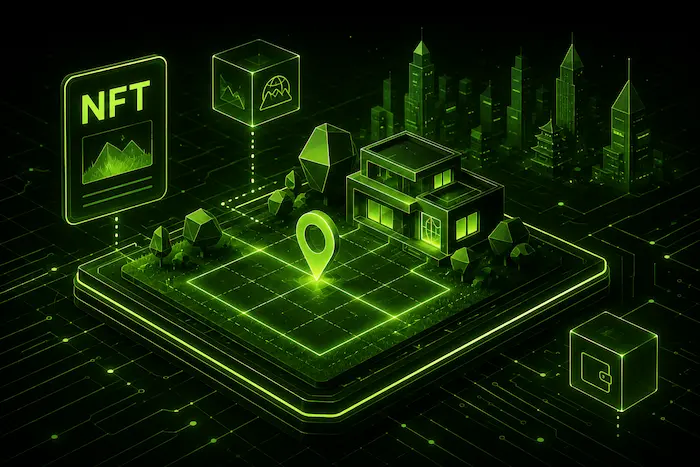
The NFT Virtual Land is a digital form of land that exists in the metaverse space through blockchain technology, whereby its ownership is secured by means of non-fungible tokens (NFTs).
The idea attracted significant attention as the NFT market expanded in 2021 when metaverse platforms offered virtual land to the public for trading and development.
Nevertheless, activities in this industry have slowed down due to reduced demand in recent times compared to the peak seen before.
What Is NFT Virtual Land?
NFT virtual land is a parcel of digital space inside a blockchain-based metaverse. A plot is depicted by a unique NFT that helps to track its ownership and facilitate its transfer through blockchain.
Contrary to regular online games where game creators hold ownership rights for property inside a game, blockchain-based virtual world games let the player become a direct owner of their land.
Virtual worlds based on blockchain technology continue working despite decreased interest in comparison with 2021 and 2022, and Decentraland and The Sandbox stay the most recognizable platforms.
How NFT Virtual Land Works
In each metaverse, the virtual space is subdivided into a certain number of land plots. Each plot comes with an NFT, which means that ownership becomes clear and trackable via blockchain technology.
Virtual land owners can make use of the platform’s features for customizing or developing of the land plot.
Virtual land features are as follows:
- Ownership on Blockchain: All transactions occur on-chain and are permanent.
- Transferability: Owners have the opportunity to sell, lease or transfer the land via the marketplaces of the platform.
- Limitation in the supply: Most of the platforms provide only a certain number of land plots.
Common Usage of NFT Virtual Land
The application of the NFT virtual land depends on the chosen platform.
Land owners can use their land to:
- Conduct virtual events, shows, or parties.
- Make virtual games or virtual worlds.
- Virtual establishment of offices, factories, or shops.
- Advertise virtually at highly trafficked sites within the platform.
All plots of land are not necessarily equally usable or functional, since all platforms are unique.
What Determines NFT Virtual Lands Prices?
Many considerations affect the pricing of virtual lands.
Primary considerations for prices
- Utility: A higher utility of virtual land means higher demand.
- Platform activity: Platforms with more users have traditionally commanded higher prices.
- Market situation: The sentiment on NFT and cryptocurrency markets still affects valuation.
The rise of the NFT boom from 2021 to 2022 saw sales of some virtual lands at prices in millions of dollars. The prices have fallen significantly since then as seen in many blockchain-based platforms.
Factors that Influence the NFT Virtual Land Price
| Factor | Impact on Value |
| Utility | More functional plots may cost higher. |
| Location | More desirable locations are associated with higher demand. |
| Platform | Mature metaverse platforms tend to have more interest from buyers. |
| Market Conditions | The sentiment in the NFT/cryptocurrency markets influences the price. |
| User Activity | Active communities may support stronger long-term demand. |
How Buyers Purchase NFT Virtual Land
Virtual land is generally available through two methods.
The first is the option to buy land directly from metaverse platforms during their land sales. The second gives buyers the opportunity to buy land from existing owners via NFT marketplaces.
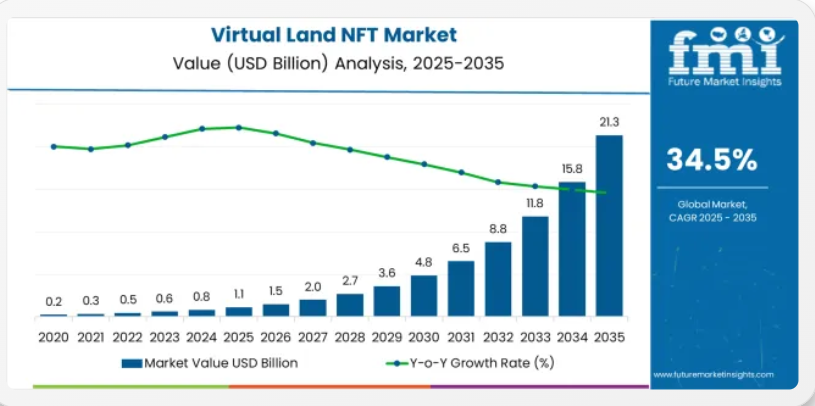
Source: Future Market insight
Before buying, it is advisable to consider some information regarding platform activities, compare similar land parcels, and assess the location of the parcel on the virtual map since prices may vary greatly.
Risk Factors Associated With NFT Virtual Land
Similar to other digital assets, NFT virtual land is associated with some risk factors.
Key issues
- Market volatility: The market prices may change together with the cryptocurrency market.
- Platform popularity: Values of the land depend greatly on users’ engagement and the development of platforms.
- Liquidity: Selling NFT virtual lands can be less liquid compared to selling other cryptocurrencies.
Other issues include having knowledge of cryptocurrency wallets, transactions with NFT, fees and security within the blockchain network, since hacking and phishing may lead to loss of your asset permanently.
Present Course of the Market for Virtual Land
The latest trends suggest that NFTs-based virtual land has moved from being purely speculative towards becoming a more utilitarian form of digital ownership. Based on the available data, metaverse builders are constantly improving their product by adding functionalities for gaming, community events, commercial operations, and creative activities.
Furthermore, the integration of blockchain, virtual and augmented reality technologies is currently being considered. Despite ongoing research, blockchain-enabled virtual land operates as digital real estate within existing metaverse networks.
Conclusion
NFT virtual land remains a blockchain-based form of digital property that allows users to own, transfer, and develop virtual real estate inside metaverse platforms. While market activity has declined from its earlier peak, supported platforms continue operating with ownership verified through NFTs.
From the available data, it is evident that land valuation is determined by platform usage, functionality, and market environment, as the investors still bear certain risks like volatility, liquidity issues, and changing user behavior.
Frequently Asked Questions
What is NFT virtual land?
An NFT virtual land refers to a piece of digital real estate located in a blockchain metaverse and represented by an NFT.
How do people acquire NFT virtual land?
Individuals have two ways of purchasing virtual lands, through official sales conducted by the platforms themselves or via NFT marketplaces where the existing landowners are selling their plots.
What determines the value of NFT virtual land?
Utility, platform engagement, plot location, and market environment are the main value drivers.