

Transfers of funds from one nation to another form an essential component of the world’s financial system, since it makes it possible to perform transactions in connection with business and payment operations in foreign nations.
Nevertheless, transfers of money abroad involve dealing with many financial institutions, settling payments with a time lag, and keeping a significant amount of the organization’s money abroad. Considering the growing impact of blockchain technology on the financial sector, companies have built the necessary infrastructure.
Bolt On-Demand Liquidity is a perfect example of a solution whereby digital assets act as bridge assets to make international payments without holding substantial amounts of foreign currency in reserve by firms. In addition to having payment solutions, the firm has also come up with liquidity solutions for decentralized finance aimed at enhancing cross-chain execution and liquidity.
What Is Bolt On-Demand Liquidity?
Bolt On-Demand Liquidity is a blockchain-based payment infrastructure that only gets liquidity when there is an attempt to make a payment. Companies don’t need to invest their accounts in destination countries; the platform turns their funds into cryptocurrency tokens before sending them across chains.
According to Bolt’s data, the procedure of making payments is carried out through the following stages:
- Initiation of payment by a sender for an international payment.
- Conversion of local currency to a supported digital asset.
- Blockchain-based transfer of a digital asset.
- Exchange of a digital asset for the local currency of the recipient.
- Recipient receiving the payment via a local bank or other payment service.
The company states that this approach allows businesses to reduce idle capital while accelerating payment settlement.
How Bolt On-Demand Liquidity Works
Bolt reports that its infrastructure combines blockchain settlement with digital asset liquidity pools to automate international transfers.
Instead of keeping reserves in each marketplace where transactions take place, liquidity comes from the real-time process as soon as a transaction is started.
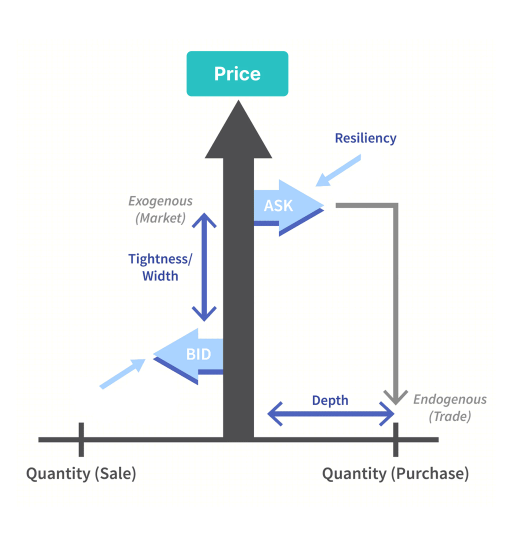
Source: B2B Broker
The company adds that the infrastructure will be built with the capability of connecting with fintech companies, payment processors, cryptocurrency exchanges, and enterprise payment systems through APIs.
The main operational features are:
- Instant liquidity provision for every single payment transaction.
- Blockchain-based settlement rather than full dependence on correspondent banking.
- API connectivity for payment providers and corporate platforms.
Key Features of Bolt On-Demand Liquidity
| Feature | Description |
| On-demand Liquidity | Liquidity is generated only on payment initiation. |
| Digital Asset | As the name suggests, digital assets are used to bridge transactions. |
| APIs | The APIs can be integrated by the payment companies into their infrastructure. |
| Funding Efficiency | Companies need not keep pre-funded foreign currency accounts. |
| Blockchain Tracking | The transactions are logged on blockchain networks for the purpose of settlement. |
Bolt On-Demand Liquidity in Decentralized Finance
Apart from payment settlement, Bolt On-Demand Liquidity also acts as an infrastructure for DeFi.
The company claims that its network integrates liquidations, cross-chain swaps, bridging, and pricing into a single API. The goal is to make it easier for users to trade over the available blockchain networks without having to do the bridging themselves or maintain any gas balances on the networks.
Bolt also states that liquidity providers can deploy capital across multiple blockchain networks rather than keeping assets isolated in separate liquidity pools.
The platform also reports:
- Single-sided liquidity pools allow one asset to trade against multiple quoted assets.
- Liquidity providers do not need to hold several assets simultaneously.
- Capital can be deployed across multiple supported blockchain networks.
Single-Sided Liquidity Pools and PoPE Mechanism
Bolt states that its infrastructure includes single-sided liquidity pools designed to reduce liquidity fragmentation.
According to the company, one asset can trade against several quoted assets, including ETH, USDT, and SOL, without dividing liquidity into multiple pools.
The platform also introduces its Proof of Pricing Efficiency (PoPE) mechanism.
Bolt reports that PoPE separates automated market makers from traditional asset reserves by executing trades using pricing derived from real-world market data reflected on-chain.
The company states that this model is intended to reduce exposure to:
- Loss-versus-rebalancing (LVR)
- Maximal extractable value (MEV)
- Arbitrage-related risks
- Continuous liquidity rebalancing
Founder Background
Bolt Liquidity was founded by Frojdi Dymylja, who began working with blockchain technology and algorithmic trading in 2017.
According to the company, Dymylja contributed to the Cosmos SDK while working at Tendermint. Bolt also reports that he contributed to or advised blockchain projects including Babylon, Celestia, and Dymension.
The firm indicates that it was because of such experience that the design of its liquidity infrastructure came up with an emphasis on liquidity fragmentation and blockchain infrastructure problems.
Future Development Plans
According to Bolt, future plans are to further develop its liquidity infrastructure.
As per the firm, the plan includes routing transactions from both on-chain and off-chain liquidity sources and adding more digital assets.
The company has indicated its intention to implement Dynamic Debt Provisioning, which will enable the facilitation of market-making without locking in the liquidity provider’s capital in advance.
Issues Faced by On-Demand Liquidity
Some issues faced by Bolt with regard to on-demand liquidity using blockchains have been identified:
They are:
- Requirements for regulations for AML, KYC, licensing, and local financial regulations.
- Availability of liquidity within the supported trading pair.
- Fluctuations in digital asset prices during settlement.
- Integration between blockchain payment networks and traditional finance institutions.
These fields still play an important role, as blockchain payment solutions are evolving.
Conclusion
The concept of Bolt On-Demand Liquidity provides both blockchain settlements and real-time liquidity provisioning for cross-border transactions without pre-funded foreign bank accounts.
As per the company, its infrastructure is also extended to Decentralized Finance by means of liquidity aggregation, cross-chain swaps, one-sided liquidity pools, and price optimization tools. It is said that the company’s plans include further expansion of liquidity sources and market-making capabilities, taking into account various issues, such as regulations and others.
Frequently Asked Questions
What is Bolt On-Demand Liquidity?
Bolt On-Demand Liquidity is a blockchain-powered payment infrastructure that utilizes digital assets for making cross-border payments without keeping pre-funding of foreign currency accounts by businesses.
How does Bolt On-Demand Liquidity operate?
The service will change the local currency to a certain digital asset, transfer it via a blockchain network, and convert it back to the local currency of the receiver before the payment is done.
For which industries is Bolt’s payment infrastructure used?
Bolt says that the infrastructure is created for fintech companies, payment processing firms, cryptocurrency exchanges, enterprise payment solutions, payroll services, remittance, and B2B payments.