
Key Insights
- The Strait of Hormuz is also the route for a significant amount of global oil and gas vessels, raising risks for energy markets.
- The conflict has grown from a battle between the United States and Iran to include Bahrain, Kuwait and Jordan in the military activities reported.
- Diplomatic efforts appear stalled, while both sides signal readiness for further military action.
Iran Closes Strait of Hormuz as New U.S. Strikes in Region Deepen Conflicts Iran Closes Strait of Hormuz in the wake of new U.S. Strikes as regional conflicts intensify
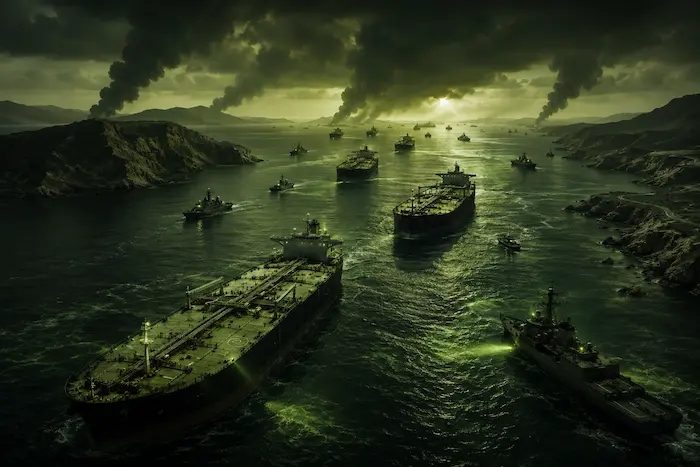
After a new series of military strikes launched by the United States against key sites throughout Iran on Thursday, Tehran announced the closure of the Strait of Hormuz. The move was seen as a major escalation in the conflict and has brought into question the security in the region and the world’s energy supply.
All shipping through the strategic waterway has been halted, according to Iran’s Khatam al-Anbiya Central Headquarters. Military officials state that if anyone tries to enter the strait, whether a tanker or a commercial vessel, it may be attacked.
The announcement came shortly after US Central Command confirmed additional strikes against air defence systems, radar facilities, communications networks, and surveillance infrastructure. Washington described the operation as a defensive response to continued attacks in the region.
Shipping routes face new security risks
The Strait of Hormuz remains one of the world’s most important energy corridors. A significant share of global oil and gas exports moves through the narrow passage each day.
Military authorities stated that the closure was necessary because of deteriorating security conditions. Officials also rejected US claims that commercial shipping continued to move safely through the waterway.
According to local media reports, there were explosions in several southern areas, including Bandar Abbas, Minab, Jask, Qeshm and Sirik, and air defence activity was observed in the same areas. Tensions between the Navy was also reported in the area of the strategic route.
With growing uncertainty in the energy sector, energy markets responded.
The oil markets reacted swiftly to the rising tensions. Traders focused on the possibility of prolonged supply disruptions from the Gulf.
Brent crude rose to $94.58 per barrel, while West Texas Intermediate climbed to $91.74 per barrel. US crude futures gained more than $3 earlier in trading before easing slightly.
Analysts said the latest events suggest a diplomatic breakthrough remains unlikely in the near term. Concerns over energy supply security continue to influence market sentiment.
Recent data also showed US crude inventories declined by 7.2 million barrels to 426.5 million barrels during the week ending June 5. Since the conflict began on February 28, total US crude stocks, including strategic reserves, have fallen significantly as authorities sought to offset supply pressures.
Separately, industry surveys indicated OPEC production reached its lowest level in more than two decades due to sanctions and export disruptions affecting several Gulf producers.
Retaliatory Actions Expand Across the Region
Iran’s Islamic Revolutionary Guard Corps said it launched attacks against military positions linked to the United States in Bahrain, Kuwait, and Jordan. Officials also reported operations against maritime targets in the Gulf.
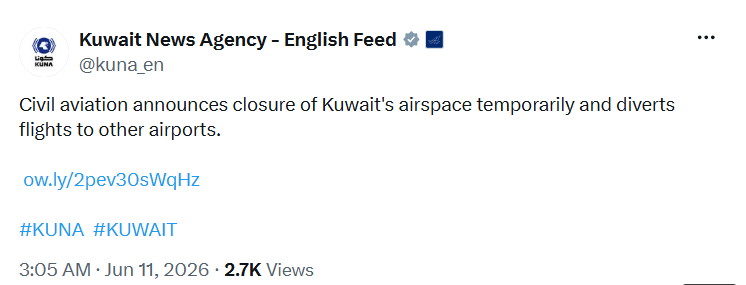
Kuwait temporarily closed its airspace after missile and drone threats emerged. Bahrain activated air raid sirens as security alerts increased.
State media reported that two vessels attempting to move through the Strait of Hormuz had already been struck. Military commanders warned ships to remain anchored and avoid approaching the waterway.
US officials disputed several of these claims. Central Command stated that commercial vessels continued to transit the area under the protection of international naval forces.
Washington Signals More Pressure Ahead
President Donald Trump warned that further military action could follow if negotiations fail. He said the strikes would end if a deal is reached but maintained a strong stance toward Tehran.
Défense Secretary Pete Hegseth also defended the operation, saying the strikes support both military objectives and diplomatic leverage.
Meanwhile, Iranian officials accused the United States of targeting civilian infrastructure. Foreign Ministry spokesperson Esmaeil Baghaei claimed an attack damaged a dam supplying drinking water to several villages and described the action as a violation of international law.
The competing claims highlight the widening divide between both sides as efforts to restore a ceasefire continue to falter.
Conclusion
Iran’s closure of the Strait of Hormuz has created a lot of tension in the Middle East and escalated worries about the security of worldwide vitality supplies. The latest strikes in the United States have raised concerns that a conflict could further spread if diplomacy fails in others countries, as a result of retaliation military actions in several countries.
Meanwhile, conflicting reports from Tehran and Washington have introduced an element of uncertainty in the Gulf. International interest continues to be invested in whether or not talks can avert further regional conflict, as oil prices climb and security threats rise in one of the world’s most vital shipping lanes.