

- The digital credits received market focus as seen in the market growth outlook for Strategy and Strive.
- The cash position of Strategy dwindled along with its dividends due to STRC trading below book value.
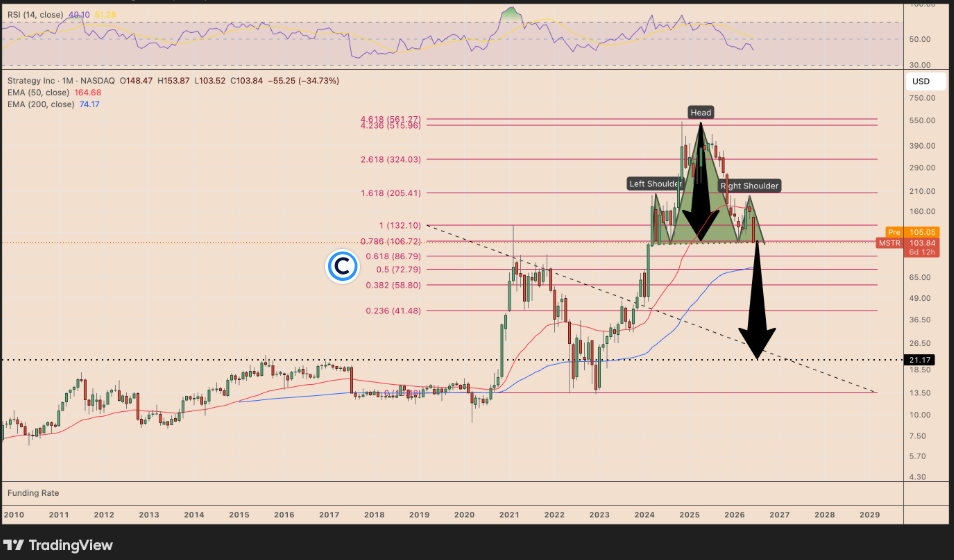
- The price of MSTR is about to see a test at an important support level.
Bitcoin treasury companies are increasingly focusing on a new category of investment products described as digital credit, with executives from Strategy and Strive linking preferred stock offerings to a segment of the global credit market that they believe could expand significantly over time.
The discussion emerged as both companies highlighted perpetual preferred stock products tied to their Bitcoin-focused business models, while separate market data pointed to growing financial obligations, declining cash reserves, and technical risks surrounding Strategy’s common stock.
Recent comments from Strive Chief Executive Officer Matt Cole and Strategy Executive Chairman Michael Saylor centered on the idea that preferred securities such as STRC and SATA represent a form of digital credit.
Bitcoin Treasury Companies Outline Digital Credit Market Potential
During an interview with Bloomberg Crypto, Cole discussed the possibility of digital credit developing into a sizable segment of the financial market.
He mentioned the almost $300 trillion world credit market and indicated that tapping even a little bit from it would mean tapping into a multi-trillion-dollar market.
According to Cole, digital credit offerings would be able to lure investors looking for yield-oriented investments. He also indicated that demand for such products may extend beyond the current offerings available through Strategy and Strive.
The comments aligned with a statement published by Saylor on June 24, in which he described digital credit as income-oriented exposure for investors who support Bitcoin.
The remarks reflected a broader effort by Bitcoin treasury companies to frame preferred stock products as a separate category within capital markets rather than solely as funding tools tied to Bitcoin accumulation strategies.
At the same time, market activity showed continued attention on the securities themselves. SATA traded below its $100 par value, changing hands at $96.15 in premarket trading on Wednesday after closing at $94.50 during the previous session. Trading volume remained above its average level despite the decline.
Bitcoin Treasury Companies Compare Preferred Stock Yields
The digital credit discussion also focused on the income characteristics of preferred stock offerings.
Saylor referenced performance data comparing the effective yields of Strategy’s preferred securities, including STRC, STRK, and STRD, against traditional credit products. The comparison showed yields on Strategy’s preferred securities exceeding those available through several established credit exchange-traded funds and preferred stock benchmarks.
Meanwhile, STRC closed at $87.31 on Tuesday after recovering from a recent low of $82.53. The security remains well below its $100 par value despite the rebound.
Strategy Chief Executive Officer Phong Le disclosed that he purchased approximately $1 million worth of STRC and stated that he intended to continue holding the position. The disclosure came during a period when the preferred stock remained under pressure and investors continued evaluating the company’s ability to support dividend payments.
Strategy Cash Position Draws Increased Attention
While executives discussed the long-term potential of digital credit, separate analysis highlighted growing financial pressures facing Strategy.
According to CryptoQuant Head of Research Julio Moreno, the company’s cash reserves have declined by 38% since the beginning of 2026. During the same period, annual dividend obligations linked primarily to STRC increased from roughly $300 million to approximately $1.2 billion.
Moreno noted that Strategy currently relies on cash reserves to fund dividend payments associated with its preferred stock offerings. As those obligations increased, the company’s dividend coverage ratio declined significantly.
Data cited by Moreno showed dividend coverage falling from more than seven years at the start of the year to roughly 14 months as of June. He estimated that restoring coverage to approximately 24 months would require around $2.8 billion in cash reserves, nearly double the amount currently held by the company.
The pressure has also been reflected in market pricing. STRC fell to a record low of $82.50 last week before stabilizing within a range between $82 and $89. Because the security trades below par value, its effective yield has risen above 13%, compared with a stated dividend rate near 11.5%.
MSTR Technical Pattern Adds Additional Risk
Alongside concerns regarding cash reserves and dividend commitments, technical analysis of Strategy’s common stock has identified a potential head-and-shoulders formation on the monthly chart.
The pattern has developed since March 2024 and includes a neckline support area between approximately $100 and $105. Usually, technical analysts see any move below that price level as a signal for a bearish situation.
Source: TradingView
According to the configuration of the pattern, the breakdown will signal a target towards $20. The analysts who were analyzing the current chart compared it to the head-and-shoulders formation that happened during the dot-com period and saw a lot of similarity between the current and past charts, where the stock was seeing a long downward move after breaking the support level.
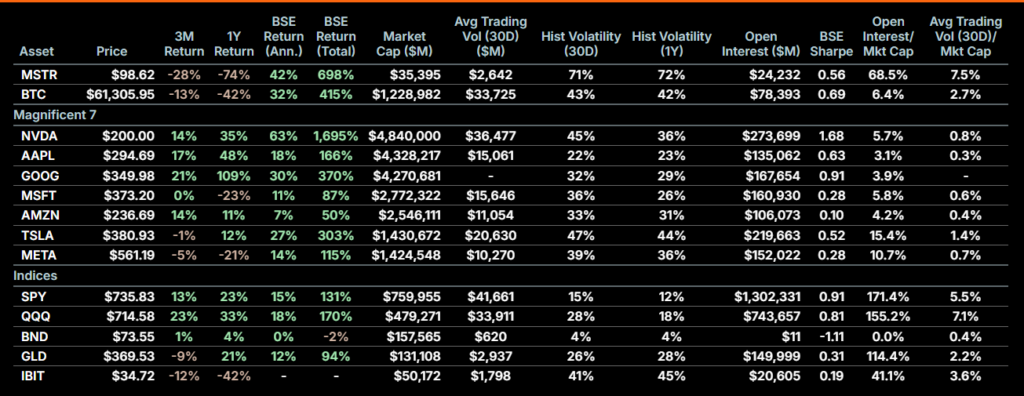
Moreover, Strategy continues holding Bitcoin. The company currently holds 847,363 BTC acquired at an average purchase price of approximately $75,650 per coin.
Source: Strategy
Recent fundraising activity illustrates the company’s balancing act between preserving Bitcoin exposure and maintaining liquidity. In June, Strategy sold approximately 2.71 million MSTR shares and raised about $335.5 million. Of that amount, roughly $34.9 million was used to purchase an additional 520 BTC.