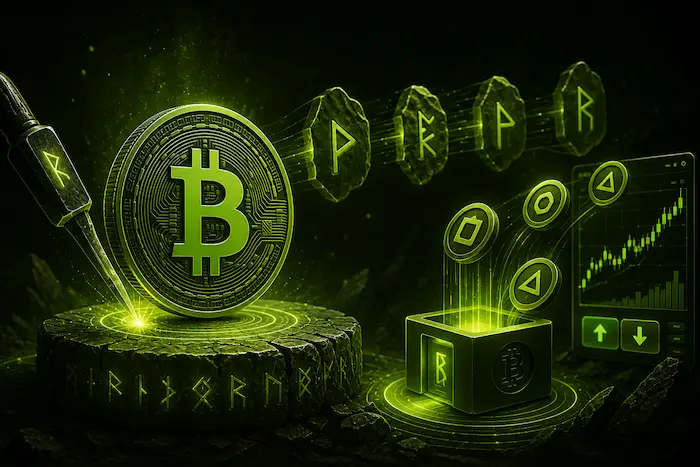
Bitcoin Runes pioneered a novel method of issuing fungible tokens directly on Bitcoin’s blockchain, thus opening the blockchain network beyond Bitcoin’s use case of a payment system.
The protocol was created by Casey Rodarmor, the founder of Ordinals, and it came into existence at Bitcoin block 840,000, together with the halving of Bitcoin. Bitcoin Runes attracted considerable interest from users who wish to issue, mint, and trade Bitcoin tokens since the launch of the protocol.
Even though trading activity became lower as time passed following the launch, Bitcoin Runes continues to facilitate token issuance and marketplace transactions via the protocol-compatible wallets and Bitcoin-based marketplaces.
What Is Bitcoin Runes?
Bitcoin Runes is a protocol for fungible tokens which uses Bitcoin’s Unspent Transaction Output (UTXO) protocol. It differs from other Bitcoin protocols for fungible tokens in that it allows for fungible asset issuance and transactions in accordance with Bitcoin’s existing framework.
Developers and artists can create fungible tokens in the protocol without having to rely on smart contracts or even blockchain. Once created, these tokens can be easily moved from one compatible wallet to another and also traded in Bitcoin marketplaces that support them.
Source: Transcak
The launch of Bitcoin Runes, along with the halving event, was the advent of yet another application of Bitcoin with the ability to create fungible tokens on the blockchain itself.
Selecting a Compatible Wallet
Before using Bitcoin Runes, one needs to have a wallet that works with the protocol. Not all Bitcoin wallets work with the Runes.
The compatible wallet must support the following:
- Holding of Bitcoin and Rune
- Displaying the amount of Rune
- Signing the transactions involving Rune
- Connecting to the Rune marketplace
In addition, users must have some BTC in order to pay for the transaction fee needed to confirm transactions within the Bitcoin network.
One of the other things that needs to be done is the management of UTXOs. Because Bitcoin has the use of outputs from single transactions rather than account balances, the user may find it necessary to break the UTXO down into smaller amounts prior to Rune minting.
The Etching Transaction Will Create a New Rune
The process used to generate a new Bitcoin Rune is called Etching.
As the etching transaction takes place, the token is defined by its creator and later broadcast to the Bitcoin blockchain. These include the following attributes:
- Name of the Token
- Token Symbol
- Maximum Supply
- Divisibility
- Minting Rules
- Pre-mining of the Token (Optional)
Once the transaction is completed, these attributes cannot be changed.
The existing naming guidelines state that Rune names should consist of 13 to 28 characters, with the shorter names being provided by a later update. The process of checking the transaction confirmation status can be done through the Bitcoin mempool till the transaction is included in a block.
Projects can take advantage of the etching procedure for the creation of their community tokens, gaming items, loyalty points, or other fungible digital assets on the Bitcoin blockchain.
Minting Bitcoin Runes
Once a Rune is etched, anyone will be able to create tokens according to the parameters set at the time of creation.
By “minting,” one means the process of creating new coins of a particular Rune in accordance with the supply and participation limits that have been established by its creators.
The user connects their wallet and sends the mint request, paying for the transaction with the Bitcoin transaction fee. It is possible to set various speeds of transaction confirmation on some platforms; faster transactions mean higher fees while the slower ones depend on the current network load. Monitoring Bitcoin mempool can help users analyze the current situation with fees before sending any more transactions.
Bitcoin Runes Trading
After being minted, Bitcoin Runes can be exchanged within the Bitcoin markets that accept this type of asset.
This process usually includes linking a compatible wallet, choosing the Rune token, placing either a buying or selling request, approving the transaction in Bitcoin, and waiting for confirmation from the blockchain.
If you are listing the Rune token for sale, remember that frequently changing the list might keep your previous lists active until their expiration or completion. Prior to the acquisition of any Rune, project details that can be found include distribution of holders, premine percentage, token supply, and minting parameters. Some projects have reserved tokens prior to any public minting process; thus, premine percentages are an important feature in the publicly available token structure.
Supporting Services and Network Monitoring
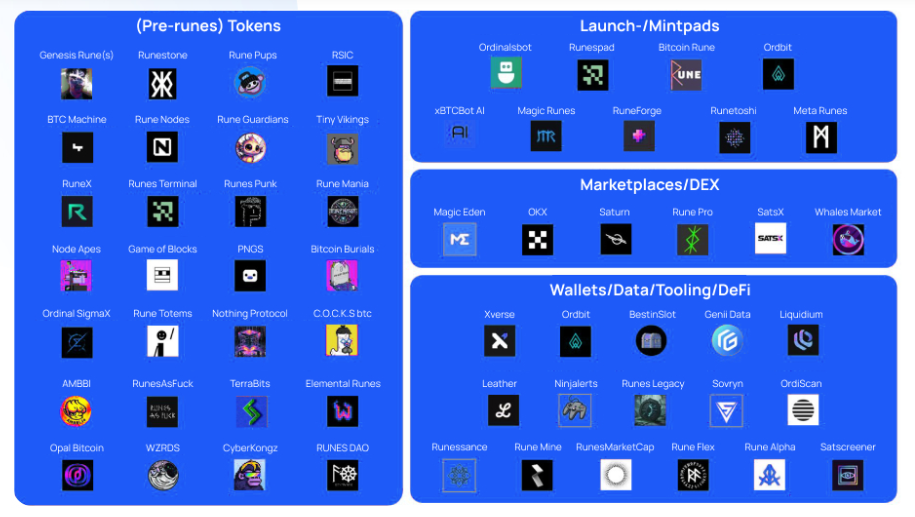
A number of different platforms exist to facilitate various tasks relating to the usage of Rune tokens such as creating, trading, analyzing the blockchain, and monitoring transactions.
Some of the platforms provide functionalities such as etching and minting while others are aimed at second-stage trading and analysis of the blockchain.
Since Bitcoin transaction fees vary depending on network congestion, monitoring the mempool remains part of managing Rune transactions.
Best Practices for Beginners
Several operational practices can help users complete Rune transactions more efficiently.
BTC maintenance allows paying for transaction fees while placing etching, minting, and trade requests. Checking the authenticity of a Rune prior to buying will allow you to differentiate the genuine projects from the fake ones that have similar names.
The usage of wallets and platforms supporting the Rune protocol allows achieving compatibility while storing, transferring, and connecting to the marketplaces. The study of publicly available data such as supply limitations, holders’ structure, minting conditions, and pre-mining allows gaining extra transparency.
Conclusion
Bitcoin Runes have provided the ability to build fungible tokens on the Bitcoin blockchain by using Bitcoin’s UTXO model, including token creation by etching and token minting, as well as secondary token transactions by compatible wallets and marketplaces.
FAQs
What is Bitcoin Runes?
Bitcoin Runes is a protocol for fungible tokens which works on the Bitcoin blockchain.
What is the difference between etching and minting?
The etching process is used to create a Rune and set up its characteristics, while the minting process is used to generate tokens according to the conditions set during the etching process.
Why is BTC necessary for Bitcoin Runes?
Due to the covering of the transaction costs on the Bitcoin network when creating, minting, transferring, and trading tokens.