

Cross-chain bridges are taking increasingly different approaches to moving assets and messages between blockchain networks in 2026.
Current DefiLlama data recorded $15.97 billion in cross-chain volume over the latest 30-day period as of August 29, while Across accounted for about $6.21 billion of that activity.
Other major systems, including Stargate, deBridge, Wormhole, and LayerZero, use different combinations of liquidity, intents, messaging, and verification infrastructure.
The sector has also faced heightened scrutiny over security. In April, the KelpDAO exploit resulted in approximately $292 million in rsETH being stolen after attackers compromised off-chain infrastructure associated with a LayerZero-based bridge. The incident showed that bridge security can depend on components beyond smart contracts.
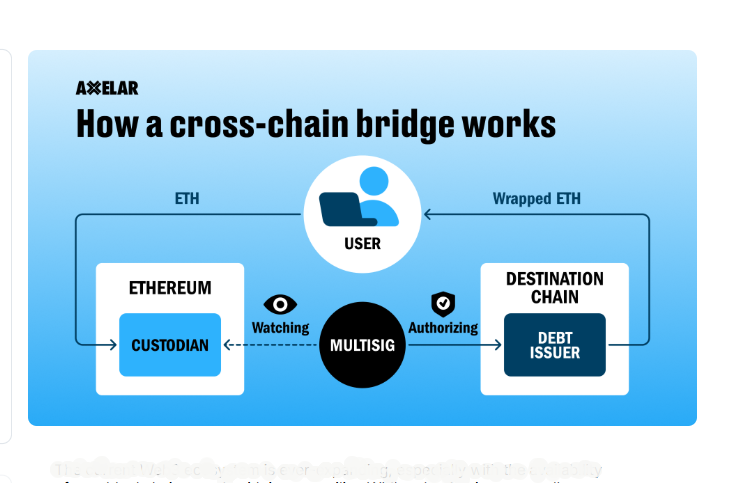
Source: Axelar
The ranking considers network reach, transaction activity, architecture, asset support, security design, developer adoption, and current relevance. It includes both consumer-facing bridges and interoperability infrastructure.
Cross-Chain Bridges See Different Models Take Shape
Across currently leads the listed protocols by reported 30-day bridge volume. DefiLlama recorded approximately $6.21 billion in volume for the protocol on August 29.
Its architecture is based on cross-chain intents, allowing users to specify an outcome while relayers compete to provide liquidity on the destination network. Across says it can provide approximately two-second fills and supports more than 24 mainnet chains.
The protocol also supports cross-chain actions that can combine transfers with subsequent DeFi transactions. Its model differs from traditional bridges because liquidity does not have to be maintained in large pools across every individual route.
Stargate remains another established participant. Its 30-day bridge volume stood at about $316 million on August 29. Stargate V2 uses multiple transfer mechanisms, including Hydra, and describes itself as a composable cross-chain liquidity transport protocol.
Besides, deBridge managed to raise around $170 million in just 30 days. Its deBridge Liquidity Network uses solvers rather than conventional liquidity pools across every supported chain.
Users specify what they want to receive, while solvers fulfill orders with destination-chain liquidity. The protocol describes the system as zero-TVL cross-chain trading infrastructure with asynchronous order fulfillment.
Key factual takeaways
- Across recorded about $6.21 billion in 30-day bridge volume on August 29.
- Stargate recorded approximately $316 million, while deBridge posted roughly $170 million.
- Wormhole and LayerZero provide broader messaging and interoperability infrastructure beyond basic asset transfers.
Messaging Infrastructure Broadens the Bridge Market
Wormhole operates across both asset transfers and cross-chain messaging. Its product suite includes Native Token Transfers, Wrapped Token Transfers, messaging, queries, governance infrastructure, and settlement tools. Its transfer system uses Guardian-signed Verifiable Action Approvals, or VAAs.
Native token transfers move native assets without requiring wrapped representations, while wrapped token transfers use a lock-and-mint model.
Wormhole’s supported networks can also change. The protocol announced that Berachain would be fully deprecated on August 31, 2026, while Injective is scheduled for full deprecation on September 30.
LayerZero occupies a similar infrastructure-focused position. Its documentation says the protocol supports more than 150 blockchains and allows applications to transfer tokens, send arbitrary messages, and develop customized cross-chain systems.
Its security architecture uses Decentralized Verifier Networks, or DVNs, which allow applications to choose verification configurations.
The KelpDAO incident highlighted the importance of those configurations. According to Chainalysis, attackers were able to exploit the internal RPC network infrastructure and single-verifier setup, leading to the leakage of approximately $292 million worth of rsETH.
However, it is important to note that there was no hack of the LayerZero protocol but rather an attack based on the choice of application-level verifications.
Native Asset Transfers Come to Forefront
Cross-Chain Transfer Protocol (CCTP) by Circle adopts a novel method for transferring USDC.
While other cross-chain transfer protocols usually lock USDC in one blockchain and mint wrapped USDC in another, the Circle protocol destroys native USDC in the source blockchain and mints native USDC in the destination blockchain. As of November 14, 2025, more than $110 billion had been transferred via CCTP.
CCTP was extended in 2026 to networks such as Injective, Morph, EDGE, and Pharos. Its capability set includes Standard Transfer, Fast Transfer, Hooks, and Forwarding Service. Thus, CCTP is specifically relevant for applications/users that want to transfer USDC between networks.
CCIP of Chainlink is another infrastructure-level offering. It supports cross-chain messaging and token transfers across EVM networks as well as Solana, Aptos, Sui, TON and Canton. Chainlink’s release notes also show a July 2026 Canton integration and additional support for cross-chain token standards and assets.
| Protocol | Reported data or reach | Main approach |
| Across | $6.21B 30-day volume | Intent-based transfers |
| Stargate | $316M 30-day volume | Cross-chain liquidity |
| deBridge | $170M 30-day volume | Solver-based settlement |
| LayerZero | 150+ blockchains | Messaging and interoperability |
| Circle CCTP | $110B+ cumulative volume | Native USDC transfers |
Security Remains Central to Cross-Chain Bridges
Axelar provides a decentralized interoperability network that uses validators to connect blockchain ecosystems and support token transfers, messaging, and smart-contract interactions.
Hyperlane emphasizes permissionless interoperability, using mailbox contracts and configurable interchain security modules. Its Warp Routes also support token movement.
Celer cBridge completes the ranking as an established multichain transfer system. Its inclusion reflects continued recognition in the bridge sector rather than current volume leadership.
The broader market increasingly includes intent-based systems and specialized infrastructure such as Circle Gateway, USDT0, and Hyperliquid.
Security remains a key consideration because risks can involve smart contracts, validators, relayers, oracles, liquidity providers, and off-chain infrastructure. The KelpDAO incident demonstrated that compromise of infrastructure used to verify blockchain state can affect cross-chain systems even without a conventional smart-contract vulnerability.
Developments scheduled for the remainder of 2026 also show that the sector remains dynamic. Wormhole has scheduled the deprecation of Berachain and Injective, while Circle identifies CCTP V2 as its canonical implementation and plans to begin phasing out CCTP V1 on October 31.
Conclusion
Cross-chain bridges in 2026 encompass several technical models rather than a single bridge architecture. Across leads the listed protocols by recent volume, while Stargate and deBridge use distinct liquidity approaches.
Wormhole and LayerZero offer more generic messaging solutions, while CCTP is dedicated to native USDC payments.
FAQs
What are the leading cross-chain bridges by current activity?
Across recorded about $6.21 billion in 30-day volume on August 29, followed by Stargate at about $316 million and deBridge at roughly $170 million.
How is Across different from other conventional bridges?
Across leverages cross-chain intents where liquidity on the destination chain is provided by relayers according to the outcome desired by the users.
How did the KelpDAO exploit happen?
Hackers were able to attack the internal RPC infrastructure due to a single-verifier setup, leading to the theft of $292 million worth of rsETH.
What is Circle CCTP designed for?
CCTP is designed to transfer native USDC between supported blockchains by burning USDC on the source chain and minting native USDC on the destination chain.