Gold has always been used as a way of preserving value. Cryptocurrencies have brought about change in the methods of investment, but gold remains a better way to hedge oneself against any economic challenges and inflation.
Tokenized gold is a concept that aims at linking assets to blockchain. This is done through tokenization, which seeks to bridge the gap between the traditional gold market and blockchain’s simplicity and flexibility.
What is Tokenized Gold?
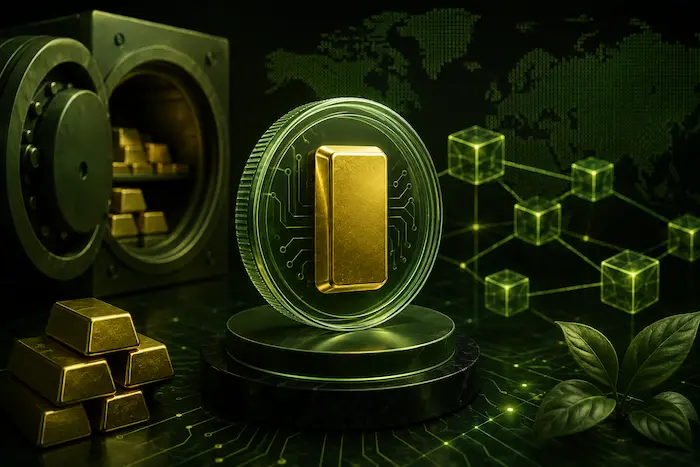
Tokenized gold is the digital representation on a blockchain of tokens representing physical gold that is under custody. Such tokens usually stand for a certain amount of gold measured either in grams or in troy ounces.
As compared to other cryptocurrencies whose value depends solely on market demand, the tokenized gold is different because its value depends on the physical gold holdings kept by multiple custodians.
Key Features
- Physical gold reserve backed
- Tokenized on blockchain networks
- Indicates a particular amount of gold
- It can be traded online like any other cryptocurrency.
Tokenized Gold Creation Process.
Creation of tokenized gold usually takes several steps such as: Custody of Physical Asset, Token Creation, Token Issuance.
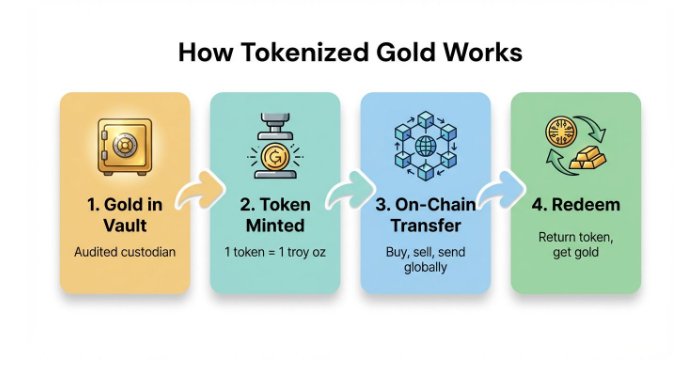
Source: Altrady
| Stage | Description |
| Custody | Physical gold is purchased and stored in secure insured vaults |
| Token Minting | Digital tokens are issued on a blockchain to match gold reserves |
| Verification | Auditors validate reserves to token supply. |
| Redemption | Players holding eligible tokens can take advantage of the opportunity to redeem them for physical gold as per the issuer’s terms and conditions |
The number of tokens issued is usually directly correlated with the number of gold reserves a bank has. When investors convert their tokens into actual physical gold, the redeemed tokens are typically destroyed in a “burning” process.
Others employ proof-of-reserve mechanisms and blockchain verification protocols to offer extra transparency on reserves.
Gold Tokenization and Fractional Ownership
One of the features of gold tokens is their ability to be split into parts. People often used to purchase gold in bulk, such as gold bars and gold coins. It is possible to acquire gold fractions by purchasing tokens.
Moreover, this is what allows people to participate in the gold-backed investment program while not buying bulk amounts of gold.
Access through small-scale investments
Through tokenized gold, it becomes possible:
- To own fractional shares of gold.
- Carry out online transactions using crypto wallets.
- Use a virtual ID like a credit card number for the subject, along with a PIN or password.
- Lower entry levels than other conventional gold products
Blockchain Functionality and Trading
With tokenized gold, the transfer can occur digitally via blockchain networks, whereas in the physical gold market, it might require shipping, storage, or settlement processes.
The exchange of the transactions can be between the person who owns the wallet or from the person who is connected with the exchange that provides gold-backed tokens.
Each transaction is recorded on a distributed ledger and establishes a permanent record of ownership transfer, thanks to Blockchain technology. This process offers transparency of transactions and lessens the need for manual recordkeeping.
Some gold assets tokenized can also be utilized by blockchain-based finance apps, which means the holders of such tokens can access blockchain-based finance systems with gold-backed assets.
Multiple issuers have introduced tokenised gold products based on physical gold reserves.
| Project | Backing Structure |
| Tether Gold (XAUt) | Each token is backed by one troy ounce of gold held in vaults in Switzerland |
| Paxos Gold (PAXG) | 1 token is represented by 1 troy ounce of gold held in London vaults. |
Both projects create blockchain tokenization that is meant to be representative of the real world value of physical gold reserves.
The backing arrangements are based on the principle of having custodians who will keep the gold that is stored and have reserve records.
Risks of Tokenized Gold
While tokenized gold merges the physical and blockchain worlds, there are certain pitfalls to the model.
Custodial Risk
The token holders rely on the issuers and custodians to keep the gold reserves that are the collateral for the tokens. The system needs to be based on trust that the reserves are being managed correctly and are available when required.
Regulatory Considerations
Digital asset and real-world asset tokenization regulations are still in a state of flux in multiple jurisdictions. Changes to the rules may have an impact on the process of issuing, trading or redemption.
Liquidity Factors
Trading volumes of tokenized gold are still low compared to the global gold market, but the markets continue to grow.
Operational Costs
Investors may encounter:
- Blockchain transaction fees
- Storage-related charges
- Redemption fees
- Platform-specific costs
The Role of Tokenized Gold in the RWA Market
But tokenized gold is just one of the more recent, but related, movements in the real-world asset space, in which real-world assets are represented on blockchain networks.
The real-world asset is based on three components: physical gold reserves, tokens issued by the blockchain, and verification systems that tie token ownership to real-world assets. Gold-backed tokens are also a prime example of how tokens are being adapted to represent traditional commodities, yet not lose the connection to the physical asset.
Conclusion
A tokenized gold system uses physical gold along with blockchain to allow digital possession, exchange, and transfer of tokenized gold depending on custody services, reserve checks, and infrastructure support.
FAQs
What is tokenized gold?
Tokenized gold is a digital token supported by tangible gold in a secure vault and is constructed on the blockchain.
What is the backing of tokenized gold?
The issuers maintain a gold reserve and then issue tokens representing a certain number of gold bars in their reserve.
Are tokens worth redeeming in the case of gold?
Others give the option for token holders to buy back with a minimum amount and fees to convert tokens into real gold.