The APIs for blockchain technology have become extremely popular this year due to the preference of developers for managed infrastructure instead of blockchain node operation.
Alchemy, QuickNode, Infura and Chainstack are among the platforms that offer access to different networks, whereas dedicated platforms cater to indexed blockchain data and blockchain analytics.
The market has also moved beyond basic RPC connectivity. Transaction history, token balance, NFT details, smart contract events, and real-time blockchain activity are all available to developers using higher-level APIs.
The development follows the discussion of blockchain technology in the financial market applications, where an ECB board member, according to Reuters, has called for increased usage of blockchain infrastructure in financial markets.
How Blockchain APIs have evolved
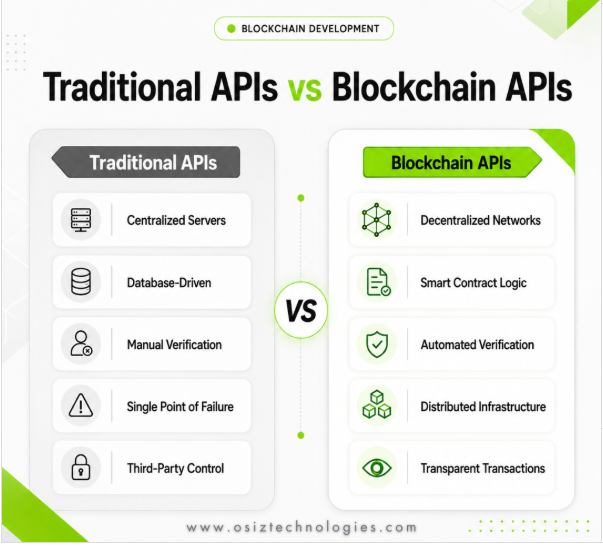
Raw RPC is one of the major parts of the blockchain infrastructure. There are methods like eth_call, eth_getLogs and eth_getBalance that help applications interact with EVM networks without setting up their own node. Also, transactions may be sent using RPC methods.
Source: Michael Matthew
However, raw RPC alone does not efficiently provide every type of information required by modern applications. Wallets, for example, may need historical transfers, NFT metadata, token prices, and balances across several networks.
API providers have responded by adding indexing and specialized data services on top of node infrastructure.
The comparison below is based on chain coverage, API depth, developer tooling, data access, and real-time capabilities rather than one performance benchmark. Differences in billing structures, request limits, and infrastructure configurations make direct price and latency comparisons difficult.
Blockchain APIs ranked by development needs
| Provider | Main strength | Network coverage or focus |
| Alchemy | Broad API stack and multichain data | 100+ blockchains |
| QuickNode | RPC, streaming, and data services | 80+ chains |
| Infura | Ethereum infrastructure | Ethereum and Layer 2 networks |
| Chainstack | Broad coverage and node infrastructure | 70+ chains |
| Ankr | RPC and indexed APIs | 80+ networks |
| Helius | Solana infrastructure | Solana |
| Moralis | Higher-level blockchain data | Multichain |
| The Graph | Decentralized indexing | Protocol-specific Subgraphs |
| Bitquery | Analytics and data streaming | 40+ chains |
| GoldRush | Wallet and portfolio data | Multichain |
- Alchemy
Alchemy ranks at the top of the supplied comparison because its API stack extends beyond conventional RPC. Its documentation includes more than 100 supported blockchain networks, including Chain APIs, Data APIs, and Wallet APIs.
However, its services include JSON-RPC, WebSockets, transaction trace, debugging, portfolio data, transfer, pricing, NFTs, and webhooks. Wallet APIs also include support for account-abstraction applications.
- QuickNode
QuickNode combines infrastructure access with data and streaming services. It has documentation for JSON-RPC, REST, gRPC, and WebSocket APIs, in addition to Streams, Webhooks, SQL Explorer, and IPFS. The support list is more than 80 chains, but the exact number depends on the counting methods used for networks and products.
- Infura
Infura continues to be one of the important platforms in Ethereum-based applications. As per its June 18, 2026 documentation, it offers APIs that are managed and do not involve running any infrastructure by the developers. Infura also provides access to the Ethereum and Layer 2 blockchain data, transactions, WebSocket Archive Data, and IPFS Infrastructure.
- Chainstack
The services provided by Chainstack include access to various chains, such as Ethereum, Solana, BNB Smart Chain, Polygon, Arbitrum, Base, Optimism, Avalanche, TON, Bitcoin, Sui, Cardano, Polkadot, and XRP Ledger.
According to the documentation, the platform has support for more than 70 chains. In August 2026, support for XRP Ledger was introduced on August 9, and Stellar support was launched on August 24.
- Ankr
The document by Ankr on August 28 mentions that access to RPC is available on over 80 different networks. Its Advanced API adds indexed information covering NFTs, token balances, prices, transactions, and logs, while developers can consume data through HTTPS, WebSockets, and gRPC.
- Helius
Helius has a specialized method of operation that concentrates on Solana infrastructure. Its APIs are tailored to make transactions, digital assets, and account events easier to interact with on Solana. This makes the platform relevant to Solana-native wallets, trading applications, analytics services, and consumer applications.
- Moralis
Moralis focuses on structured blockchain information rather than only low-level node access. These networks include Ethereum, Base, Solana, BNB Smart Chain, Polygon, Avalanche, Arbitrum, Optimism, and more. Its APIs cover wallet, token, NFT, and transaction information in application-ready formats.
- The Graph
The graph differs from conventional RPC providers through its decentralized indexing model. Its subgraphs extract, process, and store blockchain information so applications can query protocol-specific data through GraphQL. Developers can create custom subgraphs based on particular protocols and data models.
- Bitquery
Bitquery targets advanced blockchain analytics, covering more than 40 chains with datasets for DEX trades, token prices, holders, transfers, balances, and money-flow analysis. It supports GraphQL, WebSockets, Kafka, gRPC, and cloud data delivery, including a common schema across supported EVM and non-EVM networks.
- GoldRush
GoldRush, formerly associated with Covalent’s multichain data infrastructure, focuses on normalized blockchain information for wallets, portfolio trackers, and applications combining balances, transactions, and token data across networks. Its inclusion reflects the growing demand for data abstractions that operate across multiple blockchains.
What developers should consider
The expansion of blockchain APIs has shifted the infrastructure market toward integrated services covering RPC, indexing, historical data, event streaming, transaction simulation, and wallet functionality.
This broader infrastructure is increasingly relevant as blockchain systems are considered for financial market applications.
Developers also face infrastructure dependencies. The companies that provide APIs continue to be centralized organizations, leading to the need for availability, cost, rate limiting, and proprietary interfaces.
According to the source, teams can mitigate such dependencies through the use of various RPC providers, self-hosting of nodes for critical tasks, or the use of common interfaces to ease migrations.
The other challenge is related to the changes in blockchain infrastructure. For example, the JSON-RPC API of Sui is set to get deprecated by 2026, whereas the transition date from the current system to gRPC or GraphQL for Ankr has been marked as September 30.
Key Takeaways
- Alchemy provides over 100 different blockchain integrations along with data and wallet APIs.
- QuickNode combines multichain infrastructure with streaming and indexed data services.
- Specialized platforms such as Helius, The Graph and Bitquery target distinct development and data requirements.
Conclusion
Blockchain APIs have developed from basic RPC gateways into broader infrastructure platforms offering indexed data, streaming, analytics, and application-level services.
The top companies vary in terms of network support and specialization, with some covering multiple chains like Alchemy, while others, like Helius, are Solana-specific, and others are decentralized indexers like The Graph. As blockchain infrastructure requirements expand, selecting an API increasingly depends on the specific data, network, and application needs of each development workload.
FAQs
What are blockchain APIs used for?
They connect applications to blockchain infrastructure and can provide RPC access, indexed data, transaction information, balances, NFTs, and real-time activity.
Which provider has the broadest coverage in the supplied ranking?
Alchemy is listed with support for more than 100 blockchains.
Who is the API provider for Solana?
Helius specializes in Solana infrastructure, data access, and developer tooling.
Why are indexed APIs important?
The indexed APIs offer structured data like history of transfer, NFT data, token balance, and transaction information without requiring the application to fetch all the unstructured data from the blockchain itself.