Key insights:
- Block can broaden cryptocurrency choice without constructing extensive new token infrastructure.
- MoonPay gains another mainstream payment method alongside PayPal and Venmo integrations.
- Wallet providers receive a simpler funding route for users entering digital asset markets.
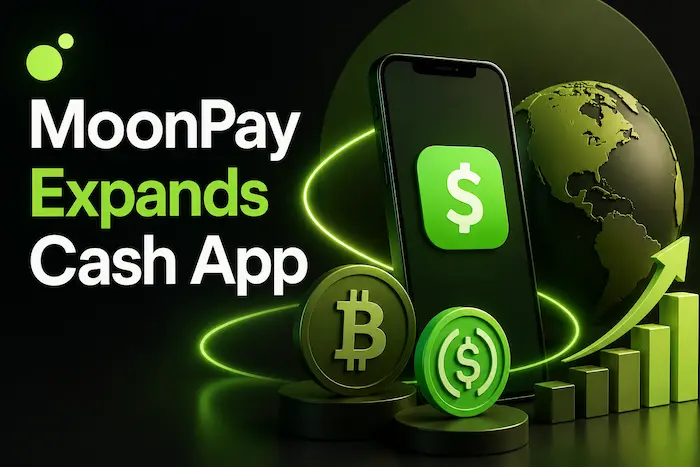
Cash App is widening cryptocurrency access through a new integration with MoonPay for eligible users across the United States. The agreement adds ether, solana, XRP, USDT, and other digital assets without requiring Block to build new trading infrastructure.
The expansion marks a significant shift for Block’s payments platform. Its cryptocurrency offering historically centered on bitcoin before adding USDC earlier this year. MoonPay now provides a route into a much broader digital asset market.
MoonPay opens a wider crypto gateway
MoonPay announced the integration Tuesday as it added Cash App Pay to its cryptocurrency checkout service. Eligible American customers can use their existing balances when purchasing supported digital assets through MoonPay.
The process removes several steps commonly associated with cryptocurrency purchases. Customers can complete transactions inside MoonPay’s checkout instead of moving between separate applications.
Cash App Pay is now available on MoonPay!
eligible US customers can use their @CashApp balance to buy digital assets on MoonPay
live today in the United States pic.twitter.com/xf6SO0SjrL
— MoonPay 🟣 (@moonpay) August 18, 2026
MoonPay said it became the first cryptocurrency platform approved to support the payment option. The arrangement also extends across several companies within its partner network. Those platforms include MetaMask, Trust Wallet, Ledger, BitPay, Uniswap Wallet, Bitcoin.com, Tangem, LOBSTR, Edge, and Moonshot.
Users can therefore fund supported wallets through MoonPay while paying from their existing balances. The integration connects a mainstream payments account with services operating throughout the cryptocurrency ecosystem.
Block gains broader asset coverage without developing separate infrastructure for every token. MoonPay, meanwhile, gains access to customers already comfortable using digital payments.
Bitcoin remains central to Block’s strategy
Block has long treated bitcoin as the centerpiece of its digital asset strategy. Jack Dorsey has remained one of the cryptocurrency’s most prominent corporate supporters.
However, customer demand has pushed the company toward additional assets. The platform added USDC earlier this year despite Dorsey expressing reservations about stablecoins. Dorsey said in March that customers wanted stablecoin access. He also warned against replacing one financial gatekeeper with another.
The MoonPay agreement offers Block a compromise. It preserves bitcoin’s strategic importance while letting an external provider handle broader cryptocurrency access.
Morgan Kuntze, Block’s global partnerships lead, reinforced that position Tuesday. He said Bitcoin remains central while customers should have flexibility in how they pay. The approach could reduce technical complexity for Block while testing demand for alternative cryptocurrencies.
Scale gives the partnership wider significance
The integration matters partly because of the payment platform’s reach. Block reported 59 million active users in June, according to its second-quarter shareholder report.
That audience gives MoonPay exposure to a large pool of potential cryptocurrency buyers. Many already use the service to manage everyday financial transactions. MoonPay co-founder and Chief Executive Ivan Soto-Wright said the agreement connects those users with digital assets through familiar payment infrastructure.
The partnership also arrives during an aggressive expansion period for MoonPay. The company has moved beyond its original role as a fiat-to-crypto gateway. In April, MoonPay acquired crypto security company Sodot. It followed that transaction by acquiring Solana trading infrastructure provider DFlow in May.
MoonPay then bought cross-chain infrastructure startup Glide in July. It also launched PayBox, which supports authorized cryptocurrency transactions through AI services while users retain asset custody. The company holds a New York BitLicense and Limited Purpose Trust Charter. It also operates under European Union crypto authorization in the Netherlands.
Competitive pressure moves closer to mainstream payments
The Cash App partnership highlights an emerging battle over cryptocurrency distribution. Instead of developing all services from scratch, payment companies are being more competitive on access and convenience.
Outsourcing wider token access may help to reduce development costs and infrastructure needs for Block. It also enables the company to maintain their existing stance on bitcoin.
MoonPay’s partnership sets a new milestone in its mission to connect traditional payment wallets with decentralized wallets. Its existing PayPal and Venmo support already follows that strategy.
However, wider access also places greater attention on regulatory compliance, transaction controls, and consumer protections. Those issues become more important as cryptocurrency services reach mainstream financial customers.
The deal does not replace Block’s direct bitcoin offering. Instead, it creates another route for customers seeking assets outside its native cryptocurrency selection.
That distinction could shape how other financial applications approach digital assets. Companies can offer broader access through specialist partners without becoming full cryptocurrency marketplaces themselves.
The alliance basically symbolizes a pragmatic shift. Block can maintain a focus on bitcoin and address customers’ demand for options. MoonPay gains distribution, while users gain a shorter route between conventional balances, cryptocurrencies, and self-custody wallets.