A good crypto wallet for a newbie will be the wallet that allows self-custody without complicated details. The list of the top 10 crypto wallets for beginners in 2026 comprises Trust Wallet, Exodus, Phantom, Coinbase Wallet, MetaMask, and many others. This ranking focuses primarily on setup, interface simplicity, recovery, supported assets, and how easily a first-time user can complete basic transactions.
How the Top Crypto Wallets Were Ranked
Ease of use is the main criterion. A beginner-friendly wallet should make it relatively simple to create an account, receive crypto, send a transaction, and understand recovery responsibilities.
Security also matters because self-custody transfers responsibility for private keys or recovery credentials from an exchange to the user. A recent academic review of cryptocurrency wallets found that wallet designs differ significantly in their authentication and key-management approaches.
- Trust Wallet
Trust Wallet ranks first for being mobile-oriented and for providing support across many blockchains. This app allows users to handle many cryptocurrencies without having to download other apps for each blockchain.
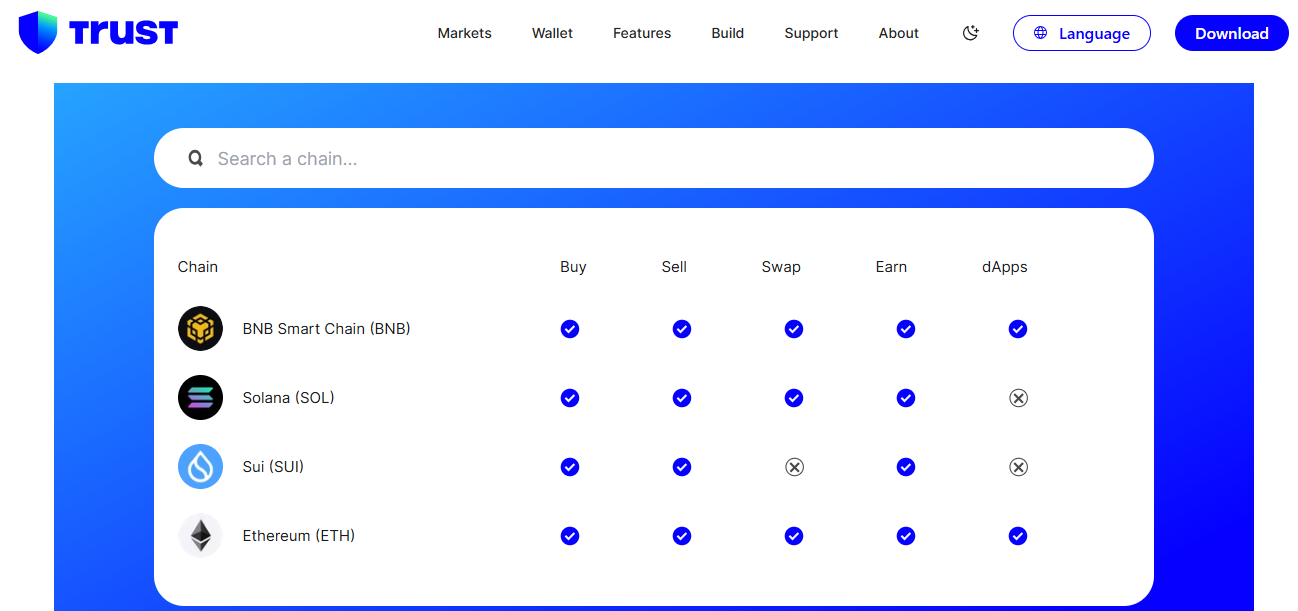
Source: Trust Wallet
This makes Trust Wallet an excellent choice to start with for newbies. However, it can also be considered a disadvantage since it provides too many options, and hence, more complicated tasks can arise from it.
- Exodus
The next choice would be Exodus due to its interface being focused on simplicity in managing your portfolio. The program has both desktop and mobile versions and thus can be used by beginners interested in seeing their balances and transferring or receiving cryptocurrencies.
Its neat design puts it ahead of wallets that make users dive into all the DeFi opportunities right away.
- Phantom
Phantom is especially easy to use for beginners starting to work with cryptocurrency through Solana. It has moved out of Solana and currently supports several other blockchain networks such as Ethereum, Base, Polygon, Sui, Monad, Bitcoin, and HyperEVM. The design is still pretty simple; however, you need to know which asset and network you are able to send.
- Coinbase Wallet
Coinbase Wallet makes sense for those who have experience with Coinbase. With the self-custody feature, the user gets full control over the wallet keys instead of keeping the assets in an exchange’s custody.
Familiarity with the Coinbase ecosystem can lower the learning curve. But novices have to remember that self-custody is not the same as storing funds on an exchange.
- MetaMask
MetaMask continues to be among the most important wallets for Ethereum and Web3 communities. Its major advantage is ecosystem access, with support for decentralized applications and Ethereum-compatible networks.
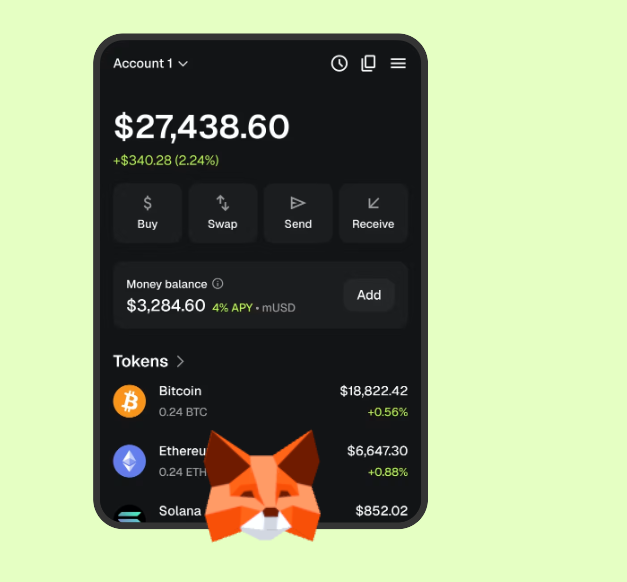
Source: MetaMask
But with greater flexibility comes a higher barrier of entry. Novices will have to learn about networks, transaction fees, token approval, and dApp permissioning before becoming comfortable with MetaMask. For Ethereum-focused users, however, its ecosystem makes the additional learning worthwhile.
Hardware Wallets Add Security but Also Complexity
- Ledger
Ledger ranks sixth because hardware wallets introduce an additional physical security layer. Ledger says its devices keep private keys on the hardware signer and can be connected to applications such as MetaMask and Phantom.
The trade-off is setup. A beginner must purchase and initialize a device, protect the recovery information, and learn how transaction signing works.
- Trezor
Trezor offers another established hardware-wallet option. This model has an emphasis on open-source technology and offline key security and uses hardware that requires the user to go through a physical setup and backup process.
The Trezor model is thus good for beginners who are already planning to store their assets long term, but is inconvenient for beginners just making their first crypto purchase.
- Zengo
Unlike other wallets, Zengo uses multiparty computation instead of the common seed phrase. This feature is likely to attract beginners who fear loss of the recovery phrase.
According to Coin Bureau’s 2026 beginner comparison, Zengo is their wallet that lacks a seed. However, wallets that meet various needs differently exist. The most important thing is that one is learning a new recovery technique instead of the conventional seed phrase wallet recovery technique.
- Tangem
Tangem focuses on hardware security through NFC-enabled wallet cards. Its simple physical format can make cold storage less intimidating than a conventional hardware device.
That simplicity is useful for beginners, although purchasing and managing physical cards still introduces responsibilities that do not exist with a basic mobile wallet.
- Rabby
Rabby is designed more heavily around Ethereum-compatible Web3 and DeFi activity. It can simulate transactions and provide additional information before users approve transactions, features that can help experienced users assess potential actions.
However, for beginners, its focus on decentralized finance makes it harder to use than Trust Wallet or Exodus. It is better viewed as a wallet users can graduate to as their Web3 knowledge improves.
What Beginners Should Know Before Choosing
The biggest mistake is assuming that a wallet removes the risks of self-custody. It does not. Users remain responsible for protecting recovery credentials and checking addresses, networks, and transaction details.
The research on the safety of wallets has emphasized the significance of authentication and key-management designs, while today’s recommendations from the industry still focus on the validation of the signed message by users.
Moreover, beginners do not need to download wallet software from ads or unreliable sites. A legitimate wallet provider will not require users to disclose a recovery phrase to receive support.
FAQs
What is the best crypto wallet for a beginner?
Trust Wallet is one of the best choices for beginners as it has a user-friendly interface on a mobile device and supports many crypto networks.
Are crypto wallets safe for beginners?
Crypto wallets are safe for beginners if used properly, however beginners need to protect themselves by making sure they have their seed phrase and verify all transactions.
Is MetaMask good for beginners?
MetaMask is the best place to experiment with Ethereum and Web3.