
- Tokenized Securities became prominent following the signing of an exploratory blockchain MoU between Tether and the NSE.
- The MoU evaluates the tokenization mechanisms provided by Hadron and the settlement process of USDT in jurisdictions where it is permissible.
- Approval for the same remains in progress, and no pilot launch schedule has yet been revealed.
Tokenized Securities became the focus of a new initiative after Tether and the Nairobi Securities Exchange (NSE) signed an exploratory memorandum of understanding (MoU) to examine blockchain-based market infrastructure, digital asset education, and the potential tokenization of securities in Kenya.
According to the memorandum, plans to analyze the Hadron tokenization platform by Tether, evaluate immediate settlement facilities, and investigate if USDt (USDT) can act as a settlement infrastructure layer where regulations allow in Kenya have been detailed.
Tokenized Securities Agreement Emphasizes the Hadron Platform
The agreement is all about the Hadron platform that Tether uses for tokenizing assets. As per the memorandum, the parties will be looking at fractional access to securities for both local and diaspora citizens, along with the process of onboarding that complies with the AML/KYC rules of Kenya.
Moreover, the MoU also suggests examining the instant and atomic settlement approaches that can ease the process of settling transactions on the exchange.
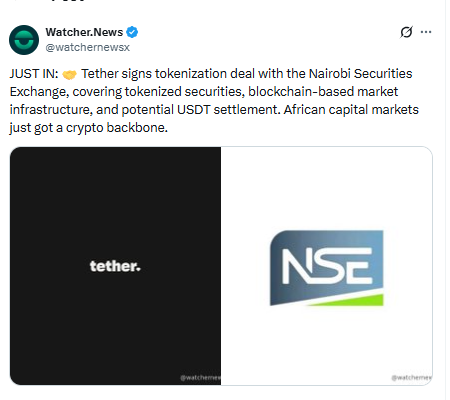
Source: Watcher.News
The memorandum stated that Tether and NSE will conduct training sessions for brokers listed on the NSE and other retail investors interested in using blockchain technology in their transactions.
Nevertheless, the memorandum does not involve the creation of any market based on blockchain. There is no indication as to which securities might be tokenized, what kind of blockchain will facilitate the transactions, or what organizations are behind the management of the underlying assets. No dates or budget were revealed.
Critical Issues Subject to Scrutiny
- Options for fractional ownership of investments available to both local and diaspora investors.
- Utilization of blockchain for transactions and compliance processes.
- Training programs for brokers and retail traders.
Regulatory Approval is Mandatory
Whether the initiative moves out of the pilot stage will be determined by the existing regulatory regime in Kenya.
Virtual Asset Service Providers Act became operational on November 4, 2025, categorizing tokenization and token issuance under the jurisdiction of the CMA, while stablecoin issuance will be handled by the Central Bank of Kenya.
Draft implementing regulations released by the National Treasury in March 2026 remain under review by the CMA. The memorandum further notes that USDT would only be evaluated as settlement infrastructure “where permitted” under Kenyan regulations. No approval from either the CMA or the Central Bank accompanied the announcement.
Previous Blockchain Initiatives Provide Context
The latest agreement follows earlier blockchain projects involving the Nairobi Securities Exchange. In 2025, the exchange partnered with DeFi Technologies, Valour, and SovFi in developing the Kenya Digital Exchange for tokenized stocks, bonds, mutual funds, and commodities.
Hadron by Tether facilitates the tokenization of equity, bonds, sovereign debt, and commodities, along with configurable compliance solutions. Based on market data that was cited in the press release, the market size of tokenized real assets, other than stablecoins, stood at approximately $36.9 billion as of July 27, whereas the market capitalization of USDT was close to $184 billion as of July 29.
Issues Outstanding Prior to Launching the Product
- Selection of assets for the pilot program.
- Structure of ownership, custody, and investor protection.
- Regulatory approvals as well as integration into the current depository framework.
Exploratory Work without Launch Schedule
The memorandum continues to be exploratory in nature as opposed to a roll-out of the product. Future activities will involve the selection of the pilot assets, establishment of a custody structure, disclosure to investors, and regulatory approvals. Other issues include settlement finality, redemption, taxation, data security, and domestic as well as diaspora investors.
Neither Tether nor the Nairobi Securities Exchange has announced deadlines for completing these activities. NSE Chief Executive Frank Mwiti said the initiative aligns with the exchange’s 2025-2029 strategy focused on technology, market participation, and investor access while describing the project as exploratory.
Frequently Asked Questions
What does the Tether-NSE memorandum cover?
The partnership discusses tokenized securities, market infrastructure using blockchain technology, education on digital assets, and potential use of USDT as settlement infrastructure in compliance with Kenyan regulatory requirements.
Have tokenized securities been launched at the Nairobi Securities Exchange?
Not yet. The memorandum is purely exploratory and does not endorse tokenized securities, nor does it allow trading or establishment of a market using blockchain technology.
What is the function of Hadron in the process?
Hadron is a platform created by Tether to facilitate tokenization.