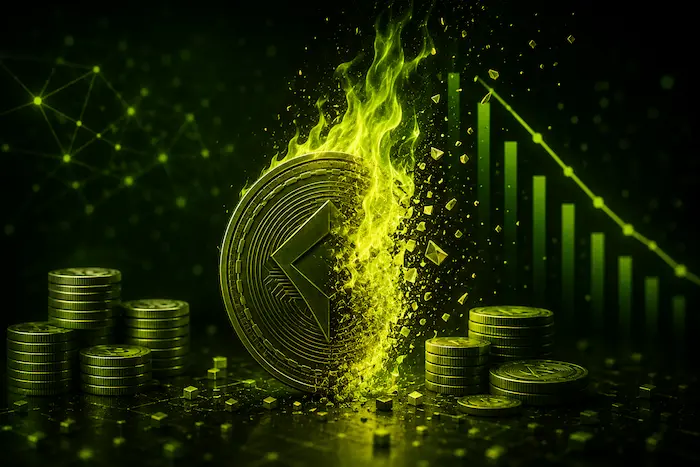
Coin burn refers to the practice through which tokens of cryptocurrencies are destroyed through a transaction on the blockchain network. This can be achieved by sending coins to a designated wallet known as the burn address or through the implementation of certain procedures through smart contract execution.
In successful attempts, the coins sent to this wallet cannot be withdrawn or recycled anymore, resulting in a reduction in the total number of tokens, which can be seen on a blockchain explorer.
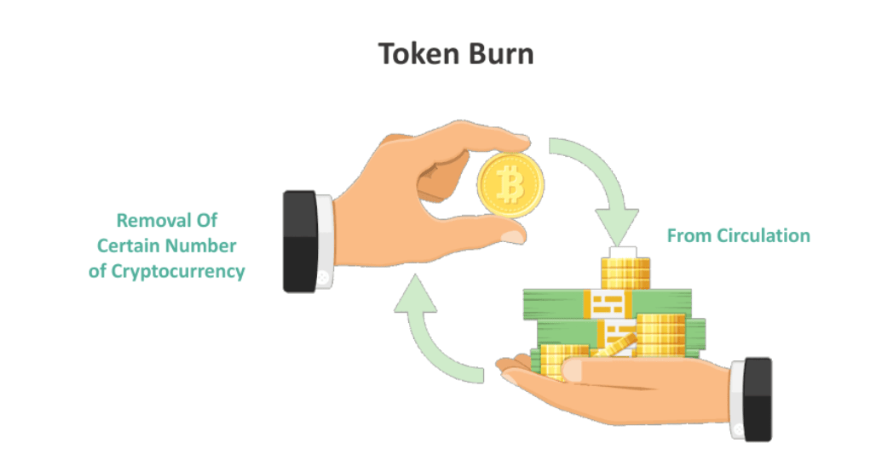
Source: Wall Street Mojo
With time, several ways through which cryptocurrencies control their token supplies have been developed, and coin burning has gained prominence among those methods. Coin burning may be carried out for several reasons, including supply management, network economy, cross-chain transactions, and protocol management.
How Coin Burning Works
The process of coin burning usually occurs through a smart contract with the burning function. As soon as the token holder triggers the smart contract, it verifies whether the token holder owns enough coins for conducting the operation.
What follows:
- Coins are taken out of the token holder’s wallet.
- The supply of coins is reduced.
- The process is recorded on the blockchain.
- The coins cannot be accessed anymore.
As the process is visible in the blockchain, any user can check the number of coins taken out of circulation.
Why Projects Implement Coin Burning
The reasons behind projects’ coin burning vary depending on the nature of the projects and the token structures of the cryptocurrency networks.
Token Supply Reduction
There could be projects with large token supplies that can use coin burning to reduce the total number of tokens circulating in the network. This helps balance the supply increase from other network methods.
Token Fees Burning
In some cases, some blockchain networks burn off transaction fees received from users. Not all the fees are distributed among network members; some portion of it is always burned off.
Transfers between Blockchains
Some bridge projects follow the burn-and-mint protocol. The tokens are burned on one blockchain, while the same number is minted on another.
Scheduled Burn
Some blockchain projects commit to burns at specific times, either quarterly or tied to revenue milestones or ecosystem goals.
Methods for Coin Burning on Various Blockchain Networks
| Burn Types | How They Work | Use |
| Scheduled Burn | The number of tokens gets reduced periodically | Supply control |
| Fee Burn | Burns part of the transaction fees | Continuous decrease in supply |
| Burn-and-Mint | Burns tokens on one chain and mints them on the other chain | Cross-chain token transfers |
| Milestone Burn | Activated when certain milestones are achieved | Ecosystem management |
| Proof of Burn | Tokens burnt to earn certain rights to access networks | Protocol operation |
Coin Burning Using BNB Auto-Burn Feature
One of the most popular burn mechanisms is the BNB Auto-Burn every quarter.
Moreover, it was introduced in December 2021, when the previous calculation of trade volume was discontinued. The current system determines burn amounts using two measurable inputs:
- The price of BNB.
- The number of blocks produced on BNB Chain during the quarter.
This calculation allows people to calculate the number of burns that will be expected in the coming period before burns begin. The main aim of the company is to decrease the number of BNB tokens from 200 million to 100 million.
According to the 35th quarterly burn in April 2026:
- 65.2 million BNB have been taken out of circulation.
- 134.8 million BNB were still in circulation.
- A total of 32.6% of BNB had been burned.
The outcomes of burning can be checked on the blockchain.
BEP-95 Brings Continuous Coin Burning
In addition to quarterly burns, BNB Chain uses another system named BEP-95. This means that:
- A part of the fees for each gas is burnt in every block.
- The crypto supply decreases continually, not quarterly.
The burning depends on how much the network will be used. From the data collected, about 265,000 BNB was burned via BEP-95 up until early 2026.
Additionally, the BNB Chain features the Pioneer Burn Program, where those who accidentally sent their BNB to a non-existent wallet are eligible to recover their losses through burning during quarterly burns.
Ethereum Uses Transaction Fee Burns
The Ethereum blockchain has a transaction fee burn system since its August 2021 EIP-1559 upgrade.
Under this system:
- Every transaction includes a base fee.
- The base fee is permanently burned.
- Amounts burned are variable based on blockchain activity.
During periods of high transaction volume on the blockchain, the amount of Ether destroyed may exceed the amount issued, resulting in temporary net deflation.
The process directly relates the use of the network to the decrease in supply. Proof of Burn Has a Different Purpose
However, not all cases of coin burning aim to cut circulation to influence economics. Proof of Burn system works like a protocol layer system where users burn coins in order to show their dedication to a certain network in exchange for mining privileges among others.
Some main features of Proof of Burn are:
- Tokens get burned forever.
- The burn acts as a commitment mechanism.
- Participation rights are linked to burned value.
- The process can function as a Sybil-resistance tool.
Unlike supply-management burns, Proof of Burn serves an operational role within the network itself.
Conclusion
The coin-burning concept remains one of the most widely used approaches for removing tokens from circulation in the cryptocurrency industry. Coins get burnt in projects through frequent events, a transaction fee structure, cross-chain transactions, and protocol-based coin burning, such as Proof of Burn. Examples of coin burning include BNB Auto-Burn, BEP-95, and EIP-1559 on the Ethereum network.
FAQs
What is Coin Burning in cryptocurrency?
Cryptocurrency burning is the process of destroying crypto tokens using the blockchain or through smart contracts.
Can burnt coins be recovered in any way?
No, burnt coins can never be retrieved and cannot be used anymore.
How do you know whether the burn has taken place?
One may use the blockchain explorer for proof of burned coins and their effect on the coin supply.